The Architecture of Delegitimization: Inside the War for Australia’s Political Center. u1

The Architecture of Delegitimization: Inside the War for Australia’s Political Center
Under the fluorescent glare of the Brisbane Convention Centre, the Australian Labor Party thought it was delivering a routine conference rallying cry.
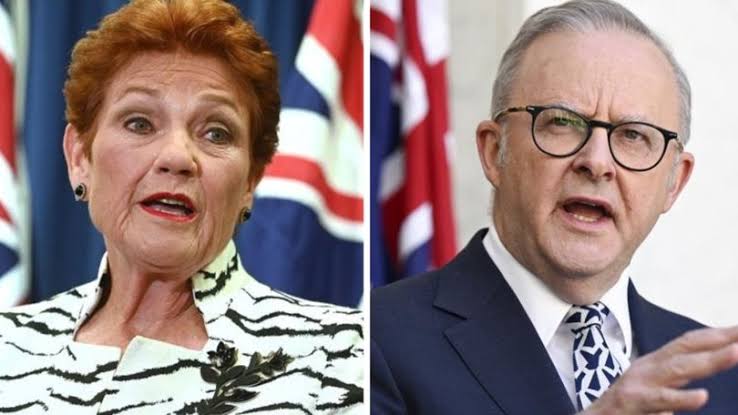
Prime Minister Anthony Albanese, flanked by Treasurer Jim Chalmers, took to the podium to confront an unsettling political reality. For nearly three decades, Pauline Hanson’s One Nation existed on the jagged perimeter of Australian democracy—an occasional nuisance, a Queensland-centric curiosity, a vehicle for working-class grievance that mainstream parties comfortably quarantined whenever federal elections drew near.
Those days are finished.
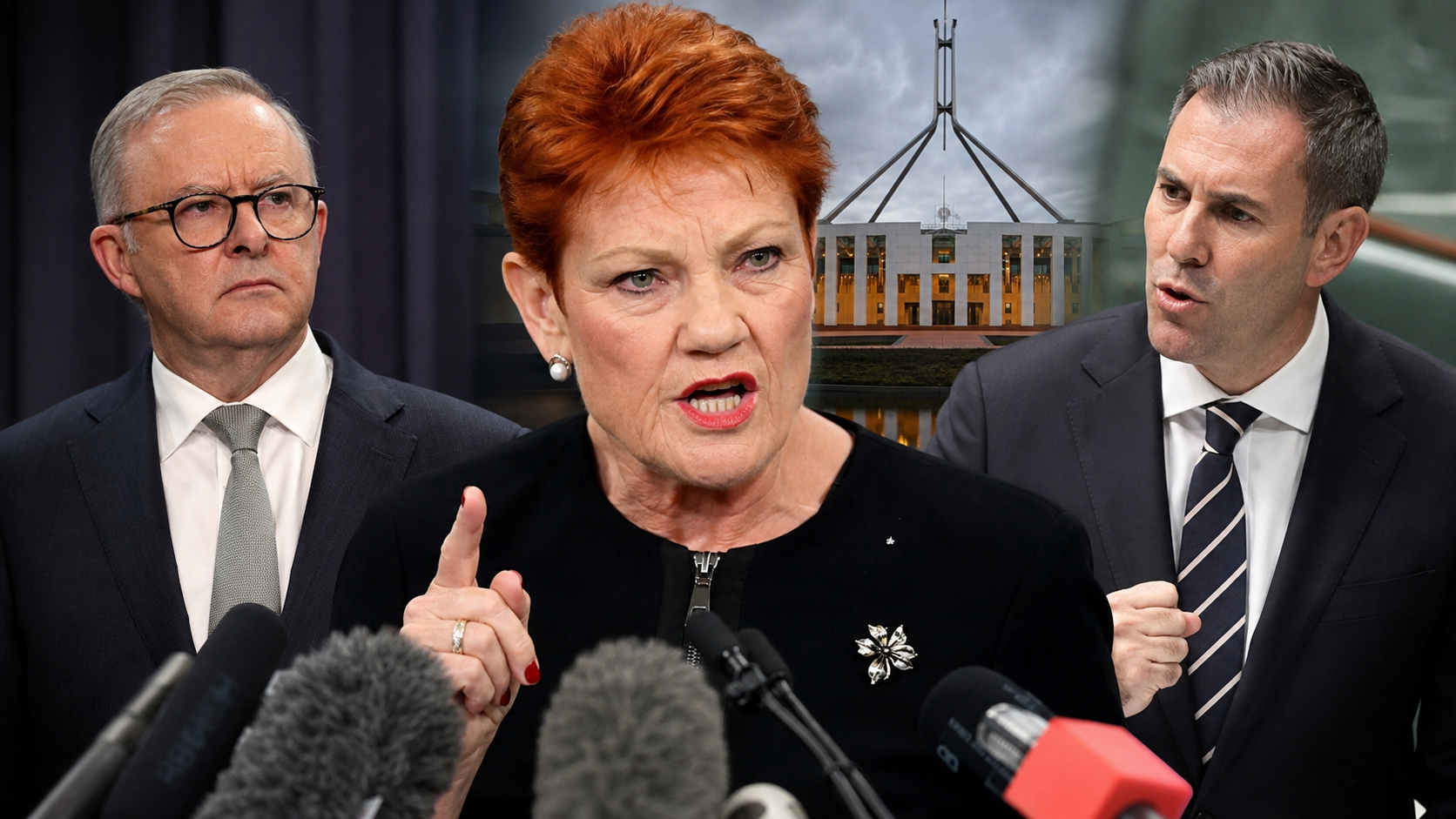
With One Nation surging to an unprecedented 30 percent in national primary polling and seizing a historic lower-house seat in Western Australia’s outer-suburban stronghold of Secret Harbour, Labor abandoned its posture of amused disdain. Albanese declared that hard-right populists were “on the march,” peddling a politics that is “dangerous, divisive, and downright dishonest.” Chalmers doubled down, warning against a “dangerous and divisive coalition of chaos” between the Liberals, Nationals, and Hanson.
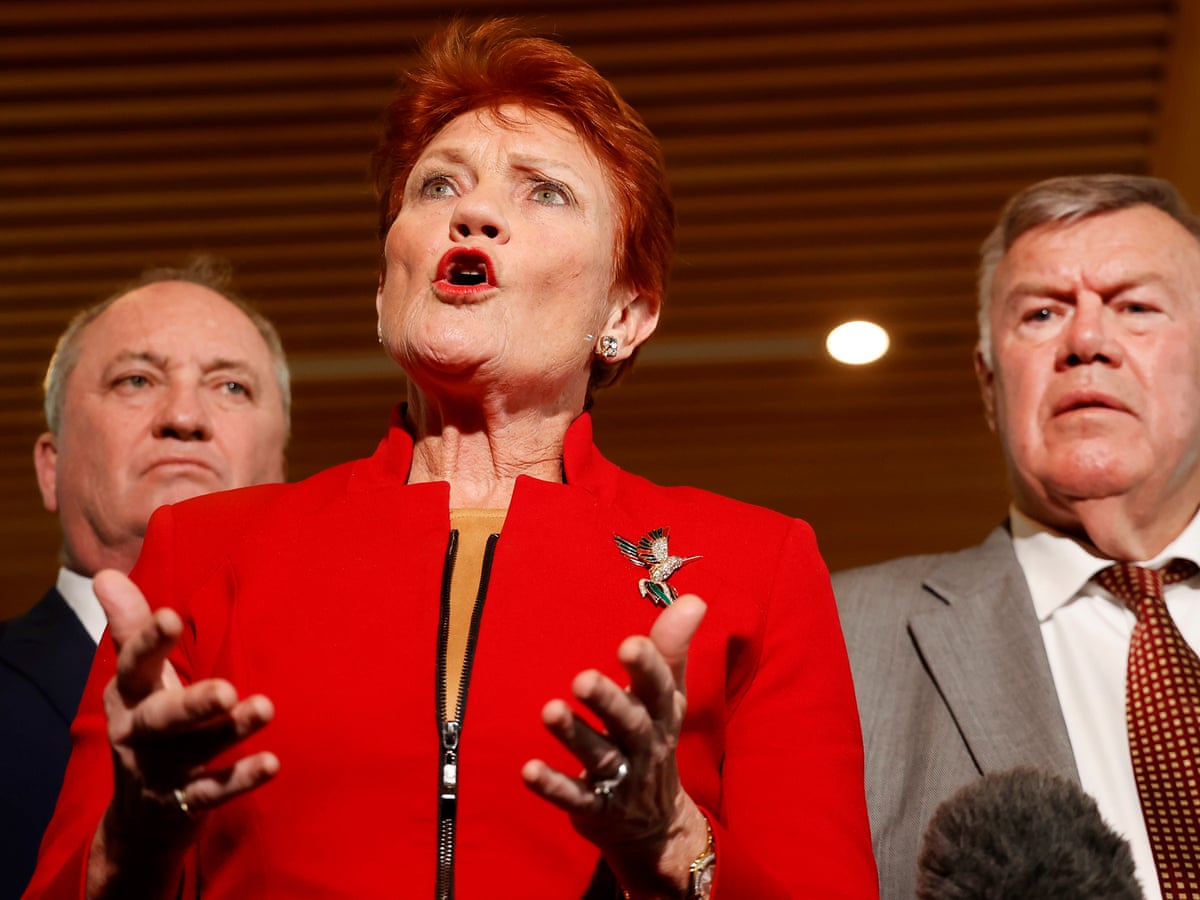
Hanson did not retreat into grievance. She counterattacked with surgical precision. Stepping before the cameras, she accused Australia’s two most powerful men of “normalizing and encouraging potential incitements to violence” by branding a democratically elected movement and its supporters as threats to the nation. Invoking recent political violence overseas, she demanded that the Prime Minister “turn the temperature down.”
The exchange is not a routine spat over parliamentary etiquette. It marks the opening salvos of an existential struggle over the boundaries of democratic speech, the collapse of Australia’s century-old two-party duopoly, and the dangerous territory that opens when a ruling class begins to view a third of its electorate not as political rivals, but as a national security risk.
1. The News Story: The Rhetorical Rupture
The immediate clash erupted in the wake of the Queensland Labor State Conference, where senior figures laid out their strategic counter-offensive against One Nation’s historic electoral resurgence.
┌─────────────────────────────────────────────────────────────────┐
│                    THE CLASH OF RHETORIC                       │
├───────────────────────────────┬─────────────────────────────────┤
│ THE LABOR LEADERSHIP          │ PAULINE HANSON & ONE NATION     │
├───────────────────────────────┼─────────────────────────────────┤
│ • Populists peddle "dangerous,│ • Words have consequences:      │
│   divisive, dishonest" policy │   "That is how political        │
│ • "Must defeat them; we owe   │   violence is incited"          │
│   it to history"              │ • Voters entitled to choose     │
│ • Right-wing alliance framed  │   without being branded a       │
│   as "coalition of chaos"     │   danger to their own nation    │
│ • Scrutiny demanded as minor  │ • Labor hypocritically raising  │
│   party support expands       │   temperature after preaching   │
│                               │   civic restraint               │
└───────────────────────────────┴─────────────────────────────────┘
The Political Landscape and Key Figures
At the center of this collision are three figures operating under intense electoral pressure:
-
Anthony Albanese: The Prime Minister who built his national brand on conciliation, unity, and lowered political temperature—most visibly reiterated when heightened tensions and security threats forced his temporary evacuation from The Lodge. In Brisbane, however, Albanese pivoted from consensus-builder to wartime leader, framing the populist right as an existential danger that Labor owes “to history” to defeat.
-
Jim Chalmers: The Treasurer, widely seen as Labor’s strategic architect and ideological standard-bearer. Chalmers shifted the critique from abstract populist theory to practical arithmetic, warning voters that a vote for Hanson could produce a governing pact uniting the Liberals, Nationals, and One Nation—a combination he explicitly labeled a threat to Australia’s cohesion, economy, and people.
-
Pauline Hanson: The founder of One Nation, entering her fourth decade in public life. Having survived political excommunication, electoral wipeouts, and prison time, Hanson has evolved from a raw, populist outsider into a seasoned media operator capable of using the establishment’s rhetorical overreach to expand her base.
The Catalysts: A Historic Realignment
Two seismic political events transformed what would have been ignored as standard partisan sniping into a national emergency for the government:
                  [ THE DUAL CATALYSTS ]
                             │
       ┌─────────────────────┴─────────────────────┐
       ▼                                           ▼
[ SECRET HARBOUR BY-ELECTION ]           [ NATIONAL PRIMARY SURGE ]
Luke Herdegen takes WA seat;           Newspoll puts One Nation at 30%;
Labor collapses in heartland;           Labor drops to 29%;
First ON lower-house win in WA.         Coalition stranded at 19%.
-
The Fall of Secret Harbour: When One Nation candidate Luke Herdegen captured the Western Australian lower-house electorate of Secret Harbour, the tectonic plates of state and federal politics shifted. This was not a regional Queensland farming seat; it was an outer-suburban, working-class commuter belt that Labor had held in various forms for decades. The Liberals were relegated to third place. It delivered empirical proof that One Nation’s support could convert into parliamentary seats.
-
The 30% Polling Threshold: A subsequent Newspoll registered One Nation at 30 percent of the national primary vote, eclipsing Labor at 29 percent and leaving the Coalition trailing at 19 percent. While Australia’s preferential voting system makes translating primary vote percentages into 76 federal House of Representatives seats a complex exercise, a minor party commanding nearly a third of the electorate can no longer be dismissed as a protest vote.
The Accusation of Incitement
Hanson’s counter-offensive seized upon the vulnerability of Labor’s terminology. Pointing to the recent shock of high-profile political violence overseas—including the targeted killing of veteran British politician Ann Widdecombe—she argued that repeatedly describing a democratic party as a “threat” or “danger to the country” creates a moral justification for violence in the minds of extremists.
While no evidence links Labor’s conference speeches to any specific physical threat or violent act, Hanson effectively inverted the moral high ground: accusing the Prime Minister of violating his own calls for restrained political discourse the moment his parliamentary majority came under pressure.
2. My Professional Perspective
Having spent three decades tracking democratic politics across Washington, Fleet Street, and Canberra, I have observed that democracies rarely unravel overnight. They degrade through a series of small, linguistic boundary shifts.
The battle between Anthony Albanese and Pauline Hanson is not about policy scrutiny versus free speech. It is about the dangerous transition from ideological disagreement to political excommunication.
What People Have Overlooked: The Asymmetry of the “De-Platforming” Strategy
For years, the political establishment utilized a predictable playbook to manage Pauline Hanson: containment. You mocked her grammar, boycotted her press conferences, passed preference-deal exclusions, and assured suburban voters that a vote for One Nation was an act of economic illiteracy and social backwardness.
That playbook relied on a single arithmetic foundation: One Nation had to stay below 10 percent.
When a protest party polls at 7 percent, you can isolate it. You can tell the other 93 percent of the country that those voters are an aberrant fringe.
┌────────────────────────────────────────────────────────┐
│               THE POLLING INFLECTION POINT             │
├───────────────────────────┬────────────────────────────┤
│ THE QUARANTINE PLAYBOOK   │ THE 30% CRISIS             │
│ (One Nation @ 5–9%)       │ (One Nation @ 30%)         │
├───────────────────────────┼────────────────────────────┤
│ • Dismiss as regional     │ • Represents nearly 1 in 3 │
│   fringe protest          │   Australian voters        │
│ • Moral shame suppresses  │ • Normalizes across outer- │
│   preference flows        │   suburban mortgage belts  │
│ • Mainstream media limits │ • Attacks on party are read│
│   serious policy debate   │   as attacks on the voter  │
└───────────────────────────┴────────────────────────────┘
When that party reaches 30 percent, the math inverts. You are no longer talking about a radical fringe. You are talking about the plumber in Rockingham, the aged-care worker in Penrith, the truck driver in Townsville, and the small business owner in suburban Adelaide. You are talking about roughly one out of every three Australian citizens walking down the street.
When the Prime Minister of a country stands up and describes a movement supported by one-third of the population as “dangerous” and a “threat to our nation,” he is no longer attacking a political candidate. He is inadvertently declaring a third of his own country to be a domestic liability.
This is Hanson’s strategic opening. She is not defending her party platform on industrial relations or climate targets; she is stepping in front of her voters and saying: Look at how they look down on you. They don’t just dislike my policies; they despise your democratic right to vote for me.
The Deeper Meaning: The Failure of the Centrist Monologue
Why is One Nation sitting at 30 percent? The political class wants to believe it is the result of digital disinformation, right-wing echo chambers, or economic anxiety weaponized by opportunistic populists.
That is the diagnosis of an elite that refuses to look in the mirror.
The surge in support behind One Nation and the collapse of the major party vote is the direct consequence of a decades-long Centrist Monologue.
For twenty years, Labor and the Coalition operated under a shared managerial consensus. They agreed on high immigration targets to paper over structural deficits in GDP. They agreed on complex, subsidized transitions toward net-zero energy grids that coincided with spiking household power bills. They agreed on foreign policy alignments and central bank orthodxies.
THE REALITY CHASM
┌──────────────────────────────┐       ┌──────────────────────────────┐
│     CANBERRA'S DASHBOARD     │       │   OUTER-SUBURBAN REALITY     │
│ • Headline GDP growth stable │       │ • Real wages squeezed        │
│ • Net-zero targets codified  │  VS.  │ • Rents up 40%, mortgages up │
│ • Multi-year budget surplus  │       │ • Power bills doubling       │
│ • Civic language managed     │       │ • Feeling ignored by capital │
└──────────────────────────────┘       └──────────────────────────────┘
                               │
                               ▼
        The Anti-Establishment Realignment (Secret Harbour)
When working-class communities in places like Secret Harbour raised their hands and said, “We cannot afford our mortgages, our kids can’t buy a home, our local hospitals are gridlocked, and our wages haven’t kept pace with grocery bills,” the major parties offered them incremental superannuation adjustments and rhetorical lectures about social cohesion.
Hanson did not create this discontent. She merely provided an address for it.
When Albanese and Chalmers attack One Nation as “dangerous,” they are attempting to use the language of moral panic to solve what is fundamentally an economic and institutional failure. But moral condemnation does not pay a variable-rate mortgage.
The Weaponization of “Safetyism” in Political Speech
There is a subtle, corrosive shift in Hanson’s own counter-strategy that deserves rigorous journalistic scrutiny.
By framing Labor’s harsh political criticism as an incitement to violence, Hanson is deploying the contemporary left’s favorite weapon: the language of harm and safetyism.
For years, progressive institutions have argued that “speech is violence,” that certain ideas create unsafe environments, and that public figures must be held accountable for the emotional and physical impact of their rhetoric.
Hanson has taken that exact conceptual framework and weaponized it against the government.
THE SAFETYISM CYCLE
Progressive Orthodoxy: "Words are violence; harsh rhetoric causes real-world harm."
                               │
                               ▼
Hanson's Appropriation: "Branding One Nation a threat incites violence against us."
                               │
                               ▼
Result: Democratic policy debate is chilled under the threat of physical culpability.
This is a dangerous road for Australian democracy. A government must have the absolute right to call an opposition policy catastrophic, economically illiterate, or socially divisive. To argue that calling an opponent’s platform “dangerous” is equivalent to ordering a physical hit on a candidate is to degrade the meaning of incitement.
If politicians are legally or socially prohibited from warning the public that a rival party’s economic blueprint will crash the currency, or that its social policies will fracture community relations, democratic accountability ceases to exist.
Both sides are engaged in a mutual escalation: Labor delegitimizes the voter, while Hanson delegitimizes robust political debate.
What Questions Remain Unanswered?
As this confrontation accelerates toward the next federal election, four investigative questions demand answers:
-
How Will Preferential Flows Function? If One Nation secures 25 to 30 percent of the primary vote, Australia’s preferential voting system will enter uncharted territory. Will the Coalition formally break with tradition and direct preferences to One Nation ahead of Labor in marginal seats? If so, what policy concessions—on immigration, energy, and the judiciary—has the Liberal-National leadership privately discussed?
-
Where Is Labor’s Economic Firebreak? Labor cannot win a rhetorical war on patriotism and national threat against an entrenched populist movement. What specific, structural economic interventions—in housing supply, energy costs, and migration caps—is the Albanese cabinet prepared to deploy to halt the bleed of working-class voters in outer-metropolitan seats?
-
The Parliamentary Cohesion Question: Can One Nation maintain institutional discipline? The historic vulnerability of minor parties in Australia—from the Australian Democrats to Clive Palmer’s United Australia Party—has been internal fragmentation. Who are the candidates One Nation is preselecting in suburban seats, and will they hold together under parliamentary pressure, or collapse into factional infighting?
Australia’s political architecture was built for two players. For a century, the House of Representatives was designed like a tennis court: Labor on one side, the Coalition on the other, exchanging volleys of power with predictable, institutional grace.
That court has been dismantled.
The spectacle of a Prime Minister declaring a minor party a threat to history, while that party’s leader warns the Prime Minister that he is inciting bloodshed, is not an isolated skirmish. It is the sound of a traditional political order realizing that its monopoly on authority has evaporated.
Anthony Albanese cannot preach civic restraint when his house is calm, only to reach for the vocabulary of existential terror the moment his majority slips into the danger zone. When you tell voters that their democratic choice is dangerous to their own country, they do not apologize and return to the fold. They dig in. They conclude that the system itself is their adversary.
Pauline Hanson has survived thirty years because she understands this dynamic intimately. She does not need the approval of the Canberra press gallery; she needs only the anger of the citizen who feels that the political class views their struggles with contempt.
Australia is entering a fragmented political era. If its leaders wish to protect social cohesion, they must abandon the rhetoric of existential threat and demonstrate that they can govern with tangible competence.
You do not defeat populism by scolding its voters. You defeat it by making their lives workable again.
When the stewards of a democracy begin warning that the voters themselves have become a danger to the nation, who is truly failing the test of democratic legitimacy—the citizens looking for an alternative, or the leaders who drove them there?