

“Where Is the Money?”: Pauline Hanson Presses Labor Ministers on Capacity Investment Scheme Risks
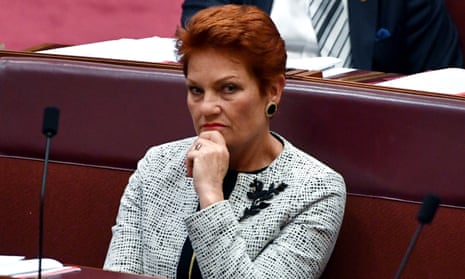
A tense Senate exchange has placed the federal government’s Capacity Investment Scheme under renewed scrutiny, as One Nation Senator Pauline Hanson questions Finance Minister Katy Gallagher over the program’s potential long-term liabilities and budget transparency.
The debate over Australia’s energy transition took a sharp financial turn inside Parliament House as One Nation leader Senator Pauline Hanson pressed senior government ministers over the true cost of the federal Capacity Investment Scheme.
The grilling focused directly on how the multibillion-dollar renewable energy underwriting program is accounted for in the 2025–26 federal budget. Hanson’s central argument was straightforward: taxpayers deserve absolute clarity over potential financial exposures and contingent liabilities created by government-backed energy market interventions.
While the federal government insists that all necessary fiscal risks are properly captured within official budget documentation, the exchange underscores growing political friction over how Australia finances its sweeping shift toward renewable generation and storage.
What Happened in the Senate?
The confrontation unfolded during parliamentary proceedings as Hanson sought specific financial details regarding the Capacity Investment Scheme.
Hanson directed her questions to Finance Minister Katy Gallagher, asking for the total projected cost of the scheme in the 2025–26 Budget and whether those financial obligations were explicitly included among the government’s quantified contingent liabilities.
A brief procedural dispute erupted when Foreign Minister Penny Wong intervened, arguing that energy and climate policies fall outside the Treasury portfolio. However, the President of the Senate permitted the question to proceed.
Responding to the inquiry, Gallagher stated that she did not have the specific budget papers on hand during the exchange. Nevertheless, she indicated that costs associated with the scheme would indeed be captured within the government’s contingent liabilities and statement of risks, noting concurrently that an independent review of the scheme was currently underway.
Understanding the Capacity Investment Scheme
To understand why the financial accounting has sparked debate, it is necessary to examine how the Capacity Investment Scheme operates.
Established to accelerate investment in new clean-generation and energy-storage projects, the scheme relies primarily on underwriting arrangements rather than direct, upfront government spending. Under this mechanism, the Canberra administration provides revenue support to give private investors commercial certainty when building new electricity capacity, such as large-scale battery storage and dispatchable renewables.
Because these arrangements involve underwriting and future commitments, their financial implications cannot always be measured by examining simple annual expenditure line items.
Contingent liabilities represent potential future obligations that depend entirely on market conditions and future circumstances. Unlike an immediate budget outlay, the government may never be required to pay the full financial maximum represented by a contingent obligation, but the underwriting exposure remains real.

Why the Financial Exposure Matters to Taxpayers
Hanson’s parliamentary questioning taps into a broader public debate regarding government accountability during major economic transitions.
As Australia’s ageing coal-fired power stations retire, the national electricity grid requires massive capital injections to maintain reliability and prevent supply shortfalls. The federal budget itself projects substantial fiscal pressures, with total payments for 2025–26 estimated at roughly $777.5 billion against receipts of $735.4 billion, yielding an underlying cash deficit of $42.1 billion.
Critics argue that when the state underwrites private energy infrastructure, taxpayers effectively absorb underlying market risks. Hanson contends that these potential obligations require maximum transparency, ensuring that citizens understand what financial exposure the public balance sheet is carrying as the energy market changes.
The Government’s Position: Encouraging Private Investment
The Albanese government defends the Capacity Investment Scheme as an essential policy tool to guarantee future electricity reliability and drive down consumer costs over the long term.
Ministers argue that government intervention is necessary to provide the commercial certainty required for large-scale infrastructure projects during a period of unprecedented market disruption. By using underwriting frameworks rather than direct nationalization, the strategy aims to mobilize billions of dollars in private-sector capital to build out necessary storage and generation.
Furthermore, official budget papers link the expanded framework to regional reliability projects, such as those integrated into New South Wales’ electricity infrastructure framework, designed to keep lights on and stabilize energy grids.
What Happens Next in the Energy Funding Debate?
The Senate clash did not uncover hidden fiscal mismanagement or reveal undisclosed taxpayer debts. Instead, it exposed a fundamental ideological and procedural disagreement over the level of detail governments must provide when managing complex, long-term market interventions.
As the Capacity Investment Scheme undergoes its scheduled review, future budget updates and parliamentary estimates hearings are expected to provide deeper transparency into project outcomes, underwriting agreements, and long-term risk assessments.
The underlying policy question, however, extends far beyond a single afternoon in the Senate: how can modern governments successfully balance the urgent need for massive infrastructure investment with their core responsibility to clearly disclose financial risks to the taxpaying public?
How do you think governments should balance underwriting private energy projects against disclosing potential long-term financial liabilities to taxpayers?