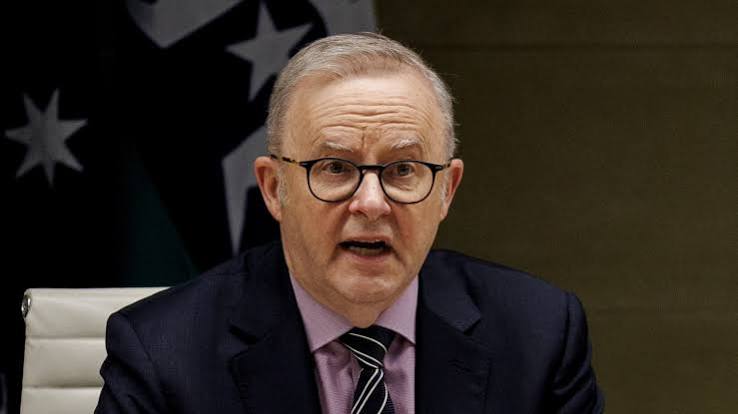
Pacific Climate Summit Under Pressure as Labor Insists World Leader Turnout Won’t Define Success. u1

The Edge of the Rising Tide: Behind Canberra’s High-Stakes Pacific Climate Gamble
In the corridors of Parliament House in Canberra, where fluorescent lighting hums over polished marble, political battles are waged with spreadsheets, press releases, and poll numbers. But more than two thousand miles to the northeast, across the vast, azure expanse of the South Pacific, the currency of survival looks vastly different: it is measured in centimeters of encroaching brine, crumbling coral seawalls, and freshwater wells turning brackish overnight.
Next month, these two starkly contrasting worlds are scheduled to collide.
From October 5 to 8, the international diplomatic caravan will converge on Suva, Fiji, and the precarious coral atolls of Tuvalu for the official Pacific Pre-COP summit. Conceived as the moral and operational curtain-raiser for the United Nations Climate Change Conference (COP31)—scheduled to take place from November 9 to 20 in Antalya, Türkiye—this gathering was engineered to do something international climate diplomacy rarely achieves: drag the world’s power brokers out of sterile convention centers and plant their wingtips directly into the sodden sand of the planetary front lines.
Yet, with just four weeks remaining before delegates touch down on the tarmac, the summit has ignited a fierce political dispute within Australia. Critics in Canberra have seized upon an initial guest list that lacks the heavyweights of the global order, turning what was pitched as a diplomatic breakthrough into a domestic political liability for Prime Minister Anthony Albanese’s Labor government.
The Anatomy of an Unorthodox Compromise
To understand how Australia found itself underwriting an international summit across two independent Pacific island nations, one must revisit the delicate diplomatic maneuvering that shaped the COP31 hosting agreement.
For months, Australia and Türkiye were locked in a diplomatic standoff, both bidding to host the 2026 UN climate negotiations. For Australia, hosting COP had long been envisioned as a joint endeavor with its Pacific neighbors—a grand gesture signaling that Canberra was back at the multilateral table after a decade of regional friction over fossil fuel policy. However, facing a deadlocked vote and the risk of diplomatic paralysis, a compromise was struck.
Under the negotiated settlement:
-
Antalya, Türkiye, secured the rights to host the formal COP31 mega-conference and its marquee World Leaders’ Summit.
-
Australia was awarded the pivotal role of President of Negotiations, placing Climate Change and Energy Minister Chris Bowen at the helm of crafting the consensus text and brokering the final treaty mechanics among nearly 200 nations.
-
To preserve the Pacific character of the joint bid, Fiji agreed to host the primary Pre-COP preparatory sessions, while Tuvalu was selected to host a specialized leaders’ retreat.
The mandate was clear: place the existential vulnerabilities of Small Island Developing States (SIDS)—namely adaptation finance, loss and damage, ocean preservation, and the rapidly fading target of limiting global warming to 1.5 degrees Celsius—at the center of the agenda before negotiations move to the Mediterranean coast.
The Roster and the Backlash
The controversy erupted when the initial attendance sheet was made public. Announcing the preliminary roll during the Pacific Islands Forum meeting in Koror, Palau, Fijian Foreign Minister Sakiasi Ditoka confirmed that heads of state or government from five nations outside the immediate Pacific island grouping had formally committed:
-
Antigua and Barbuda
-
Cabo Verde
-
Thailand
-
The Maldives
-
Timor-Leste
While an unspecified contingent of Pacific heads of government will also attend, the world’s major greenhouse gas emitters and wealthiest industrialized democracies—the nations whose industrial policies dictate global atmospheric trajectories and whose treasuries finance multilateral climate funds—were conspicuously absent from the head-of-state ledger. Economic powerhouses such as Germany, Mexico, and South Korea have signaled they will send ministerial-level delegations rather than prime ministers or presidents.
In Australia, the political opposition wasted no time framing the gathering as an expensive misfire. Shadow Minister for Energy Dan Tehan denounced the summit as an overseas “talkfest,” demanding complete transparency over invitations and contracts. Tehan argued that working Australian families, currently navigating painful cost-of-living pressures and soaring energy bills, are being forced to bankroll an exclusive international forum that the world’s most powerful leaders are treating as optional.
The debate has zeroed in on the balance sheet:
-
Event and Broadcast Contracts: Approximately $19.2 million to $20 million has been committed directly to logistics, event management, secure communications, and international broadcasting infrastructure required to link the remote islands to the global press corps.
-
The Broader Diplomatic Envelope: A far larger sum—$147.8 million over three years—was established under the measure titled Standing with our partners in the Pacific within the federal government’s 2026–27 Budget. While political opponents have conflated this nine-figure sum with the price tag of the four-day Fiji-Tuvalu conference, the budget papers specify that this allocation finances Australia’s entire three-year COP31 negotiating apparatus, regional trade initiatives, bilateral climate partnerships, and institutional capacity-building across the Pacific.
The Counteroffensive: Principles Over Headcounts
Confronted by daily headlines questioning the return on investment, the Albanese government has mounted a firm defense.
Appearing on News24 Sunday Agenda, Assistant Minister for Foreign Affairs and Trade Matt Thistlethwaite was asked whether the gathering would be branded a failure if the world’s most influential leaders declined to travel to the South Pacific.
“No, it won’t,” Thistlethwaite answered. “We’re listening to what our Pacific neighbors are telling us.”
Thistlethwaite pointed out that in diplomacy, working sessions driven by key cabinet ministers and veteran negotiators often yield more tangible progress than the choreographed photo opportunities that accompany visiting presidents. More importantly, he argued, the summit was never meant to be a vanity project for Canberra; it was designed around the urgent priorities articulated by Pacific leaders themselves—topsoil erosion, ruined staple crops, salt-poisoned aquifers, and vital infrastructure washed into the sea.
Prime Minister Anthony Albanese echoed this position at the Pacific Islands Forum in Palau, rebuffing suggestions that the event’s worth could be calculated purely by headcount. Dismissing the gathering because Western superpowers opted out of a 24-hour trans-Pacific flight, Albanese argued, fundamentally disrespects the Pacific’s right to command the international stage on its own terms.
In Tuvalu, Prime Minister Feleti Teo has championed the leaders’ retreat as an unprecedented opportunity. For decades, Tuvaluan diplomats have traveled to Geneva, New York, Paris, and Sharm el-Sheikh, delivering speeches about their low-lying atolls sinking beneath the waves. Now, for the first time, visiting decision-makers will stand on the narrow slithers of coral that make up Funafuti, looking out at the Pacific Ocean with no place left to retreat.
Crucially, the summit is not merely symbolic; it carries a distinct operational objective: rallying international capital behind the Pacific Resilience Facility (PRF). Ratified earlier this year by Australia and Fiji, the PRF is a Pacific-owned, Pacific-led financing trust designed to bypass slow-moving multilateral development banks and funnel grants directly into community-level seawalls, water catchment systems, and disaster preparedness.
Whether that operational objective can survive the domestic political storm, however, remains the defining question heading into October.
2. My Professional Perspective
Over thirty years of reporting from war zones, international treaty summits, and corridors of power from Washington to Canberra, I have developed an instinctive skepticism of government talking points—both from those who sell multilateral conferences as world-saving breakthroughs and from those who dismiss them as taxpayer-funded junkets.
When you strip away the partisan spin, you realize that the controversy surrounding the Pacific Pre-COP is not actually about travel itineraries, ministerial flight manifests, or whether twenty million dollars represents good value for an international broadcast feed.
It is about something much rawelier, more uncomfortable, and deliberately obscured: the collision between domestic political survival, long-term geopolitical architecture, and the bitter, unspoken truth about global climate negotiations.
1. The Real Reason the Superpowers Aren’t Showing Up
The domestic debate in Australia has framed the absence of leaders like the American President or European heads of state as a diplomatic failure by the Albanese government. That narrative is politically potent, but analytically shallow.
Let us be completely honest about why leaders of the world’s major emitting nations are reluctant to set foot on Tuvalu or Fiji: to stand on an atoll that is two meters above sea level is to enter a moral trap.
In the air-conditioned plenary halls of Dubai, Glasgow, or Baku, a leader from a major Western democracy or a fossil-fuel-reliant Asian power can deliver a carefully calibrated speech about “aspirational transitions,” sign non-binding declarations, and slip out via a private motorcade. The geometry of a massive convention center diffuses accountability. You are surrounded by thousands of suited diplomats, corporate lobbyists, and technical working groups.
Tuvalu does not afford that luxury.
Funafuti is a narrow ribbon of land, in some places barely twenty meters wide, flanked on one side by a lagoon and on the other by the crashing surf of the open ocean. There are no five-star hotels to retreat to. There are no corporate pavilions to distract the cameras. When you look a Tuvaluan village elder or a schoolchild in the eye on that island, you are standing in the crime scene of the 21st century.
If a G7 leader visits Tuvalu, they are immediately confronted with the bill. Pacific leaders are not looking for polite expressions of sympathy; they are demanding legally binding, unencumbered grants for Loss and Damage, capital contributions to the Pacific Resilience Facility, and hard commitments to phase out the coal, oil, and gas exploration that fuels the developed world’s economies.
By sending ministers instead of heads of state, major powers are practicing classic diplomatic insulation. They are sending functionaries with strict negotiating mandates who lack the constitutional authority to make spontaneous financial pledges on the tarmac. Canberra understands this dynamic intimately, even if it cannot say so publicly. The opposition attacks the government for failing to attract big names; the deeper reality is that those big names deliberately avoid forums where the moral calculus cannot be finessed.
2. The Geopolitical Shadow Game: Climate as Hard Security
The second detail largely missing from the mainstream coverage is the massive geopolitical shadow looming behind this entire endeavor. We cannot view this summit through the lens of environmental policy alone. In the contemporary Pacific, climate policy is national security policy, and national security policy is climate policy.
For the past five years, the South Pacific has become the most contested body of water on earth. Beijing’s diplomatic, economic, and security push into the region—punctuated by its security pact with Solomon Islands and extensive infrastructure loans across Melanesia—has kept defense strategists in Canberra and Washington awake at night.
Australia’s most significant vulnerability in counteracting Chinese influence across the Pacific has never been military or economic; it has been environmental credibility. For decades, Pacific leaders have stated plainly at the Pacific Islands Forum: The greatest threat to our sovereignty is not a foreign navy; it is the rising sea. Whenever Australia attempted to lecture the region on security partnerships while simultaneously approving new coal mines and resisting ambitious emissions targets, Pacific diplomats saw hypocrisy.
The $147.8 million allocation in the budget is not an environmental handout; it is strategic statecraft. By securing the presidency of the COP31 negotiations and underwriting the Fiji-Tuvalu meetings, Labor is attempting to execute a decisive geopolitical pivot. Canberra is saying to Suva, Port Moresby, Honiara, and Tarawa: We are using our diplomatic muscle to place your survival at the center of the Western alliance’s agenda.
If Australia fails to lead on this front, Beijing will gladly fill the vacuum. China does not have to worry about parliamentary question time or opposition press releases criticizing event management contracts. What the Coalition brands an overseas “talkfest” is, in the dry language of defense white papers, the price of maintaining Australia’s status as the security partner of choice in its own maritime backyard.
3. Australia’s Own Divided Soul
Yet, here lies the great paradox at the heart of Australia’s position—one that foreign correspondents notice immediately, but domestic political coverage often glosses over.
While Chris Bowen prepares to assume the presidency of global negotiations, and while Matt Thistlethwaite tours Sunday morning television studios defending the Pacific summit, Australia remains the world’s third-largest exporter of fossil fuels.
The Pacific island nations who will gather in Fiji next month are acutely aware of this schizophrenia. They know that even as Australia co-sponsors the Pacific Resilience Facility, Australian coal and liquefied natural gas continue to flow to ports across Asia, generating the very greenhouse gas molecules that are thermal-expanding the waters around Tuvalu.
This is the tension that makes the upcoming Pre-COP so fraught for Canberra. It is a tightrope walk over an abyss. If Australia merely uses the summit to burnish its diplomatic credentials without advancing genuine, high-dollar climate finance and confronting its own extraction economy, the Pacific will eventually call the bluff. You cannot play the noble protector of the islands while exporting the fuel that drowns them.
4. The Unanswered Questions
As the clock winds down toward the October 5 opening ceremony, several critical questions remain entirely unaddressed by the official press conferences:
-
What happens if the Pacific Resilience Facility comes out of Fiji underfunded?If Western powers send second-tier delegations that offer only token contributions, does Australia step in to bridge the capital shortfall, or does the facility become another underfunded multilateral shell?
-
What is the breaking point for Tuvalu’s patience?Prime Minister Feleti Teo has placed immense faith in this gathering. If the international community treats this summit as a mere photo-op without delivering enforceable commitments at COP31 in Türkiye, does the Pacific walk away from the negotiation process entirely, opting instead for high-stakes legal battles at the International Court of Justice?
-
Why has the technical infrastructure become so expensive?The opposition has a legitimate right to scrutinize public spending. Building international-standard broadcast hubs and secure communication nodes on remote atolls like Funafuti is notoriously complex and costly. But why were these contracts awarded with such opacity, providing easy ammunition to those who wish to sink the entire diplomatic strategy?
Beyond the headlines of attendance tallies and political bickering, this story is a mirror. It forces us to confront how modern democracies balance urgent, near-term domestic anxieties against long-term civilizational survival.
When the history of our era is written, it will not be penned in the rhetoric of political soundbites or the accounting ledgers of short-term budget cycles. It will be carved into the physical geography of our planet—into the coastlines that survived, and those that were surrendered to the waves.
The political squabble currently playing out in the corridors of Canberra over the Fiji and Tuvalu summit is profoundly revealing. It demonstrates how easily an existential reality can be diminished into an ideological weapon. To look at a four-day meeting on the front lines of sea-level rise and see only a balance-sheet entry of twenty million dollars, or to measure its legitimacy solely by whether the world’s most powerful presidents arrive with motorcades, is to misunderstand the fundamental crisis of our time.
Diplomacy is rarely an arena of cinematic victories. It is a grueling, unglamorous process of inching forward across stubborn terrain. For the people of Tuvalu, whose entire nation rests barely a few paces above the high-tide line, this summit is not a political football or an abstract policy exercise. It is a desperate, dignified demand for witness. It is an insistence that before their ancestral homes, their traditions, and their burial grounds are swallowed by the Pacific, the people who hold the levers of global power must look them in the eye and make their choice.
Canberra’s decision to underwrite this summit is messy, politically risky, and undeniably fraught with internal contradictions. Yet it remains one of the few instances where a middle power has attempted to re-center global diplomacy around those who have the most to lose, rather than those who have the most to spend.
Whether the October summit transforms into a landmark turning point or collapses into another forgotten footnote will not be decided by the guest list that lands in Suva next month. It will be decided two months later, in the winter chill of Antalya, when Minister Chris Bowen sits in the president’s chair at COP31. It is there that Australia will have to prove whether it was simply renting Pacific moral authority for diplomatic cover, or whether it is genuinely prepared to fight for their survival.
As the delegates prepare their briefings and the critics sharpen their attacks, one question remains hanging over every debate:
If the wealthiest nations on Earth consider the cost of bearing witness to a sinking nation too high, what price will the rest of the world inevitably pay when the water finally reaches our own doorsteps?