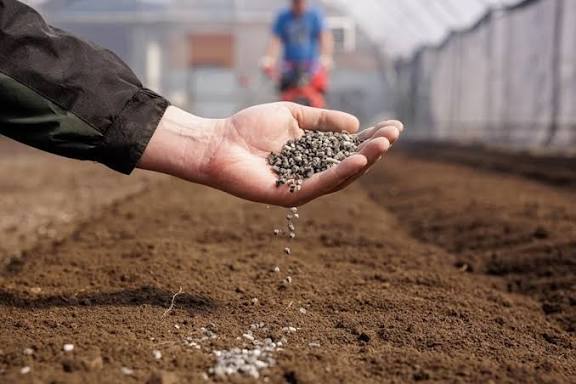

The Gas-to-Grain Trap: The Hidden Vulnerability Beneath Australia’s Food Bowl
Australia presents itself to the world as an agricultural titan. In any given harvest year, the nation’s farmers generate enough grain, beef, dairy, and horticulture to nourish more than 70 million people—feeding its domestic population nearly three times over and standing as an indispensable grain merchant to the Indo-Pacific.
Yet beneath this expansive agricultural prowess lies an acute, systemic vulnerability: Australian agriculture operates on an almost entirely imported diet of synthetic soil nutrients.
To maintain commercial crop yields across millions of hectares of wheat, barley, canola, and sorghum, farmers require intensive applications of synthetic nitrogen, particularly urea ($CH_4N_2O$). Over the past three decades, progressive industrial rationalization and domestic energy market shifts have hollowed out Australia’s domestic chemical manufacturing base.
┌─────────────────────────────────────────────────────────────────────────┐
│               AUSTRALIA'S UREA FERTILISER EXPOSURE (2026)               │
├────────────────────────────────┬────────────────────────────────────────┤
│ Domestic Urea Production       │ 0% (100% Import Reliant)               │
│ Middle East Sourcing Share     │ 62% Direct Imports                     │
│ Feedstock Dependency           │ Much of remaining 38% uses M.E. gas    │
│ Annual Domestic Urea Demand    │ ~2.5 to 3.0 Million Metric Tonnes      │
│ Peak Critical Application Window│ May–July (Winter Cropping Planting)    │
└────────────────────────────────┴────────────────────────────────────────┘
Following the closure of Incitec Pivot’s Gibson Island synthesis plant in Brisbane, Australia was left without an operating facility capable of manufacturing fertiliser-grade urea. Consequently, the nation became entirely reliant on cargo vessels traversing thousands of nautical miles to deliver the foundational input of its food supply.
Main Events: A Chokepoint Crisis and One Nation’s Intervention
The fragility of this arrangement transformed from a theoretical trade risk into an operational emergency in early 2026.
Escalating military conflict in the Middle East severely disrupted commercial shipping lanes through the Persian Gulf and the Strait of Hormuz. Maritime insurance premiums spiked, loading schedules stalled, and chemical synthesis plants across the Gulf were hobbled.
The shockwaves struck Australian regional supply hubs within days. Major distributors—including Incitec Pivot Fertilisers—faced cargo cancellations, forcing suppliers into an emergency scramble across international spot markets. Spot prices for granular urea climbed rapidly to between A$880 and A$1,000 per tonne at major ports.
To avert a catastrophic supply shortfall during the critical winter planting window, Canberra and commercial importers turned to alternative supply lines in Indonesia and Nigeria, with Export Finance Australia activating emergency lines through its Fuel and Fertiliser Facility. While emergency shipments managed to secure roughly 85% of forecast requirements by July, the scare left growers shaken and demonstrated the precariousness of the agricultural supply chain.
Persian Gulf Disruption ──► Strait of Hormuz Stalled ──► Spot Urea Surges ──► Emergency Pivot to Asia/Africa
Seizing on the crisis, Senator Pauline Hanson formally unveiled One Nation’s Fertiliser Self-Reliance Plan.
Hanson’s blueprint argues that an energy-abundant nation exporting nearly 10 percent of the world’s liquefied natural gas (LNG) should not be held hostage by foreign supply chokepoints to fertilize its own paddocks.
Her proposal links three core elements:
-
Domestic Gas Reservation: Mandating preferential domestic gas allocations at discounted, cost-plus prices for local industrial manufacturers.
-
Scrapping Net-Zero Targets: Repealing Commonwealth carbon reduction frameworks, which One Nation argues have inflated electricity tariffs, penalized heavy chemical manufacturing, and starved new gas exploration projects of capital.
-
Rebuilding Sovereign Fertilizer Plants: Directing state backing toward constructing Australian-owned ammonia and urea manufacturing infrastructure.
Hanson packaged the strategy with a direct consumer appeal: “Australian gas, Australian fertiliser, stronger Australian farmers, and cheaper Australian food.”
Important Entities, Facts, and Nuances
-
The Fertiliser Supply Working Group: In an implicit acknowledgment that fertilizer availability is a matter of national security, the Albanese government established a multi-agency working group. Chaired by the Department of Agriculture, Fisheries and Forestry (DAFF), the group brings together the Department of the Prime Minister and Cabinet, DFAT, Industry, Export Finance Australia, the ACCC, the National Farmers’ Federation (NFF), and Fertilizer Australia to monitor international vulnerabilities.
-
The CSIRO Warning: Research by the Commonwealth Scientific and Industrial Research Organisation (CSIRO) emphasized that Australia’s synthetic nitrogen dependence on the Middle East has increased by more than 20 percentage points since 2011, leaving the nation exposed at both ends of the trading system: vulnerable to import price spikes on nutrients and vulnerable to export volatility on finished grain.
-
The Gas-to-Ammonia Equation: Ammonia synthesis via the Haber-Bosch process relies on natural gas ($CH_4$) not merely as a thermal fuel source, but as the chemical donor of hydrogen. Natural gas accounts for up to 90 percent of the cash operating cost of ammonia production, making local plant economics hostage to domestic wholesale gas contracts.
-
The Perdaman Horizon: The domestic manufacturing vacuum is already slated for a private-sector transformation. The A$6.0 billion Perdaman Project Ceres facility on Western Australia’s Burrup Peninsula—backed by a 20-year gas supply pact with Woodside and a 20-year offtake deal with Incitec Pivot—is advancing toward commercial commissioning by the second half of 2027. Designed to produce 2.3 million tonnes of urea per year, it will be one of the largest single-train plants on Earth.
2. My Professional Perspective
Over three decades spent reporting from farm gates in the Riverina to petrochemical terminals in the Persian Gulf and the corridors of Canberra, I have watched Australian public policy oscillate through cycles of market complacency followed by sudden geopolitical panic.
When a political firebrand like Pauline Hanson steps up with a populist slogan promising that burning more local gas will yield cheaper supermarket groceries, the metropolitan press corps tends to dismiss it as crude economic nationalism.
That dismissiveness is a mistake. Hanson has identified a structural vulnerability in Australia’s economic model. However, her proposed diagnosis and cure contain profound economic distortions that require cold, unvarnished scrutiny.
The Overlooked Detail: The 3,000-Mile Logistics Wall
What Hanson’s blueprint leaves entirely unaddressed is the brutal tyranny of Australian domestic freight logistics.
Consider where Australia’s gas is extracted, where the new mega-plant is being built, and where the wheat actually grows:
                      THE CONTINENTAL DISCONNECT
┌───────────────────────────────────┐     ┌───────────────────────────────────┐
│     WEST COAST PRODUCTION HUB     │     │     EAST COAST AGRICULTURAL HUB   │
├───────────────────────────────────┤     ├───────────────────────────────────┤
│ • Burrup Peninsula (Karratha, WA) │     │ • Murray-Darling Basin (NSW/VIC)  │
│ • Massive offshore gas reserves   │     │ • Broadacre grain belt, high N use│
│ • Perdaman: 2.3M tonnes/yr capacity│    │ • High transport & freight costs  │
│ • Distance to East Coast: ~3,000mi│     │ • Existing ports set up for import│
└───────────────────────────────────┘     └───────────────────────────────────┘
The Perdaman plant on the Burrup Peninsula in Western Australia is situated thousands of nautical miles away from the premier grain belts of New South Wales, Victoria, and South Australia.
Under Australia’s high-cost coastal shipping regulatory framework, loading granular urea onto a vessel in Dampier, sailing it around the continent, and discharging it at ports in Geelong, Newcastle, or Brisbane can be more expensive per tonne than chartering a bulk dry-cargo carrier out of Sohar, Qatar, or Bontang, Indonesia.
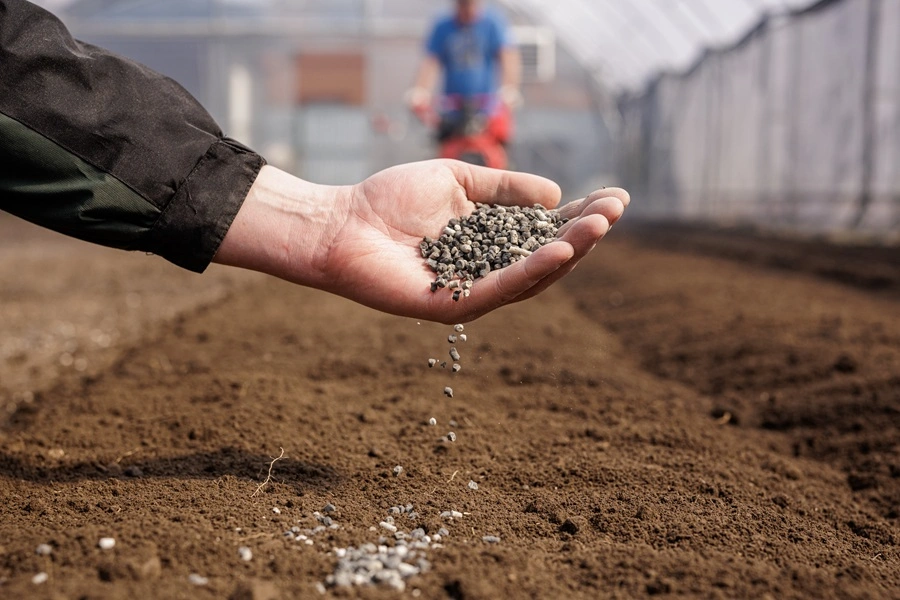
Furthermore, the East Coast gas market—where Incitec Pivot’s Gibson Island plant shuttered in 2022—is functionally disconnected from Western Australia’s offshore basins. The East Coast suffers from an artificial domestic supply squeeze precisely because multinational consortiums prioritized export liquefaction terminals in Gladstone over regional pipelines.
Simply shouting “produce more Australian fertilizer” does not solve the physical reality that shipping fertilizer across the Australian landmass is an expensive logistical hurdle.
The Supermarket Grocery Fallacy
The central political promise of Hanson’s campaign—that domestic fertilizer manufacturing translates directly into cheaper supermarket checkout receipts—is an economic sleight of hand.
                 THE CONSUMER PRICE EQUATION
  Raw Grain Farm-Gate Price  ──►  Only ~5% to 10% of Retail Bread Cost
  Fertiliser Share of Grain  ──►  ~20% to 30% of Farm Input Costs
  Direct Impact on Checkout ──►  Fractional / Negligible Shift
In modern food supply chains, the farm-gate value of raw agricultural commodities represents an increasingly marginal share of the ultimate retail shelf price.
When an Australian consumer purchases a loaf of sliced bread at a supermarket:
-
The cost of the raw milled wheat inside that loaf accounts for less than 10 percent of the final price.
-
The remaining 90 percent of the cost is consumed by industrial baking energy, packaging films, transport diesel, cold-chain warehousing, distribution wages, wholesale markups, and supermarket retail margins.
Even if an Australian fertilizer plant managed to slash raw urea costs to local farmers by 20 percent, the downstream deflationary effect on a loaf of bread or a box of cereal would be measured in fractions of a cent.
Food price inflation is not driven by single-input swings; it is driven by systemic logistics, domestic electricity overheads, and retail market power. Promising hard-pressed families that fertilizer sovereignty will cure their grocery bills is a comforting fiction.
The Real Strategic Dilemma: Market Optimization vs. Sovereign Insurance
Where Hanson’s critique lands with legitimate force is on the broader question of national preparedness: Australia has built a national security doctrine that treats trade lines as permanent and guaranteed, even as the global order fractures.
For thirty years, Canberra’s Treasury orthodoxy adhered to a simple economic philosophy: buy critical commodities from the cheapest global supplier, operate lean just-in-time inventories, and trust the international rules-based order to keep the shipping lanes open.
In 2026, that era of frictionless globalization is coming to an end.
THE "JUST-IN-TIME" TRAP
Zero Domestic Synthesis  ──►  No National Stockpiles  ──►  Single Sea-Lane Exposure
                                                                     │
                                                                     ▼
National Cropping Deficit  ◄── Crop Yields Collapse ◄── Port Closures / Blockade
Unlike crude oil or refined fuels, which can be stored in tanks for months, granular synthetic urea is chemically hygroscopic: it draws moisture out of ambient air, cakes, degrades, and loses its structural integrity. It cannot be stockpiled indefinitely in mass national strategic reserves.
When a conflict in the Middle East closes shipping passages, Australian growers cannot wait six months for diplomats to resolve the impasse. If nitrogen is not applied during the narrow three-to-four-week winter tillering phase, crop yields drop dramatically.
A 30 percent across-the-board drop in national grain yields represents a multi-billion-dollar direct hit to the national balance sheet, driving up rural bankruptcies, crushing agricultural export balances, and destabilizing regional economies.
Sovereign domestic manufacturing is not an exercise in microeconomic cost-cutting; it is an insurance policy. A civilized nation pays an insurance premium on its military; it must now decide whether it is willing to pay a sovereign premium on its soil nutrients.
The Decarbonization Cross-Current: The Green Ammonia Blindspot
The most shortsighted aspect of One Nation’s agenda is its insistence that domestic fertilizer production can only be achieved by tearing down emissions reduction targets and locking the nation into unabated fossil gas extraction.
The global agricultural export market is already transitioning.
Major global grain importers—particularly across the European Union, Japan, and South Korea—are moving toward mandatory Scope 3 emissions reporting and Carbon Border Adjustment Mechanisms (CBAM). Australian wheat produced with fossil-gas-derived urea carries a high embodied carbon footprint.
If Australia simply builds conventional, unabated gas-to-urea plants without carbon capture or renewable integration, it risks solving today’s supply-chain challenge only to run headlong into tomorrow’s carbon tariff wall.
The forward-looking strategic play—which modern industrial innovators are already pursuing—is green hydrogen synthesis: using Australia’s massive solar and wind advantages to generate green ammonia via electrolysis, blending domestic resource security with long-term export compliance.
Framing the debate as a stark binary between “cheap gas fertilizer” and “green fantasy” traps the nation in a backward-looking argument that ignores where agricultural export markets are heading.
The Unanswered Questions Canberra Must Address
If the government’s Fertiliser Supply Working Group intends to deliver real long-term security rather than bureaucratic crisis monitoring, it must answer four critical questions:
-
The East Coast Pipeline Link: With the Perdaman project coming online in Western Australia in 2027, what regulatory and infrastructure reforms are being executed to guarantee that Western Australian urea can be shipped to the East Coast grain belts at competitive freight rates?
-
The Strategic Minimum Production Target: Does the Commonwealth have a target for the minimum percentage of baseline nitrogen, phosphate, and potassium inputs that must be produced on Australian soil to safeguard national food security during an extended maritime conflict?
-
The East Coast Gas Squeeze: Why does the Australian Domestic Gas Security Mechanism (ADGSM) continue to allow liquefied gas exporters to prioritize international spot markets while domestic chemical manufacturers on the East Coast face gas prices that make regional fertilizer synthesis uneconomic?
-
Soil Nutrient Alternatives: What funding is being directed into soil biologicals, legume rotation integration, and precision nutrient placement to reduce Australia’s total aggregate dependency on imported chemical nitrogen?
The battle over Australia’s fertilizer supply is not a minor trade issue buried in the rural press. It is a wake-up call regarding the fragile foundations of national sovereignty in an unstable world.
Australia has spent decades celebrating its position as the lucky country—digging minerals out of the earth, harvesting vast fields of grain, and outsourcing the industrial middle of its economy to overseas factories and offshore shipping routes.
The supply shocks of 2026 have shattered that sense of ease.
Pauline Hanson’s political campaign has touched a sensitive nerve because it exposes a basic, uncomfortable truth: a nation that cannot manufacture the nutrients required to feed its own soil does not truly control its own destiny. Her political promises of cheap groceries and effortless gas solutions may be oversimplified, but her warning about dependency is urgent.
As the massive towers of the Perdaman facility rise on the Burrup Peninsula, Australia is taking its first step toward reclaiming sovereign control over its agricultural inputs. But a single plant on the western edge of the continent will not insulate the nation from an unstable global order.
A serious country must have the strategic foresight to build resilience before crisis hits. If Australia fails to secure the basic chemical inputs that sustain its agriculture, it will learn the hard way that when the ships stop coming, the lucky country runs out of luck at the dinner table.
A Question for the Reader
In a fracturing geopolitical world, should Australia pay higher domestic prices and subsidize local gas and manufacturing to guarantee self-reliance in food production—or should we continue to rely on the cheaper, fragile global supply lines that have fed our farms for decades?