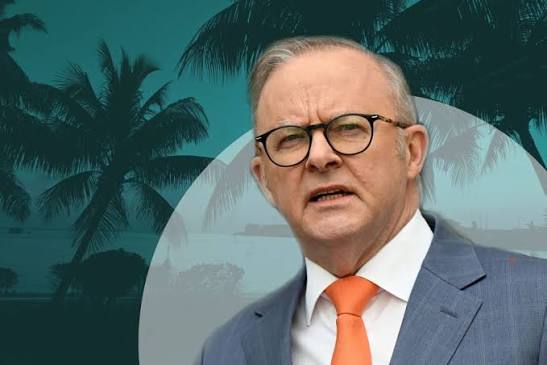

The Sinking Frontier: Inside the High-Stakes Pacific Showdown Over Australia’s Fossil Fuel Paradox
Across the azure expanse of the western Pacific, where scattered coral atolls and volcanic archipelagos comprise the world’s most geographically dispersed community of nations, diplomacy has long ceased to be an academic exercise in statecraft. It is a raw, desperate struggle for baseline physical survival.
For decades, the Pacific Islands Forum (PIF) has operated under the shadow of a profound structural contradiction. At its annual summit, the eighteen member nations gather around a single table: sixteen developing island states that collectively contribute less than 0.03 percent of total global greenhouse gas emissions, flanked by the region’s two wealthy, industrialized giants—New Zealand and Australia.
Australia’s role has always been fraught with geopolitical and environmental tension. Canberra acts simultaneously as the Pacific’s chief security guarantor, its largest bilateral aid donor, and its traditional development partner. Yet beneath the diplomatic smiles and floral shirts lies an inescapable economic reality: Australia is one of the world’s foremost extractors and exporters of fossil fuels, ranking among the planet’s top global shippers of thermal coal and liquefied natural gas (LNG).
┌─────────────────────────────────────────────────────────────────────────┐
│              THE PACIFIC FORUM METRIC: AN OCEANIC DIVIDE                │
├──────────────────────────────┬──────────────────────────────────────────┤
│  PACIFIC ISLAND MEMBERS      │  AUSTRALIA (CONTINENTAL HEAVYWEIGHT)     │
├──────────────────────────────┼──────────────────────────────────────────┤
│  • ~0.03% of global emissions│  • Major global exporter of coal and LNG │
│  • Max elevation: often <5m  │  • Legislated 43% cut by 2030 (vs 2005)  │
│  • Threat: Inundation,       │  • Paris NDC pledge: 62% to 70% by 2035  │
│    fishery collapse, salt-   │  • Current domestic cut: ~29% below 2005 │
│    water intrusion           │  • Policy: Gas as domestic "firming" fuel│
└──────────────────────────────┴──────────────────────────────────────────┘
When Prime Minister Anthony Albanese led the Australian Labor Party back to power in 2022, he promised to end Australia’s decade of international climate recalcitrance. The previous conservative coalition had frequently clashed with Pacific leaders, famously resisting language on fossil fuel phase-outs and reducing ministerial attendance to defensive exercises in damage control.
Albanese moved swiftly to repair those frayed bonds. His government legislated a domestic target to slash greenhouse gas emissions by 43 percent below 2005 levels by 2030, established a binding target of net-zero emissions by 2050, and in September 2025 formally lodged an updated Nationally Determined Contribution (NDC) under the Paris Agreement pledging a 62 to 70 percent cut by 2035.
Canberra followed its legislative push with major regional investments: hundreds of millions of dollars poured into the Australian Infrastructure Financing Facility for the Pacific (AIFFP), deploying renewable mini-grids, solar farms, and battery banks from the Solomon Islands to Micronesia.
Yet as the 55th Pacific Islands Forum Leaders’ Meeting convened in Koror, Palau, under the official banner “Building Economies: Life. Action. Unity,” this carefully polished diplomatic reset collided head-on with the laws of atmospheric physics.
Main Events: A Chilling Report and an Open Revolt in Palau
The catalyst for the confrontation in Koror was not an orchestrated political protest, but the release of a landmark scientific assessment by the United Nations Environment Programme (UNEP) titled Limiting Overshoot.
The findings delivered an emotional gut-punch to the delegations gathered in Palau. The UNEP concluded that temporarily breaching the critical threshold of 1.5 degrees Celsius above pre-industrial levels is no longer a preventable scenario under current global emissions trajectories; it is now an unavoidable near-term reality.
Even under the report’s most optimistic, fully realized decarbonization pathways, global average temperatures are projected to peak at roughly 1.8 degrees Celsius before any theoretical drawdown can begin. Under less optimistic, business-as-usual tracks, warming will barrel past 2.0 degrees Celsius.
For the leaders of low-lying coral atoll nations, the distinction between 1.5°C and 1.8°C is not a fractional rounding error on a climate model; it represents the difference between sovereign nationhood and geographic extinction.
1.5°C BREACH TRAJECTORY (UNEP "LIMITING OVERSHOOT" FINDINGS)
┌─────────────────────────────────────────────────────────────────────────┐
│ Status: Temporarily exceeding 1.5°C is now assessed as UNAVOIDABLE.     │
│ Peak Projection (Optimistic): ~1.8°C above pre-industrial levels.       │
│ Peak Projection (Current Policies): Exceeding 2.0°C.                    │
│ Systemic Cascades: Coral reef mortality >99%, irreversible ice-sheet    │
│ melt, marine ecosystem disruption, eastward pelagic fish migration.    │
└─────────────────────────────────────────────────────────────────────────┘
The Anguish of Tuvalu
The human toll of the UNEP report was laid bare by Dr. Maina Talia, Tuvalu’s Minister for Home Affairs, Environment and Climate Change. Addressing reporters in the Palauan capital, Talia was visibly shaken, revealing that the report’s conclusions had kept him awake throughout the preceding night.
“I couldn’t sleep last night thinking, ‘How are we going to prepare ourselves?'” Talia told reporters, his voice quiet against the backdrop of the Pacific. “Because the scenarios that may happen in the next 100 years or so, could happen within the next 10 years or so. It’s real now. It’s here now. It’s no longer a distant threat for the Pacific, and it’s a call for all of us to scale climate actions.”
For Talia’s homeland—a constellation of nine narrow coral atolls home to 11,000 citizens, where the highest geographic point rises barely 4.6 meters (15 feet) above the tides—the prospect of an atmospheric overshoot past 1.5°C invalidates decades of orderly adaptation planning. Talia insisted that despite the bleakness of the data, the Pacific could not surrender the 1.5°C target: “The only way out for us is to ensure that we continue to push for 1.5 to stay alive, to stay in our countries.”
The Charge from Port Vila
While Talia’s intervention was defined by grief and urgency, the sharpest diplomatic attack of the summit was launched by Vanuatu’s Minister for Climate Change, Ralph Regenvanu. Fresh off leading a historic international legal coalition that secured an advisory opinion from the International Court of Justice affirming states’ legal obligations to prevent cross-border climate harm, Regenvanu turned his sights squarely on Canberra.
Regenvanu dismissed the Australian government’s rhetoric of regional solidarity, declaring that Australia was simply “not doing enough” while continuing to license and subsidize the expansion of domestic coal and gas projects.
              THE MINISTERIAL CLASH IN PALAU
              ──────────────────────────────
         RALPH REGENVANU (VANUATU)             ANTHONY ALBANESE (AUSTRALIA)
  ┌────────────────────────────────────┐    ┌────────────────────────────────────┐
  │ • Australia is a major fossil fuel │    │ • "We all need to do more," but    │
  │   producer driving the crisis.     │      transition cannot happen overnight.│
  │ • At minimum, Australia must stop  │    │ • Gas is essential for "firming"   │
  │   approving new coal & gas fields. │      domestic grid stability.           │
  │ • Climate finance cannot purchase  │    │ • Australia provides tangible solar│
  │   silence on fossil fuel exports.  │      and battery infrastructure.        │
  └────────────────────────────────────┘    └────────────────────────────────────┘
“Australia is not doing enough. Australia is a major producer of fossil fuels. We all know fossil fuels are the primary driver of the climate crisis,” Regenvanu asserted bluntly. “The very least a country like Australia should be doing is stopping future expansion, and it’s not doing that. This means a rapid transitioning away from fossil fuels and fossil fuel subsidies. There’s no other way.”
Research compiled by civil society watchdogs underscored Regenvanu’s point, indicating that the Albanese government had approved, extended, or facilitated dozens of new fossil fuel proposals since taking office, even as its domestic renewable generation expanded to supply over 50 percent of the National Electricity Market (NEM).
The Prime Minister’s Counter-Stance
Confronted in Koror over the UNEP findings and the direct accusations from his Pacific counterparts, Prime Minister Albanese conceded the scientific gravity, admitting that “we all need to do more” and noting that the higher temperatures climb beyond 1.5°C, the more difficult it becomes to reverse systemic environmental harm.
However, Albanese firmly pushed back against the narrative that Australia is viewed across the region as a bad-faith actor.
“Australia is highly regarded when it comes to climate change… Pacific leaders have respect for the position that we’ve taken,” Albanese insisted.
The Prime Minister mounted a vigorous defense of his government’s continued support for natural gas, emphasizing that gas remains an indispensable “firming fuel”—a transitional bridge required to keep industrial power grids stable as aging coal-fired generators are retired and replaced by wind, solar, and hydro storage.
To demonstrate tangible partnership, Albanese highlighted concrete investments delivered under Australian aid programs. In Palau, the Australian government financed the nation’s very first utility-scale solar facility through a $31.4 million package via the AIFFP, bolstered by an additional $16.4 million commitment to install commercial battery storage and modernize the local electricity grid.
Once fully operational, the project will supply 25 percent of Palau’s electricity demand, displacing more than one million liters of imported diesel annually. Canberra also committed $1.89 million to establish a dedicated Pacific Renewable Energy Commissioner to unlock institutional private finance for green projects across the region.
A Fractured Regional Chorus
The confrontation revealed that the Pacific does not speak with a single, monolithic voice. While Vanuatu adopted an uncompromising stance against fossil fuel extraction, other leaders took a far more conciliatory tone toward Canberra:
-
Surangel Whipps Jr. (President of Palau): The summit’s host offered a pragmatic, demand-side perspective, arguing that international efforts must concentrate on eradicating global consumption and market demand for fossil fuels rather than exclusively demonizing resource-producing states.
-
Sakiasi Ditoka (Foreign Minister of Fiji): Ditoka actively defended Australia’s regional footprint, asserting that Canberra had done “quite a lot” to underwrite Pacific development, pointing to disaster relief logistics, security support, and development aid as evidence of a genuine partnership.
Key Facts, Nuances, and Figures
┌─────────────────────────────────────────────────────────────────────────┐
│               THE PALAU SUMMIT: KEY FIGURES & INITIATIVES               │
├──────────────────┬──────────────────────────────────────────────────────┤
│ Anthony Albanese │ Australian Prime Minister; defending gas as a        │
│                  │ necessary transitional "firming fuel" for the grid.  │
│ Dr. Maina Talia  │ Tuvalu Climate Minister; warned climate collapse is  │
│                  │ "here now" after sleepless night over UNEP report.  │
│ Ralph Regenvanu  │ Vanuatu Climate Minister; demanded an immediate halt │
│                  │ to all Australian coal and gas export expansions.   │
│ Dr. Andrew Jones │ Pacific Community Deputy DG; presented modeling on   │
│                  │ catastrophic eastward shift of migratory tuna stocks.│
│ Falepili Union   │ Historic 2024 treaty granting 280 Tuvaluans/year     │
│                  │ residency in Australia while recognizing statehood.  │
│ COP31 Presidency │ Joint 2026 climate diplomacy between Australia and   │
│ Framework        │ Türkiye; Chris Bowen named President of Negotiations.│
└──────────────────┴──────────────────────────────────────────────────────┘
-
The Economic Lifeline at Risk: Scientific briefings delivered to leaders in Koror by Dr. Andrew Jones, Deputy Director-General of the Pacific Community (SPC), warned that unchecked warming is driving a structural eastward migration of pelagic tuna stocks. As ocean waters warm, tuna schools are tracking toward cooler open-ocean pockets outside the exclusive economic zones (EEZs) of Pacific island states. Jones warned that this shift could strip regional governments of up to US$90 million annually in commercial access licensing fees, while artisanal coastal fisheries could see catch volumes crash by as much as 65 percent, eviscerating household protein intake and local food security.
-
The Falepili Precedent: Nowhere is the paradox of Australia’s climate posture more visible than in Tuvalu. In November 2023, Canberra and Funafuti signed the landmark Falepili Union treaty, which entered into full legal force in August 2024. Under the pact, Australia became the first nation in history to legally guarantee in a binding bilateral treaty that Tuvalu’s sovereign statehood, maritime boundaries, and cultural identity will endure in perpetuity, even if its physical landmass is submerged by rising seas. The treaty provides a formal migration pathway allowing up to 280 Tuvalu citizens annually to live, work, and study in Australia with full social rights. In addition, Australia budgeted approximately $46 million in official development assistance for Tuvalu across 2026–27.
-
The COP31 Diplomatic Lever: The debate in Palau directly impacts Australia’s global climate ambitions. Under a compromise brokered with Ankara, Australia and Türkiye agreed to share leadership of the upcoming COP31 United Nations Climate Summit, with Türkiye hosting the main negotiations in Antalya while Australian Climate Change and Energy Minister Chris Bowen serves as the formal President of Negotiations. A critical preparatory pre-COP gathering is scheduled for October in Fiji, coupled with a heads-of-state visit to Tuvalu designed to expose international negotiators to frontline atoll vulnerability.
2. My Professional Perspective
I have spent three decades reporting from the muddy trenches of global climate negotiations. I watched the birth of the Kyoto Protocol in 1997, stood on the gravel runways of Funafuti watching king tides breach airstrips, and tracked the flows of commercial capital through the corporate towers of resource giants in Sydney and Perth.
If thirty years of investigative journalism teach you anything about international statecraft, it is this: whenever a government presents you with two hands—one offering generous humanitarian charity, and the other quietly pocketing billions from industrial resource extraction—you are not looking at a policy contradiction; you are looking at a deliberate business model.
The mainstream press coverage of the 55th Pacific Islands Forum in Palau has largely defaulted to a familiar, comforting melodrama: the well-intentioned Australian leader navigating the tragic, emotional appeals of sinking islanders while trying his best to manage a complex energy transition.
That narrative is superficial. It treats the tension in Palau as an unfortunate misunderstanding between friends over timelines and technical constraints. If you strip away the ceremonial photo-ops, a far colder, more cynical strategic game comes into view.
The Overlooked Structural Fiction: The Scope 3 Carbon Laundromat
The foundational lie of Australian climate diplomacy—one that politicians of both major parties have defended with bureaucratic precision—rests upon the institutional architecture of international emissions accounting.
Under the United Nations Framework Convention on Climate Change (UNFCCC), emissions are calculated within territorial boundaries. If Australia burns coal in the Hunter Valley to generate domestic power, those greenhouse gases are tallied against Canberra’s domestic ledger. But if an Australian mining corporation digs that exact same coal out of the ground, loads it onto a bulk carrier at the Port of Newcastle, and ships it to an industrial burner in Yokohama, Kaohsiung, or Incheon, those emissions magically disappear from Australia’s national inventory. They become “Scope 3” emissions, the legal accounting responsibility of the buyer.
THE GLOBAL CARBON LAUNDROMAT
┌────────────────────────┐
│  AUSTRALIA (Mine Head) │ ──► Sells thermal coal & LNG (Generates immense export revenue)
└──────────┬─────────────┘
           │
           ▼ (Maritime Transit / International Waters)
┌────────────────────────┐
│  IMPORTING NATIONS     │ ──► Burns fuel; emissions added to their domestic inventories
└──────────┬─────────────┘
           │
           ▼ (Atmospheric Mixing)
┌────────────────────────┐
│  PACIFIC ATOLLS        │ ──► Absorbs physical destruction of sea-level rise & oceanic warming
└────────────────────────┘
This legal firewall allows Anthony Albanese to stand before cameras in Koror and boast that Australia has slashed domestic emissions by 29 percent and submitted an ambitious 2035 target of up to 70 percent. Both statements are technically true on paper.
Yet they conceal a devastating reality: Australia remains the world’s third-largest exporter of fossil fuels. When you factor in the carbon embodied in Australia’s coal and LNG exports, the nation’s true atmospheric footprint accounts for roughly 4 to 5 percent of total global greenhouse gas emissions.
For Dr. Maina Talia in Tuvalu or Ralph Regenvanu in Vanuatu, the atmosphere does not care about the bookkeeping provisions of Article 4 of the Paris Agreement. A ton of carbon dioxide released by burning Queensland coal heats the western equatorial Pacific at the exact same physical rate whether it was combusted in Brisbane or Tokyo.
When Australian leaders claim they are leading the regional fight against climate change while aggressively expanding liquefied natural gas extraction in the Browse Basin or opening new metallurgical coal pits in the Bowen Basin, Pacific leaders are not witnessing an “orderly transition.” They are watching a sovereign state operate an export laundromat, attempting to purchase regional moral absolution with solar panels and aid checks funded by the very revenues generated from fossil exports.
The Secret Transaction Behind the Falepili Union
Consider the much-heralded Falepili Union with Tuvalu—a treaty universally framed in Western press releases as an unprecedented triumph of humanitarian foresight and climate solidarity.
Look into the text of the treaty and the geopolitical negotiations that birthed it, and you discover that the Falepili Union is, at its core, a national security pact designed to counter Chinese strategic expansion in the Pacific.
                     THE FALEPILI TRANSACTION
┌───────────────────────────────────┐     ┌───────────────────────────────────┐
│         TUVALU RECEIVES           │     │        AUSTRALIA RECEIVES         │
├───────────────────────────────────┤     ├───────────────────────────────────┤
│ • Sovereign statehood guarantee   │     │ • Absolute security veto over any │
│   in perpetuity despite sea rise. │       defense or security partnerships  │
│ • Migration pathway: 280 citizens │       Tuvalu makes with third nations.  │
│   per year to Australia.          │     │ • Preemption of Chinese military, │
│ • ~$46 million annual climate &   │       policing, or dual-use maritime    │
│   development assistance funding. │       infrastructure on Tuvaluan atolls.│
└───────────────────────────────────┘     └───────────────────────────────────┘
Under Article 4 of the Falepili Union, Tuvalu agreed to a sweeping clause stipulating that it shall not enter into any defense, policing, or national security agreements with any third-party sovereign state without the explicit, mutual agreement of Australia.
Why did Canberra demand that clause? Because across the Pacific, Beijing has been steadily signing bilateral security pacts, funding infrastructure, and seeking maritime access hubs—most notably in the Solomon Islands and Kiribati.
Canberra did not offer Tuvalu guaranteed statehood and 280 immigration visas purely out of ecological guilt. It used Tuvalu’s desperate climate vulnerability as leverage to secure an absolute defense veto over 900,000 square kilometers of sovereign Pacific maritime territory.
When Maina Talia insists that Tuvaluans do not wish to abandon their ancestral home, he is pushing against a quiet, unspoken strategic calculation: that Canberra has already priced in the physical abandonment of Tuvalu, viewing managed depopulation not as a failure of climate policy, but as a manageable diplomatic transaction that secures Australia’s northern maritime flank.
The Economic Deception: The $90 Million Pelagic Collapse
The mainstream media narrative has treated the climate crisis in the Pacific primarily as a story of rising tides swallowing sandbags. That visual is dramatic, but it obscures an economic catastrophe that will bankrupt Pacific island states long before their runways are submerged: the collapse of the Western and Central Pacific tuna fishery.
The Western and Central Pacific Ocean hosts the world’s most lucrative tuna fishery, supplying over 50 percent of the global canned and sashimi-grade tuna supply. For nations like Tuvalu, Kiribati, and the Federated States of Micronesia, commercial vessel licensing under the Parties to the Nauru Agreement (PNA) “Vessel Day Scheme” provides the primary financial foundation of the state, accounting for up to 70 to 80 percent of total domestic government revenue.
THE PELAGIC DISPLACEMENT SPIRAL
Equatorial Waters Warm ──► Coral Bleaching / Reef Death ──► Pelagic Tuna Move East
                                                                   │
                                                                   ▼
High-Seas Exploitation ◄── Coastal Artisanal Protein ◄── Sovereign EEZs Emptied
by Distant-Water Fleets    Loss (65% Catch Collapse)      ($90M Budget Deficit)
The scientific data presented by Dr. Andrew Jones in Palau demonstrates that as the 1.5°C threshold is breached and equatorial waters experience chronic marine heatwaves, the biological food chain migrates eastward into the high-seas pocket areas of the central and eastern Pacific.
This creates a twin-tier collapse:
-
Fiscal Bankruptcy: Island governments lose sovereign control over the schools of fish. Foreign fishing fleets from China, Taiwan, and the European Union will simply follow the tuna into unregulated high-seas zones where no Pacific nation can levy licensing fees, stripping island exchequers of tens of millions in annual revenue.
-
Nutritional Starvation: For coastal atoll populations, reef fish and nearshore pelagic catches provide over 70 percent of dietary animal protein. When that catch drops by 65 percent, communities will be forced onto an absolute dependency on imported, ultra-processed shelf foods—spurring runaway rates of non-communicable disease, diabetes, and cardiovascular collapse.
To offer an atoll community a solar-powered grid while continuing to approve fossil fuel projects that warm the surrounding ocean is to install modern lighting in a home whose foundation is being systematically dynamited.
The Unanswered Questions Canberra and Brussels Must Confront
If the international community and Australian policymakers intend to maintain any shred of moral standing at the upcoming COP31 negotiations, they must answer the fundamental questions they spent the Palau summit evading:
-
The Approval Double-Standard: If Prime Minister Albanese accepts the UNEP finding that any temperature overshoot past 1.5°C threatens irreversible catastrophic tipping points, how does his cabinet legally and morally justify the ongoing environmental approvals granted to massive new gas extraction projects in the Beetaloo Basin, the Scarborough fields, and the North West Shelf?
-
The Scope 3 Blindspot: When will Australia acknowledge that its fossil fuel exports constitute an active geopolitical intervention against the stability of its closest neighbors? Does Canberra believe that funding adaptation infrastructure in Palau absolves it of the physical emissions resulting from its coal shipments to Northeast Asia?
-
The Limits of “Mobility with Dignity”: The Falepili Union caps permanent Tuvalu migration to Australia at 280 people per year. At that mathematical rate, it would take nearly forty years to relocate Tuvalu’s current population. What happens in year seven or eight, when a super-cyclone contaminates the central freshwater lenses of Funafuti with seawater, rendering the atoll instantly unlivable for its remaining 9,000 residents? Does the quota hold, or does Australia deploy the military to manage an emergency mass evacuation?
-
The COP31 Negotiation Test: As Chris Bowen assumes the mantle of President of Negotiations for COP31, will Australia support a binding, global phase-out roadmap for all unabated fossil fuels—or will it hide behind the rhetoric of “abatement technologies,” carbon capture and storage (CCS) mirages, and transitional gas to protect its export balance sheet?
The confrontation under the palm trees of Koror was not just another routine diplomatic skirmish at an annual regional summit. It was the moment the veneer of progressive climate diplomacy finally fractured against the reality of ecological overshoot.
For three years, the Australian government believed it could walk an impossible geopolitical tightrope: playing the heroic green champion to its Pacific “family,” underwriting solar panels, establishing renewable commissions, and offering historic migration treaties, all while continuing to serve as the global carbon market’s premier fuel merchant.
In Palau, the Pacific’s leaders looked their wealthy neighbor in the eye and refused to play along with the script.
When Dr. Maina Talia lay awake in his hotel room in Koror, staring at the ceiling and grappling with the knowledge that the 1.5°C threshold will be breached within years, he was not mourning a statistic. He was mourning the cemetery where his ancestors are buried, the beaches where his children play, and the distinct cultural identity of a people who have lived in harmony with the tides for millennia.
A nation cannot claim to love its neighbors while continuously profiting from the trade that sets their homes on fire. As the road moves from Palau to the pre-COP summits of Fiji and Tuvalu, and ultimately to the negotiation halls of Antalya for COP31, Anthony Albanese and his government will discover that no amount of infrastructure grants, solar battery installations, or polished speeches can bridge the chasm between extraction and survival.
The Pacific Ocean is running out of patience, and the atolls are running out of land.
A Question for the Reader
Can an industrialized democracy genuinely claim to be a climate leader while remaining one of the world’s largest fossil fuel exporters—or does real international solidarity require sacrificing profitable resource revenues to keep neighboring countries from slipping beneath the waves?