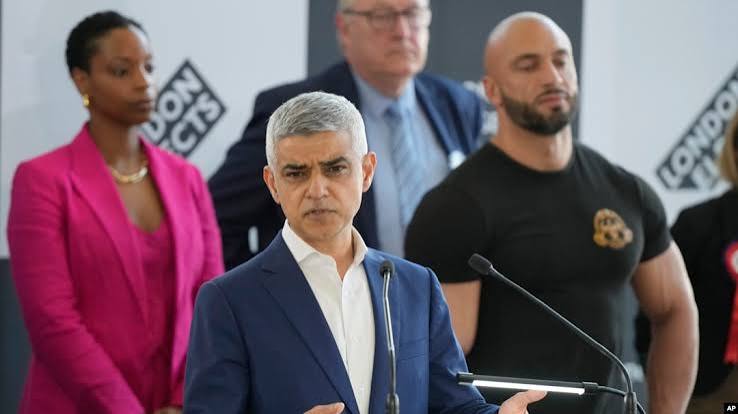
The Shadow Over City Hall: Inside the Quiet Revolt Brewing in Sadiq Khan’s London. n1

The Shadow Over City Hall: Inside the Quiet Revolt Brewing in Sadiq Khan’s London
The rain has a way of stripping the polish off London. On a damp evening along the southern curve of the Thames, looking across at the glass-and-steel monolith of City Hall’s former footprint and the towering financial hubs of the Square Mile, the metropolis still projects the supreme confidence of an imperial crossroads. The red double-deckers rumble past on schedule. The tube entrances swallow thousands in silent, choreographed streams.
Yet underneath that hypnotic hum of normalcy, something fundamental has shifted.
A decade after Sadiq Khan rode into office on an optimistic wave of civic pride—promising an open, affordable, green metropolis that would remain a beacon to the world—his political foundations have begun to show structural fractures. A comprehensive YouGov survey tracking his tenth anniversary in power has laid bare an uncomfortable reality: a decisive 56% of Londoners believe the three-term Labour mayor should step aside rather than seek an unprecedented fourth term in 2028.
The finding does not signal an immediate collapse—2028 remains years away, and Khan has built his career on defying terminal obituaries. But in the quiet backrooms of Westminster and among the everyday voters across the capital’s thirty-two boroughs, the numbers read like a profound crisis of confidence.
Only 19% of residents believe London has improved since Khan took office in 2016. A stunning 57% say he has handled crime poorly. Among those who have called the city home for over a decade, a heavy 60% declare the capital has actively degraded.
This is no longer a localized spat over traffic cones or a passing controversy over fare freezes. It is the beginning of an existential referendum on the modern British city—and a cautionary tale of what happens when political ambition collides with civic exhaustion.
1. The News Story: Anatomy of a Discontent
The immediate catalyst for this reappraisal is a comprehensive poll conducted across the capital, marking Sadiq Khan’s tenth year as Mayor of London. The figures paint a portrait of an administration struggling to convince its constituents that their lived reality matches City Hall’s press releases.
Key Survey Metrics (YouGov / London Electorate)
━━━━━━━━━━━━━━━━━━━━━━━━━━━━━━━━━━━━━━━━━━━━━━━━━━━━
• Favor Khan stepping aside for 2028:     56%
• Believe London has improved since 2016: 19%
• Believe Khan has handled crime poorly:  57%
• Disapprove of handling of housing:      66%
• Long-term residents stating city worse: 60%
━━━━━━━━━━━━━━━━━━━━━━━━━━━━━━━━━━━━━━━━━━━━━━━━━━━━
The Political Landscape and Key Figures
At the center of this storm stands Sadiq Khan, the bus driver’s son from Tooting who became the first Muslim mayor of a major Western capital in 2016. For ten years, Khan has been one of the Labour Party’s ultimate survivors. He repelled Zac Goldsmith’s hard-edged campaign in 2016, held off Shaun Bailey through the fog of the pandemic in 2021, and comfortably dispatched Susan Hall in 2024 to lock in an unprecedented third term.
2016                    2021                    2024                    2028
Defeats Zac Goldsmith   Survives Covid delays   Secures third term      The Fourth Term Question:
Elected Mayor           Defeats Shaun Bailey    Defeats Susan Hall      56% urge Khan to step aside
Surrounding him is a constellation of circling political rivals and nervous allies:
-
The Labour Establishment: Senior strategists within Sir Keir Starmer’s government are watching closely. While Khan remains an electoral heavyweight, his personal net favorability sits at minus 9 (39% favorable to 48% unfavorable). Potential Labour successors—including Brent East MP Dawn Butler, Tooting MP Rosena Allin-Khan, and Walthamstow MP Stella Creasy—wait in the wings should the incumbent be persuaded that twelve years is enough.
-
The Fragmented Opposition: The Conservatives, bruised by repeated defeats in the capital, view Khan’s crime and taxation numbers as their cleanest path back to relevance. Meanwhile, Reform UK seeks to weaponize social anxieties and immigration rhetoric in the outer suburbs, while the Liberal Democrats and Green Party hover to capture disillusioned progressive urbanites weary of institutional complacency.
The Core Battlegrounds
The survey outlines three primary pressure points eroding the mayor’s standing:
-
The Crime Divide: While City Hall routinely presents statistical dashboards indicating that homicides and certain violent crime categories remain historically bounded, 57% of respondents believe Khan has handled crime badly. The debate has migrated from raw homicide statistics to everyday public vulnerability: brazen mobile-phone snatching on high streets, open shoplifting, teenage knife fatalities, and antisocial behavior on residential estates. While operational control lies with the Metropolitan Police and funding is tied to national government, the Mayor acts as the de facto Police and Crime Commissioner for London. In the voter’s mind, the buck stops at his desk.
-
The Affordability Chasm: A staggering 66% of respondents rate Khan’s performance on housing as poor. Despite mayoral subsidies and flagship affordable housing quotas, runaway market rents and mortgage hikes have hollowed out the capital’s middle and working classes, pushing nurses, teachers, and young professionals beyond the Greater London boundary.
-
The Ultra Low Emission Zone (ULEZ) Legacy: Khan’s signature environmental intervention—expanding clean-air vehicle charging across all 32 London boroughs—stands as a profound political wedge. To environmentalists, it is an act of moral clarity that averted public health crises. To suburban working-class families and tradespeople, it remains a punitive tax levied during a cost-of-living squeeze.
2. My Professional Perspective
Over three decades covering power from the corridors of Washington and Fleet Street to the precinct stations of Chicago and Belfast, I have learned that long-term incumbents rarely fall because of a sudden scandal. They fall because of ambient decay—a slow, atmospheric erosion where the public suddenly realizes the promise of a leader has become untethered from the street in front of their home.
When you peel back the headline numbers of this poll, you are not looking at a routine midterm dip. You are witnessing the unraveling of a specific governance model.
What People Have Overlooked: The Ghost in the Machine
The political commentariat has obsessively framed Sadiq Khan through the lens of identity and high-wire Westminster friction: the liberal champion standing against Conservative prime ministers, the environmental crusader standing up to suburban petrolheads.
That framing misses the real story entirely.
The most lethal number in this data is not the 56% who want him to stand aside. It is the 60% of ten-plus-year residents who believe the city has gotten worse.
These are not ideological partisans or angry suburban blow-ins. These are the city’s caretakers: the civic lifers, the public sector stalwarts, the families who stayed through Brexit and the pandemic. They possess institutional memory. They remember what public transit cost a decade ago; they remember when small retail shops did not have to lock up baby formula behind perspex screens; they remember when the high street possessed a distinct, functional neighborhood character.
Long-Term Resident Perception (Residing >10 Years)
━━━━━━━━━━━━━━━━━━━━━━━━━━━━━━━━━━━━━━━━━━━━━━━━━━━━
City has gotten worse:    [████████████░░░░░░░░] 60%
City has improved/stable: [████████░░░░░░░░░░░░] 40%
━━━━━━━━━━━━━━━━━━━━━━━━━━━━━━━━━━━━━━━━━━━━━━━━━━━━
Significance: Loss of institutional memory cohort
For years, City Hall successfully deployed the ultimate political shield: blaming Whitehall. When services frayed, it was the fault of David Cameron’s austerity, Theresa May’s police cuts, Boris Johnson’s hostility toward Transport for London (TfL), or Liz Truss’s mortgage chaos.
And for eight years, Londoners largely accepted that defense because it contained significant truth.
That shield has now shattered. With a Labour government installed in 10 Downing Street, the political alibi has run its course. You cannot spend ten years in the driver’s seat and still ask the passengers to blame the mechanic who left the shop years ago. The electorate is no longer evaluating Khan in comparison to a hostile Tory government; they are evaluating him against their own daily endurance.
The Deeper Meaning: The “Spreadsheet Fallacy” vs. Street-Level Reality
There is a tragic disconnect at the heart of modern technocratic politics that I call the Spreadsheet Fallacy.
Inside the sleek meeting rooms of City Hall, civil servants produce immaculate bar charts. They demonstrate that TfL passenger numbers have stabilized post-pandemic, that carbon emissions in outer boroughs have dipped by measurable percentages, that certain categories of severe assault have plateaued compared to international benchmarks like New York or Paris.
┌────────────────────────────────────────────────────────┐
│               THE GOVERNANCE GAP                       │
├───────────────────────────┬────────────────────────────┤
│   CITY HALL'S DASHBOARD   │    CITIZEN'S EXPERIENCE    │
├───────────────────────────┼────────────────────────────┤
│ • Statistical drop in     │ • Phone snatched outside   │
│   lethal violence         │   tube; no officer sent    │
│ • Air quality particulate │ • £12.50 daily charge on   │
│   reductions              │   10-year-old family car   │
│ • Record affordable home  │ • Monthly flat rent up 40%;│
│   "starts" logged         │   friends forced to leave  │
│ • Tube infrastructure     │ • Evening stations feel    │
│   modernization plans     │   unstaffed, aggressive    │
└───────────────────────────┴────────────────────────────┘
Now step out onto Oxford Street or Peckham Rye at 10:00 PM.
A young professional has her phone ripped from her fingers by a masked teenager on an e-bike; she files a police report online, receives an automated crime reference number twenty minutes later, and never speaks to a human officer. A convenience store owner watches a shoplifter calmly fill a duffel bag and walk out because everyone in the room knows police will not attend for thefts under £200. Parents instruct their sixteen-year-olds to tuck their school ties into their collars and take off their coats before boarding the evening bus.
When Khan’s team responds to this visceral anxiety by quoting statistical drops in homicides, they are committing political self-harm. They are telling citizens: Your fear is an illusion manufactured by hostile algorithms.
Nothing infuriates a public more than an elected leader insisting their eyes are lying to them. Mayoral politics is fundamentally emotional, not statistical. A mayor is not the CEO of an infrastructure holding company; a mayor is the high priest of civic confidence. Once that emotional contract is broken, raw data becomes useless.
Why This Story Matters: The Fragility of the “Super-City”
London has long operated on the assumption of its own inevitability. It is the playground of international capital, the artistic engine of Europe, an agglomeration of wealth and talent so immense that it could withstand any political friction.
This poll hints that the social contract holding the capital together is straining under severe weight. When only 19% of an electorate believes their home is getting better, you are not merely looking at voter fatigue—you are looking at a quiet exodus of faith.
Cities do not collapse in dramatic cinematic implosions. They deteriorate when the taxpaying middle class gives up. When the senior midwife moves to Kent because she cannot raise a family in Zone 3. When the independent baker closes because their insurance premiums double following repeated break-ins. When the public spaces that once fostered shared belonging are conceded to disorder.
Khan’s situation is a warning flare for every progressive urban administration in the Western world—from San Francisco to Melbourne. Progressive social and environmental ideals—clean air, bike lanes, diversity declarations—are meaningless if the foundational infrastructure of civilization is neglected. People will accept low-emission zones only if they feel safe walking to the bus stop.
What Questions Remain Unanswered?
The mainstream press is treating this poll as the opening shot of an election horse race. But the real investigative questions sit far deeper:
-
Will the Labour Machine Push Khan Out? The relationship between Sadiq Khan and Keir Starmer has never been warm; it is an alliance of convenience between a cautious national prime minister and an ideological city boss. If internal party polling reveals that Khan is dragging down Labour’s metropolitan brand, will senior party whips tap him on the shoulder? Can Labour afford the chaos of an open primary in its primary stronghold?
-
Can London’s Transport Model Survive Without a Complete Financial Restructure? TfL relies disproportionately on farebox revenue compared to transit networks in Paris or Berlin. With commuter patterns fundamentally disrupted by hybrid work and capital investment frozen, is Khan’s transport legacy running on borrowed time?
-
What Does Opposition Look Like in 2028? The Conservatives’ catastrophic defeat in 2024 proved that a weak, culturally reactive campaign cannot unseat Khan. Will a center-right candidate emerge who speaks the language of fiscal restraint and policing without drifting into culture-war grievances? Or will an energetic, charismatic independent capture the imagination of a fatigued electorate?
Power has an expiration date, even for those who know how to exercise it with surgical precision.
Sadiq Khan has spent a decade serving as the face of modern London. He navigated the bitter aftermath of Brexit, the economic paralysis of prolonged lockdowns, the horror of terrorist attacks on London Bridge and Borough Market, and years of bruising political guerrilla warfare with Downing Street. He is an exceptionally disciplined politician, an orator capable of great warmth, and a relentless strategist who has repeatedly proved his critics wrong.
Yet walking the streets of London today, one feels an undeniable weight of exhaustion.
The city is not dying. Its energy remains irrepressible; its theaters are packed, its restaurants buzz, its parks flourish in summer. But the civic bond between the people and the glass office overlooking the river has withered into transactional indifference. Londoners are no longer furious; worse, they are resigned.
In politics, hatred can be fought; you can mobilize your base against an enemy. But indifference is fatal. When a populace shrugs and asks whether the person leading them still possesses the vision, the hunger, or the sheer capability to repair the basics of everyday life, the clock begins to tick with ruthless speed.
Sadiq Khan may well decide to dig in his heels, rally his formidable electoral machine, and attempt to grind out another victory in 2028. He may calculate that the opposition remains too divided, the alternative candidates too untested.
But he must face a profound question that no amount of spin or statistical manipulation can evade:
When a city’s residents stop believing that tomorrow will be better than yesterday, is the leader fighting to save the city—or merely fighting to save his own throne?