
The Fault Lines of Silence: Inside Labour’s Simmering Free Speech Revolt
The corridors beneath the Palace of Westminster carry sound in strange ways. On an ordinary Tuesday afternoon, footsteps echo off stone flags with the rhythmic cadence of routine bureaucracy. But beneath the institutional calm, there are moments when a single, sharp remark can register like a tremor across the political landscape.
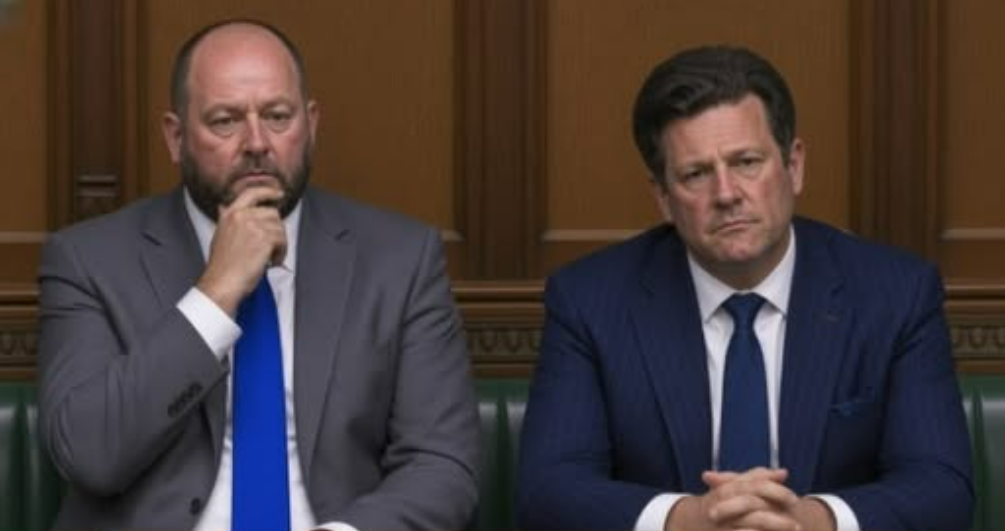
A fresh internal confrontation has opened within the governing Labour Party. Sparked by a backbench intervention asserting that “enough is enough,” the dispute centers on demands to overhaul controversial legislation governing public expression, hate crime, and community protections. What might once have been handled as a technical disagreement over statutory definitions has instead laid bare a profound ideological fissure.
At stake is one of the most volatile questions confronting modern Britain: how does a multi-ethnic, socially fragmented democracy protect its minorities from intimidation without gutting its foundational commitment to free expression and absolute equality before the law?
For Prime Minister Sir Keir Starmer’s government, this controversy arrives at a dangerous moment. It directly engages the combustible narrative of “two-tier” justice—the corrosive suspicion among a growing share of the public that state institutions apply rules unequally depending on who is speaking and what community they represent.
The controversy was ignited when a Labour Member of Parliament publicly broke ranks, declaring that current legislative frameworks governing speech, hate crime, and equality provisions had created unfair, unpredictable outcomes. The MP issued a stark public warning: “Enough is enough.”
The intervention takes direct aim at the delicate legal framework that governs public expression, assembly, and hate-speech thresholds in England and Wales.
┌─────────────────────────────────────────────────────────────────┐
│                    THE CORE CONFLICT AT A GLANCE                │
├───────────────────────────────┬─────────────────────────────────┤
│ REFORM ADVOCATES (The MP)     │ STATUS QUO DEFENDERS            │
├───────────────────────────────┼─────────────────────────────────┤
│ • Law must apply equally to   │ • Rolling back statutes removes │
│   all groups without bias     │   shields from abuse            │
│ • Vague speech thresholds     │ • Online abuse escalates into   │
│   chill legitimate debate     │   offline, real-world violence  │
│ • State enforcement risks     │ • Minorities face organized,    │
│   perceptions of double standards│ systematic harassment          │
└───────────────────────────────┴─────────────────────────────────┘
The Legal and Social Battlefield
For nearly two decades, British law has attempted to walk an increasingly precarious tightrope between safeguarding vulnerable minority groups and defending the democratic right to robust, even offensive, debate. Successive statutes—including the Public Order Act 1986, the Racial and Religious Hatred Act 2006, the Equality Act 2010, and recent online communications frameworks—have sought to define where offensive provocation ends and unlawful hostility, harassment, or incitement begins.
Critics of the current system argue that:
-
The Threshold Problem: Ambiguous statutory phrasing, compounded by police-level policies such as the recording of “Non-Crime Hate Incidents” (NCHIs), has created a palpable chill across public debate. Citizens fear that voicing provocative, unpopular, or traditional beliefs regarding religion, gender, immigration, or national identity could invite police scrutiny or workplace sanction.
-
The Perception of Disparate Application: When laws are defined by subjective complainant perception—such as the standard hate-incident definition where an offense is recorded if perceived as motivated by hostility by the victim or any other person—it invites charges that enforcement varies according to community influence or political expedience.
Conversely, defenders of the established legal framework maintain that:
-
Targeted Harassment is Real: Without clear, enforceable protections, marginalized communities—particularly religious minorities, ethnic groups, and LGBTQ+ individuals—face coordinated campaigns of abuse that drive them entirely out of the civic square.
-
Incitement Precedes Violence: Modern history shows that unpoliced hateful rhetoric often serves as the operational staging ground for public disorder, physical attacks, and community destabilization.
Labour’s Parliamentary Chessboard
For Starmer’s whips’ office, this intervention is far more dangerous than an isolated act of backbench defiance.
Labour’s electoral coalition is an intricate mosaic. It spans progressive metropolitan constituencies where protections against discrimination are paramount; working-class post-industrial seats where voters harbor deep skepticism toward institutional orthodoxy and state policing of speech; and diverse, faith-based suburban voting blocs.
Metropolitan Progressives ────┐
Traditional Working-Class ────┼──► LABOUR COALITION ──► Fractured over Speech & Justice
Faith & Minority Voters   ────┘
Opponents across the political spectrum are already circling:
-
Reform UK has made allegations of institutional double standards and restricted speech a central axis of its electoral critique.
-
The Conservative Opposition continues to challenge Labour to declare whether it stands for traditional British civil liberties or progressive speech regulation.
-
Civil Liberties Campaigns warn that failure to clarify these laws creates an opaque, litigious society where citizens self-censor out of fear.
The government faces three distinct options: defend the status quo and risk fanning backbench rebellion; issue cosmetic enforcement guidance that satisfies neither camp; or open a formal legislative review that risks turning the floor of the House of Commons into a ferocious, protracted ideological battleground.
2. My Professional Perspective
In three decades of investigative reporting from Belfast to Washington, and throughout the corridors of Westminster, I have observed that governments rarely collapse over pure economics. Economic hardship can be measured, budgeted for, and weathered.
Governments crack when the public begins to suspect that the foundational rules of the game are rigged.
When an MP shouts “enough is enough” about equal protection and speech laws, it is not an isolated temper tantrum. It is the political smoke escaping from an engine room that has been overheating for years. The political class wants to treat this as an issue of statutory definitions—a misplaced clause in a public-order statute, a poorly trained desk officer recording a non-crime incident, or a failure of Home Office communications.
That is an evasion. The deeper story has very little to do with drafting mechanics and everything to do with a quiet, systemic crisis of legitimacy that British institutions are terrified to confront.
What People Have Overlooked: The Bureaucratic Offloading of Justice
What almost every mainstream commentary misses is how we arrived here. Parliament did not set out to create an ambiguous, two-tiered speech environment through open democratic debate. Instead, politicians spent twenty years ducking the hard, offensive work of democratic consensus.
Faced with the profound demographic and cultural shifts of modern Britain, politicians realized that defining the boundaries of acceptable speech was an electoral minefield. So, they quietly outsourced it.
POLITICAL PASS-THE-PARCEL
┌────────────────────┐      ┌─────────────────────────┐      ┌───────────────────────┐
│     PARLIAMENT     │ ──►  │ POLICE / CPS GUIDANCE   │ ──►  │    LOCAL PRECINCTS    │
│ Enacts intentionally│      │ Translates vague statutes│      │ Enforces arbitrarily  │
│  broad legislation │      │ into subjective metrics │      │ out of sheer terror   │
└────────────────────┘      └─────────────────────────┘      └───────────────────────┘
They passed broad, intentionally ambiguous statutes that prohibited words or behaviors deemed “threatening, abusive, or insulting” or likely to cause “harassment, alarm, or distress.” They left it to the Crown Prosecution Service (CPS), local constabularies, the College of Policing, and magistrates to decide, on a case-by-case basis, where the red lines lay.
The result is that operational policing—often carried out by mid-level superintendents anxious about local community tensions—has become the arbiter of acceptable thought. When the state offloads moral judgments onto the police, the police will inevitably prioritize keeping immediate public order over abstract principles of free expression.
If a protest group appears large, volatile, and organized, the institutional instinct is to de-escalate, negotiate, and show forbearance. If an individual or an unorganized fringe makes an provocative statement online, the institutional instinct is to prosecute forcefully to demonstrate “decisive action.”
The public is not blind. They see this differential treatment on social media feeds and evening broadcasts. They may not know the sections and sub-clauses of the Public Order Act, but they know the difference between universal justice and tactical capitulation.
The Deeper Meaning: The Collapse of Universalism
For centuries, the singular genius of English common law was its universalism. Lady Justice wore a blindfold for a reason: the law did not care whose grandson you were, what god you prayed to, or what grievance narrative your community harbored. The action alone was judged.
Over the past three decades, Britain traded that universalism for a fragmented, communitarian model of governance.
┌────────────────────────────────────────────────────────┐
│             THE IDEOLOGICAL METAMORPHOSIS              │
├───────────────────────────┬────────────────────────────┤
│   HISTORIC COMMON LAW     │  COMMUNITARIAN PARADIGM    │
├───────────────────────────┼────────────────────────────┤
│ • Strict universalism     │ • Group-identity metrics   │
│ • Conduct-based assessment│ • Perception-based offenses│
│ • Objective standards     │ • Subjective impact models │
│ • Blind justice           │ • Managed social peace     │
└───────────────────────────┴────────────────────────────┘
Under this communitarian mindset, citizens are increasingly viewed not as individual sovereign actors, but as avatars of their respective demographic, religious, or political blocs. Laws began to codify protections based not merely on objective physical harm or immediate incitement to violence, but on subjective feelings of personal offense and communal safety.
Once you introduce subjectivity into criminal law, universalism dies.
If a law states that an offense is committed when an individual perceives hostility, then the law ceases to be an objective standard; it becomes an instrument of who can claim the highest degree of hurt. This invariably rewards the most sensitive, ideological, or aggressive factions in society, while punishing those who adhere to traditional, unapologetic debate.
The MP who said “enough is enough” is reacting to the realization that Britain has created a system where equality before the law has been replaced by a negotiated truce between competing interests. And in a negotiated truce, the side with the loudest megaphone and the greatest potential for civil disruption always wins.
Why This Story Matters: The Fragility of the British Social Contract
Why should an ordinary person care about backbench grumbling over a speech law?
Because the perception of unequal justice is the most toxic acid you can pour into the bedrock of a democracy.
History teaches us that citizens will endure high taxes, deteriorating public services, and prolonged economic stagnation. They will tighten their belts and grumble their way through decades of mismanagement.
What they will not endure is the visceral feeling that the state has picked a side against them.
Perception of "Two-Tier" Enforcement
                 │
                 ▼
      Erosion of Civic Trust
                 │
                 ▼
Withdrawal from Law-Abiding Norms
                 │
                 ▼
      Rise of Insurgent Politics
When a mechanic in Doncaster or a nurse in Plymouth watches people arrested for offensive tweets while organized mobs shouting aggressive chants face minimal intervention, something profound breaks inside their civic consciousness.
They stop viewing the police as their protectors. They stop viewing the courts as neutral arbiters. They begin to see the entire apparatus of the state as an ideological enforcer.
That is precisely how moderate, law-abiding citizens become radicalized. It is how fringe political movements find their oxygen. The mainstream political parties believe they are preserving community harmony by handling sensitive issues with kid gloves. In reality, they are storing dry tinder beneath the foundations of the state.
What Questions Remain Unanswered?
The political press will cover this as a standard Westminster squabble. But the unanswered investigative questions point to deeper structural problems:
-
What Is the True Extent of the Backbench Revolt? How many Labour MPs are privately telling the whips that they cannot defend these double standards to their constituents? If the revolt reaches beyond the usual outspoken figures, Starmer’s disciplined parliamentary majority could become increasingly fragile.
-
Who Is Directing Crown Prosecution Service Policy? To what degree are charging decisions influenced by informal civil-service guidance aimed at avoiding civil unrest rather than the strict application of legal statute?
-
Can a Left-Center Government Confront Its Own Ideological Creation? The current legal architecture around hate speech and equality was largely constructed by previous Labour administrations and progressive legal lobbies. Can Keir Starmer—a former Director of Public Prosecutions whose career is inextricably linked with this exact legal establishment—bring himself to dismantle or radically revise it?
Every civilization eventually faces a reckoning where it must decide what it values more: the messy, uncomfortable vitality of open debate, or the fragile, synthetic calm of state-enforced consensus.
Britain has spent twenty years pretending it did not have to make that choice. It convinced itself that it could police speech just a little bit, protect feelings without suppressing truth, and accommodate group sensitivities without compromising individual liberty.
The dam has cracked. The MP’s declaration that “enough is enough” is not an outlier; it is an early tremor from an electorate whose patience with double standards is running out.
Keir Starmer may attempt to dismiss this as a marginal distraction, order his whips to quiet down the dissenters, and hope the news cycle moves on to healthcare or economic growth.
He would be gravely mistaken.
You cannot fix the economy, repair public services, or govern a nation if the people no longer believe the law treats them equally. When the fundamental compact between the citizen and the state is shattered, no amount of ministerial messaging can repair the damage.
The battle lines are being drawn, not across traditional party lines, but between those who still believe in blind, universal justice and those who believe the law must manage social harmony through selective restraint.
How Britain answers this crisis will define its character for generations.
If the law no longer treats every citizen with absolute, unflinching equality—regardless of their background, beliefs, or the anger of those they offend—then what moral authority does the state have left to ask for their obedience?