The Audacity of Pauline Hanson: The Mechanics of Grievance, the Mirage of Power, and Australia’s Fractured Center. u1

The Audacity of Pauline Hanson: The Mechanics of Grievance, the Mirage of Power, and Australia’s Fractured Center
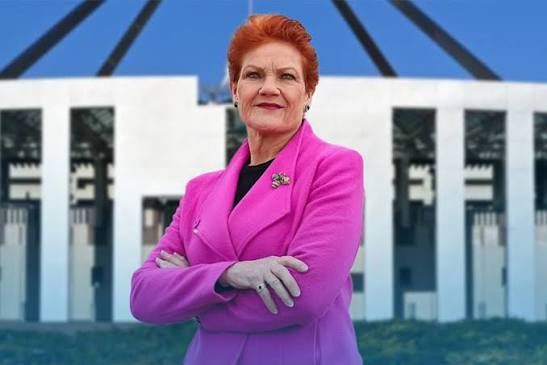
CANBERRA — For three decades, Pauline Hanson has inhabited the periphery of Australian political life like a persistent atmospheric disturbance. Commentators wrote her political obituaries in 1998, in 2003, and repeatedly across the wilderness years that followed. Yet in the volatile winter of 2026, the senator from Queensland did not merely command the spotlight; she laid formal claim to the nation’s highest executive office.
In an interview broadcast on May 31, 2026, Hanson crossed an ideological Rubicon that few minor-party leaders in Westminster democracies dare approach. Asked directly about the prime ministership amid a sustained surge in national polling for Pauline Hanson’s One Nation, she offered an unvarnished response:
“I won’t knock the job.”
The statement was not a casual aside. Hanson framed herself as possessing the maturity, legislative endurance, and unvarnished determination required to lead the Commonwealth. In follow-up coverage by ABC News, she confirmed her belief in her own capacity to govern, expressing public surprise only at the sheer velocity of One Nation’s upward polling trajectory.
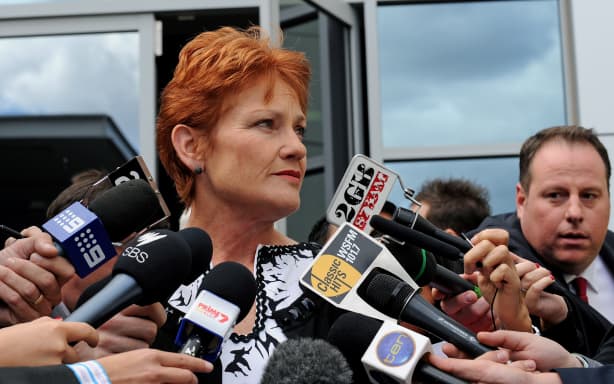
The announcement set off immediate tremors across the political landscape. For her base, the declaration was an electrifying validation—proof that a working-class woman from suburban Ipswich could openly challenge the Canberra duopoly. For her detractors, it was a chilling prospect: an unrepentant nationalist whose career began with declarations that Australia was in danger of being “swamped by Asians,” and who later wore a burqa into the Senate chamber to demand a ban on Islamic dress, now entertaining custody of the nuclear codes and the federal cabinet.
The Context: A Nation Under Strain
Hanson’s gambit does not exist in a vacuum. It arrives at a moment of acute societal and economic exhaustion across Australia. The post-pandemic inflationary spike has left real disposable wages battered. The national median house price has severed the social compact that once guaranteed homeownership to average wage earners. Meanwhile, capital cities grapple with severe rental shortages, strained hospital emergency departments, and oversubscribed transport corridors.
One Nation has harvested this systemic discontent with relentless discipline:
-
The “Fire Albanese” Campaign: In June 2026, the party deployed mobile billboard trucks across Canberra and provincial battlegrounds bearing a blunt imperative: “Fire Anthony Albanese.”
-
The National Press Club Address: Hanson reiterated her call for Australia to abandon official multiculturalism in favor of an unapologetic “monoculture,” demanding that national identity, civic loyalty, and assimilation take precedence over cultural diversity.
-
The Demographic Squeeze: Seizing on annual Net Overseas Migration figures that hovered near 301,000, One Nation cemented its demand to slash the intake to an arbitrary cap of 130,000, framing population growth as the direct architect of suburban misery.
Labor strategists watch this surge with alarm, terrified of bleeding working-class outer-metropolitan seats in Western Sydney and the Hunter Valley. Simultaneously, the Liberal-National Coalition faces an existential panic. Conservative voters in the mortgage belts and regional hubs are peeling away from mainstream conservatism, drifting toward Hanson’s visceral brand of economic and cultural protectionism.
Constitutional Architecture vs. Political Ambition
Despite the breathless headlines announcing a “power move,” the path between Pauline Hanson and the Cabinet room in Canberra is blocked by the immovable geometry of the Australian Constitution.
Under Australia’s Westminster model, the Governor-General commissions as prime minister the individual who commands the confidence of the majority in the 151-member House of Representatives. Hanson currently sits in the Senate, occupying one of Queensland’s twelve upper-house seats.
| Structural Hurdle | Political Reality |
| Chamber Incompatibility | By firm constitutional convention, an Australian Prime Minister must sit in the House of Representatives. No Senator has served as permanent Prime Minister since John Gorton briefly transitioned chambers in 1968. |
| Seat Distribution | To form government in its own right, One Nation would need to win 76 lower-house seats. In the 2025 federal election, despite regional swings, the party’s lower-house presence remained negligible. |
| Hung Parliament Leverage | The only mathematically viable scenario for a Prime Minister Hanson involves a shattered, hung parliament where One Nation holds the balance of power and coerces a fractured Coalition into a radical minority government arrangement. |
Hanson has reportedly weighed abandoning her secure, six-year Senate tenure to contest a provincial lower-house electorate—most likely in regional Queensland or the New South Wales coal country. Yet winning a single lower-house seat provides symbolic gravitas, not the keys to the Lodge.
The institutional reality is unforgiving: Hanson is demanding executive power for an organization that has historically operated not as an alternative government, but as a personality-driven protest vehicle.
2. Professional Analysis & Personal Perspective
My Professional Perspective
I have spent thirty years standing in the back of drafty civic halls, press galleries, and campaign buses across Washington, London, and Canberra. I watched the rise of Ross Perot’s populist insurgency in the United States, tracked the early convulsions of the UK Independence Party that ultimately birthed Brexit, and stood in the Australian federal press gallery in September 1996 when a newly elected independent MP for Oxley gave an inflammatory maiden speech that altered the nation’s political trajectory.
When a political figure who has survived three decades as a professional outsider looks directly into a camera lens and says, “I won’t knock the job,” a seasoned reporter does not write an earnest piece about policy platforms.
You look past the theater and examine the structural scaffolding.
Here is the deeper side of the story that the political establishment is determined to ignore: Pauline Hanson does not actually want the administrative burden of being Prime Minister. What she wants—and what she is systematically executing—is the asymmetric capture of Australia’s center-right.
What Important Details Have People Overlooked?
The political commentary class treated Hanson’s declaration as a display of delusional hubris, quickly citing parliamentary seat counts and constitutional textbooks to prove she cannot mathematically form government.
By retreating into constitutional literalism, the media missed the psychological target of her messaging.
Hanson is not running a campaign aimed at winning 76 lower-house seats; she is running a legitimacy campaign.
For thirty years, the major parties treated a vote for One Nation as a wasted protest vote—a momentary middle finger flipped at Canberra by angry rural and suburban voters who would ultimately return to the Liberal, National, or Labor fold on two-party preferred preferences. The major parties told voters: “Vote for Pauline if you’re angry, but understand she can never govern.”
By declaring herself ready, willing, and capable of holding the prime ministership, Hanson removed the psychological ceiling on her ballot. She signaled to the disillusioned tradesman in Western Sydney, the nurse in Townsville, and the small business owner in suburban Perth that One Nation is no longer a safety valve. It is an instrument of executive eviction.
She turned a transactional protest into a governing aspiration. Even if she never wins more than a handful of lower-house seats, that psychological permission structure allows conservative and working-class voters to park their primary votes with her indefinitely.
The Deeper Meaning: The Hostile Takeover of the Coalition
The true casualty of Hanson’s prime ministerial ambition is not Anthony Albanese. It is the federal Coalition.
Consider the dynamic currently paralyzing the Liberal and National parties. Historically, the Coalition retained power by balancing two distinct factions:
-
The Urban Moderates: Socially progressive, economically orthodox, metropolitan professionals concerned with clean energy, fiscal restraint, and globalized markets.
-
The Heartland Conservatives: Socially traditionalist, patriotic, culturally defensive outer-suburbanites and regional primary producers.
When Hanson asserts that she is ready to be Prime Minister, she accelerates the fatal uncoupling of these two groups.
If the Coalition attempts to fight Hanson on her own terms—by matching her rhetoric on slashing immigration, abandoning climate targets, and fighting cultural battles in schools—they alienate the affluent inner-city seats they lost to the “Teal” independents.
If they ignore her and attempt to govern from the sensible center, Hanson cannibalizes their conservative base, swallowing seats in Queensland, the Hunter, and outer-fringe growth corridors.
Hanson understands this vulnerability. She does not need 76 seats to rule Australia; she needs 5 seats in a hung parliament.
If the major parties fail to secure a clear majority, a One Nation bloc holding half a dozen lower-house crossbench seats alongside a fortified Senate presence would hold the Coalition hostage. Hanson wouldn’t be Prime Minister in title, but she would be the de facto gatekeeper of Australian legislation—dictating policy terms on migration, taxation, resources, and judiciary appointments to a weak, captive Coalition Prime Minister.
The Empty Engine Room: The Governing Paradox
The uncomfortable question that Hanson’s supporters refuse to confront—and one that must be asked with forensic clarity—is the utter absence of governing architecture beneath her.
To administer a G20 economy of 27 million people, a political party requires an extensive, highly disciplined apparatus:
-
A coherent, experienced cabinet of seasoned administrators.
-
A deep bench of policy specialists capable of managing foreign policy, defense alliances, complex taxation frameworks, and Treasury forecasts.
-
Iron-clad party discipline capable of withstanding the relentless media pressure and bureaucratic friction of government.
One Nation has none of this.
Throughout its thirty-year history, the party has operated less like a political movement and more like a private family enterprise. Its structural history is an endless trail of internal lawsuits, bitter expulsions, rogue senators resigning within months of entering Parliament, and candidates collapsing under the most rudimentary media scrutiny.
Hanson has repeatedly proved that she cannot manage her own parliamentary teams for a full three-year term without public defections. The idea that this organization could step into the National Security Committee of Cabinet, negotiate bilateral trade treaties with Washington and Beijing, or oversee a multi-billion-dollar Medicare system is an administrative fantasy.
Hanson’s power has always derived from identifying where the machine is broken, never from knowing how to assemble the gears.
What Questions Remain Unanswered?
As this political phenomenon accelerates, the Australian public must demand answers to the realities hidden beneath the populist rhetoric:
-
The Economic Mirage: One Nation campaigns furiously against the cost-of-living crisis and high housing costs, yet its parliamentary voting record consistently aligns with corporate deregulation and anti-union legislation. How does a party claiming to represent the working-class deliver economic relief while voting against wage protections and public investment?
-
The Geopolitical Realities: Hanson advocates a hardline, isolationist “Australia First” posture. How does an isolated Australia survive economically if a One Nation government initiates trade wars with Asian trading partners who purchase the nation’s iron ore, gas, and agricultural output?
-
The Successor Problem: Pauline Hanson is seventy-two years old. One Nation is entirely built around the personal brand, charisma, and defiance of a single individual. If Hanson transitions out of politics without ever reaching the Lodge, what remains of the movement? Does it collapse into irrelevance, or does it leave behind a radicalized, disenfranchised constituency primed for an even more volatile successor?
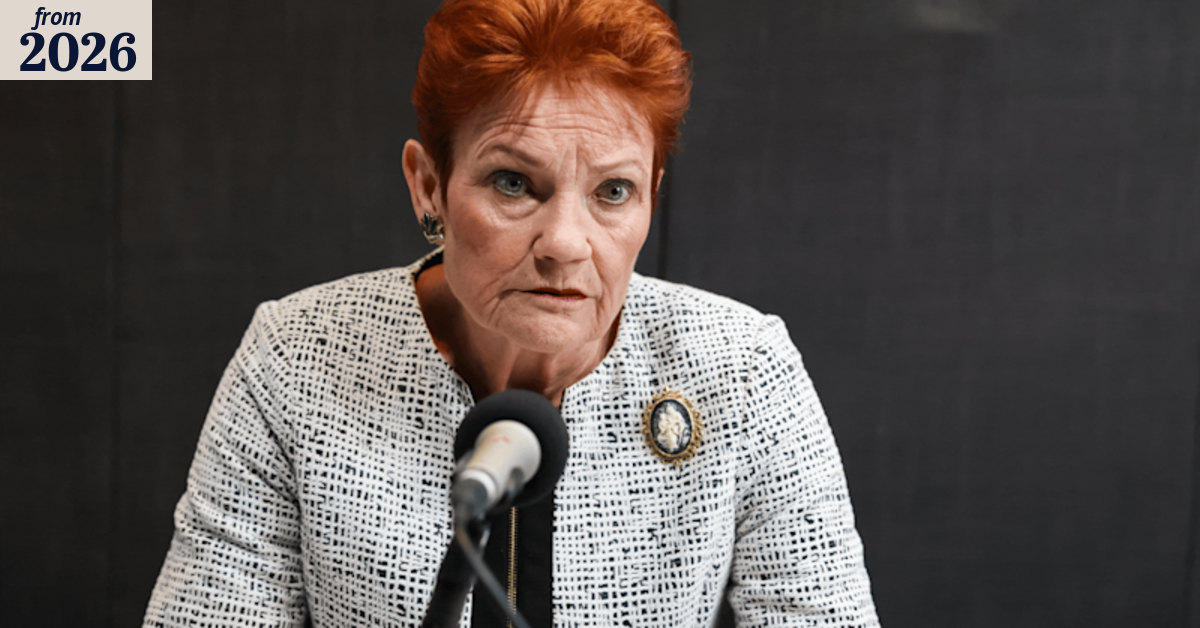
The rise of Pauline Hanson from an Ipswich fish-and-chip shop owner to a self-declared prime ministerial contender is not merely a testament to her political survival. It is an indictment of the modern Australian political establishment.
Voters do not turn to radical, anti-establishment figures because they have suddenly developed a deep ideological affection for populist economics. They turn to them when the mainstream parties—obsessed with factional preservation, curated soundbites, and bureaucratic technocracy—fail to deliver the foundational promises of democratic society: an affordable home, a stable career, safe communities, and a sense that their children will inherit a country more prosperous than the one they were born into.
Pauline Hanson has not proven she has the competence, the temperament, or the team to lead Australia. But by standing before the nation and declaring herself ready to take the reins, she has held a mirror up to a complacent political class that has forgotten how to speak to its own people.
The shockwave running through Canberra is not born of amusement; it is born of terror.
The ultimate question facing the Australian people is not whether Pauline Hanson can actually become Prime Minister.
The question is: How long can our traditional political parties continue to fail the everyday citizen before the voters decide that an administrative disaster is preferable to the status quo?