Pickering Hits Back at Media Critics — Is One Nation Turning Controversy Into a Comeback?. u1

One Nation’s Warren Pickering Confronts Past Drug Use and Family Scandals in Raw Melbourne Defense
Standing alongside his children, One Nation’s Victorian leader admits to youthful drug use and drunk driving while aggressively denying claims of crystal meth addiction and financial fraud.
MELBOURNE, Australia — Facing an escalating media storm that threatened to derail his political career before it truly began, Warren Pickering chose confrontation over retreat.
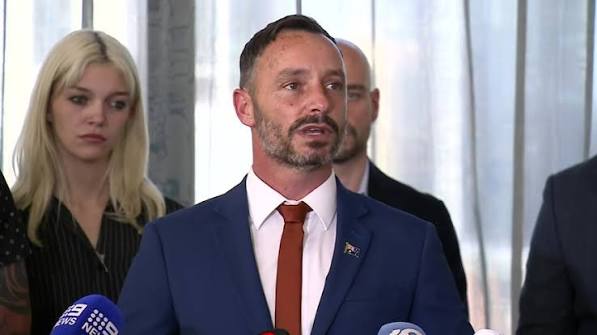
At an emotional press conference in Melbourne, the 43-year-old Victorian leader of Pauline Hanson’s One Nation stood beside his adult children and party officials. He addressed a wave of damaging allegations regarding his personal past, including youthful drug use, suspended driver’s licenses, and a disputed housing grant.
Pickering did not pretend to have lived an unblemished life. Instead, he acknowledged serious personal failures while drawing an unyielding line against allegations he insists are malicious fabrications.
The result is a complex political moment that defies simple headlines. Pickering confirmed key parts of the investigative reporting published by The Australian, including prior use of illicit substances and repeated convictions for driving under the influence. At the same time, the most explosive accusations against him remain unproven and vigorously contested.
Rather than stepping aside, One Nation is now reframing Pickering’s tumultuous history as an authentic story of personal redemption.
What Happened at the Melbourne Press Conference
The controversy erupted following a series of front-page reports in The Australian. The articles detailed claims made by Jo Scott, Pickering’s former partner of 18 years.
Scott alleged that Pickering had engaged in prolonged use of crystal methamphetamine—commonly known as ice—and smoked the drug inside a family residence near children. The reports also highlighted a historic 2010 government notice demanding the repayment of a $13,500 First Home Owner Grant, as well as deeply private relationship notes.
On Tuesday, Pickering broke his public silence to address each issue directly.
He conceded that he had used marijuana, speed (amphetamines), and ecstasy in his twenties. He also confirmed that he lost his driver’s license three times for drunk driving.
“I have never claimed to be an angel,” Pickering said, expressing remorse for the pain his past actions caused his family.
However, he issued a categorical denial regarding crystal methamphetamine. Asked directly whether he had ever consumed ice, Pickering stated he had not. He described allegations that he used hard drugs around his children as outright falsehoods designed to destroy his reputation.
No court or regulatory body has verified Scott’s claims regarding crystal methamphetamine, leaving the competing accounts fundamentally unresolved.
The $13,500 Housing Grant: Administrative Error or Fraud?
Beyond allegations of substance abuse, the media investigation focused heavily on state finances.
Records revealed that the Victorian State Revenue Office (SRO) had investigated Pickering and Scott over a First Home Owner Grant tied to a property built in Mernda. In 2010, the SRO issued a formal demand seeking the return of $13,500.
The issue stemmed from property interests previously linked to Scott.
Under Victoria’s First Home Owner Grant Act, eligibility rules extend beyond the individual applying. If an applicant’s spouse or domestic partner held a relevant residential property interest prior to July 2000, the household is legally disqualified from the grant.
Pickering argued that, as a young tradesman who had never personally owned real estate, he honestly believed he qualified.
While initial news coverage questioned whether the debt was ever repaid, subsequent reporting by The Australian confirmed that the matter had been settled. Pickering contacted the State Revenue Office after reporters raised the issue and was informed that the account had been closed for years.
Public records show no evidence that Pickering was ever charged with or convicted of criminal fraud. The legal distinction between administrative ineligibility and deliberate criminal deceit remains critical.
Family Clashes in the Public Eye
The most intense moment of Tuesday’s appearance arrived when Pickering’s family took the microphone.
Standing beside him were his biological daughter, Jhett, and his eldest stepson, Johnny. Both offered an impassioned defense of the man who helped raise them.
Johnny addressed reporters directly, stating that his life and his siblings’ lives would have been far worse without Pickering’s presence. He praised his stepfather for transforming his habits, providing stability, and being a dependable parent.
Johnny also publicly pushed back against his estranged mother, disputing her version of the family’s domestic history.
The public defense provided rare emotional counterweight to the published allegations. Yet media ethicists note that family disputes aired during political campaigns present difficult challenges.
Testimony from supportive adult children demonstrates their personal experiences with Pickering. It does not automatically disprove every claim raised by a former spouse. Likewise, uncorroborated allegations from an estranged partner cannot automatically be treated as verified legal fact.
Military Service as the Turning Point
For One Nation, the core of Pickering’s defense rests on his record in the Australian Defence Force (ADF).
Pickering enlisted in the Australian Army in 2013. He stated publicly that he ceased all recreational drug use prior to joining and formally disclosed his past drug history during the military recruitment process.
Party leader Pauline Hanson emphasized that Pickering went on to hold a Negative Vetting Level 2 government security clearance. She noted that he completed operational deployments across eight nations and continues to serve in the standby reserves.
Pickering credits the military with reshaping his character. He described military service as the pivotal chapter that instilled discipline, accountability, and a commitment to public service.
While military service demonstrates personal growth, security clearances do not function as judicial exonerations.
A defense vetting process assesses whether an individual poses an active security risk at a specific point in time. It does not certify every historical private detail as spotless, nor does it resolve whether political parties conduct adequate candidate vetting.
Private Notes and Media Boundaries
Coverage of the scandal also highlighted a handwritten note written by Pickering decades ago that included the phrase “sexual deviance”.
The phrase was published prominently without immediate context, prompting widespread speculation online.
James Ashby, One Nation’s national director, intervened to clarify the note’s origin. Ashby explained that the phrase described a consensual open relationship during a time when Pickering was privately exploring his identity.
Pickering acknowledged that, having grown up in a conservative environment, he carried lingering shame about that period of his life.
There is no evidence or allegation of unlawful sexual conduct. Media analysts have questioned whether leaking decades-old, consensual personal reflections serves the public interest, or whether it crosses the line into sensationalized tabloid invasion of privacy.
Political Vendetta or Legitimate Accountability?
One Nation loyalists quickly characterized the investigation as a politically motivated hit job orchestrated to protect the center-right Liberal Party.
With One Nation surging in national polls and targeting conservative seats ahead of Victoria’s November state election, party supporters alleged the reporting was coordinated.
However, no credible evidence has surfaced to suggest The Australian acted under instruction from Liberal strategists or fabricated its documentation.
Pickering is not a private citizen. He is the chosen state leader of a political party that campaigns aggressively on law and order, integrity, and fiscal responsibility.
Scrutinizing a political leader’s criminal history disclosures, driving records, and financial interactions with government agencies is standard investigative journalism.
At the same time, legitimate questions exist regarding proportionality. Publishing deeply intimate domestic allegations alongside verified administrative records often blurs the line between public accountability and personal humiliation.
What the Controversy Means for Candidate Vetting
The saga has renewed scrutiny over One Nation’s internal candidate selection procedures.
Reports indicate that Scott contacted Pauline Hanson’s parliamentary office to lodge complaints before Pickering was officially named Victorian leader.
While political organizations are not required to accept every unverified claim made by disgruntled ex-partners, the timeline raises questions about what party officials knew and when they knew it.
One Nation has defended its approach to recruitment. Ashby argued that the party deliberately seeks candidates with real-world flaws and lived experience, contrasting them with career politicians who have spent their entire adult lives inside political apparatuses.
That philosophy resonates with many disaffected voters who distrust polished political elites. However, it also demands that the party articulate clear boundaries between past mistakes and active liabilities.
The Verdict Rests with Victorian Voters
Pauline Hanson has firmly rejected calls to replace Pickering.
Instead, One Nation is doubling down on his candidacy. The party is gambling that voters are weary of manufactured political perfection and will respect a candidate who openly admits past wrongdoing.
The strategy turns a potential political catastrophe into a test of public tolerance.
Pickering’s record contains verified misconduct: documented drug experimentation, multiple drunk-driving infractions, and a settled state revenue dispute. It also contains inflammatory, unverified claims that he vehemently denies.
When Victorians head to the polls on November 28, they will not be deciding a courtroom verdict. They will decide whether Warren Pickering’s path from troubled youth to decorated soldier represents a disqualifying history or a credible story of personal redemption.
Does a political candidate’s admission of past drug use and personal struggle make them more relatable to everyday voters, or does it raise valid concerns about judgment?