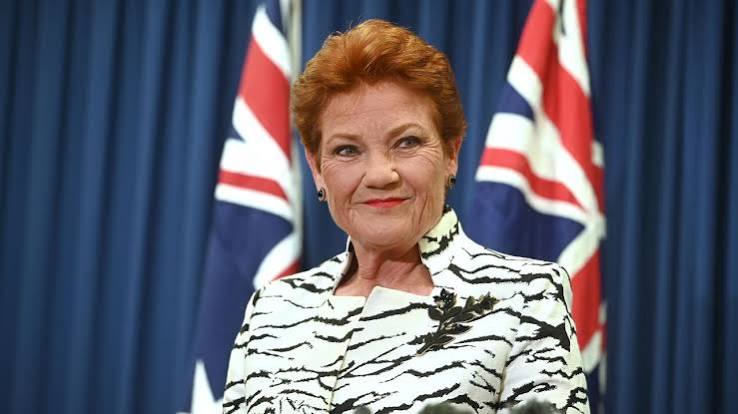

Pauline Hanson’s Zero Migration Push Shakes Up Australian Politics Amid Housing and Cost-of-Living Crises
Pauline Hanson and One Nation have upended Australia’s political debate by proposing a sweeping migration reduction plan that temporarily targets zero net overseas migration, colliding directly with the federal government’s own tightening of visa rules.
What Happened: The Push for Zero Net Migration
Australia’s ongoing debate over population growth has reached a volatile new milestone. Pauline Hanson’s One Nation has released an extensive policy package aimed at drastically curtailing migration to ease mounting pressure on housing, infrastructure, and public services.

The plan proposes slashing more than 750,000 temporary migrants over a three-year period. During this window, net overseas migration would be temporarily driven to zero before shifting toward a permanent cap of 130,000 arrivals annually.
This aggressive stance arrives just as the federal government introduces its own restrictive measures. On September 17, the Albanese administration announced a package targeting visa overstayers, international students, and working-holiday makers, aiming to lower net overseas migration to 245,000 for the current financial year and 225,000 by 2027–28.
While Labor is trimming numbers to manageable levels, One Nation is demanding an immediate, deep reset of Australia’s intake. The sharp divergence between the two approaches has turned migration into the central battleground of Australian politics.
Why It Matters: The Clash Between Housing and Labour
The national conversation around immigration has fundamentally transformed. For decades, the debate balanced economic expansion against population growth. Today, it is driven by an acute housing crisis and everyday cost-of-living pressures.
Voters across the country are grappling with soaring rents, scarce housing stock, and overstretched public infrastructure. Proponents of steep migration cuts argue that slowing population growth is the fastest way to give housing supply and healthcare networks a chance to catch up.
However, business groups, universities, and industry bodies warn that an abrupt freeze or massive reduction carries severe economic risks. Key sectors—including agriculture, construction, aged care, and tourism—rely heavily on migrant labour to fill persistent workforce gaps.

Furthermore, international education stands as a major economic pillar. Reuters reported that the sector was valued at approximately A$53.6 billion, prompting education leaders to warn that overly restrictive caps could inflict lasting damage on the economy.
The Polling Surge and Political Backlash
The traction behind One Nation’s proposal is deeply tied to voter frustration. A series of recent polls heading into late 2026 illustrate a dramatic shift in public sentiment and voter intentions.
Surveys by Roy Morgan and Newspoll have shown One Nation capturing high primary support levels—ranging between 26% and 31.5% at various points throughout the year—placing the minor party on equal footing with, or ahead of, traditional major parties in specific snapshots.
Yet political analysts caution that polling numbers reflect temporary protest sentiment rather than guaranteed electoral realignment.
At the same time, Hanson’s broader platform has drawn fierce criticism. Her June National Press Club address, in which she linked migration to national identity and argued for a “monocultural” society, sparked intense controversy and condemnation from opponents.
Critics argue that the party’s sweeping economic and immigration proposals are administratively unrealistic and could balloon government expenditures. Former senior immigration official Abul Rizvi warned that implementing mass removals and enforcement actions could cost taxpayers billions of dollars.
Understanding the Technical Reality of Migration Caps
Beneath the sensational headlines, the mechanics of One Nation’s policy reveal significant complexities.
Net overseas migration is not simply a count of issued visas; it is the statistical difference between arrivals and departures. Consequently, setting a specific visa ceiling does not automatically translate into a matching net migration figure.
Moreover, One Nation’s leadership has acknowledged that regional labour programs and agricultural sectors—such as meat processing—would require special exemptions to prevent immediate supply chain collapses.
This nuance shifts the debate away from catchy slogans and toward rigorous questions about legal definitions, enforcement logistics, and economic trade-offs.
What Happens Next?
The federal government is already feeling the pressure. By tightening student visa rules and expanding compliance measures, Labor is attempting to reclaim ground on an issue that resonates deeply with anxious households.

For the Albanese administration, the core challenge remains balancing population demand against vital workforce needs. For One Nation, the upcoming test is whether strong protest support can be successfully codified into practical, enduring governance.
Ultimately, Australia faces a fundamental question that extends far beyond political rhetoric: how to build enough homes, infrastructure, and jobs for its people while managing the realities of a growing global economy.
Do you think a sharp reduction in immigration is necessary to solve Australia’s housing crisis, or would it cause more harm to the broader economy?