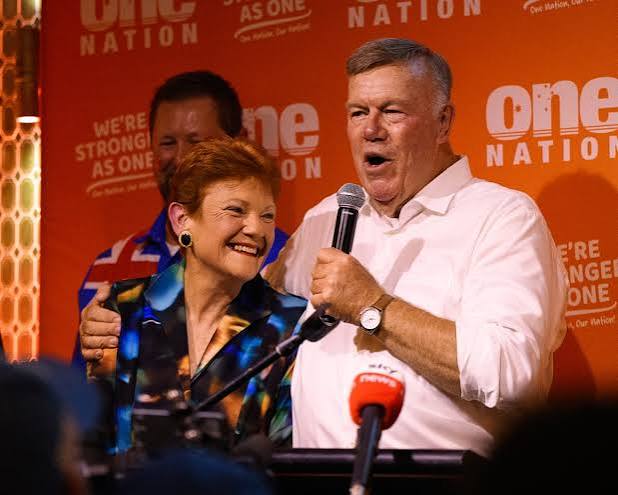
Hanson’s One Nation Support Hardens as New Research Shatters the ‘Protest Vote’ Narrative. U1

The Consolidation of the Fringe: Inside Pauline Hanson’s Quiet Realignment
Across the dusty highway strips of regional New South Wales, through the outer suburban subdivisions south of Perth, and into the blue-collar timber and trade corridors that fringe Australia’s capital cities, an unmistakable political realignment is taking shape.
For thirty years, Australia’s political establishment treated Pauline Hanson’s One Nation as an intermittent fever. It was an unruly political lightning rod that appeared whenever interest rates spiked or immigration debates grew sharp, only to burn out, tear itself apart in factional infighting, or watch its supporters sheepishly return to the Liberal-National Coalition on election day.
That political playbook has broken down.
Fresh empirical data tracking intending One Nation voters reveals that Hanson is no longer merely harvesting temporary anger. She is building a disciplined, culturally entrenched, and electorally committed base that looks less like an impulsive protest vote and more like a permanent insurgency.

With primary vote figures rivaling and at times outpacing both major political blocs—and backed by historic lower-house breakthrough victories in state and federal seats—One Nation is driving Australian politics into uncharted, multi-party territory.
The findings stem from an extensive qualitative and quantitative study examining 1,014 intending One Nation voters, conducted following weeks of intensive focus groups by veteran pollster John Utting and senior political strategist Bruce Hawker. Commissioned by the Brisbane-based, center-left TJ Ryan Foundation, the research was designed to answer a pressing question inside Australian politics: Is One Nation’s current polling surge a temporary mood or a structural shift?
The top-line takeaway is unequivocal: 52 per cent of those surveyed are effectively “locked in,” reporting that their vote is decided and unlikely to waver before the next federal election.
What makes that finding striking is how rapidly this loyalty crystallized. Four in ten respondents reported supporting One Nation only within the past twelve months. Hanson has not merely caught an influx of voters adrift during a prolonged national cost-of-living squeeze; she has turned disaffected outsiders into committed loyalists in record time.
Key Demographics: Who Are They?
The study punctures long-standing stereotypes that caricature One Nation voters as marginalized fringe dwellers:
-
Employment and Housing: More than 75 per cent own their homes—either outright or through an active mortgage—and roughly six in ten are in full-time or active employment.
-
The Trade Factor: Tradespeople, practical technicians, and blue-collar contractors form a heavy concentration of the base.
-
Income Distribution: Rather than sitting at the economic margins, household incomes largely fall into middle Australia’s sweet spot, spanning roughly $60,000 to $195,000.
-
Geography and Gender: Supporters remain disproportionately male, older than the national median, and concentrated outside inner-metropolitan capitals.
These are not the disenfranchised destitute; they are the modern equivalents of what John Howard once courted as “the battlers” and Tony Abbott termed “the tradies”—working Australians with assets, mortgages, and stable occupations who are convinced their standard of living and social standing are in steady decline.
Core Drivers: Pervasive Decline and Cultural Identity
The emotional and material engine behind this movement is an overwhelming pessimism:
-
91 per cent believe Australia is heading in the wrong direction.
-
67 per cent state their household is measurably worse off than it was three or four years ago.
-
71 per cent are convinced that mainstream politicians primarily look after themselves rather than the nation.
When questioned about their motivations:
-
45 per cent cited support for what One Nation explicitly stands for.
-
34 per cent said their choice was driven by a belief that the legacy parties had abandoned them.
-
20 per cent identified Pauline Hanson’s personal leadership as their primary anchor.
On immigration, which remains the central policy lightning rod, the nature of voter concern has evolved. Among those identifying migration as an issue, 42 per cent pointed to total arrival volumes, 28 per cent cited strain on housing and social infrastructure, and 17 per cent focused on crime and community safety. When asked why levels should be reduced, 57 per cent declared that immigration was changing Australian identity and culture too rapidly. Significantly, spontaneous mentions of religion or Islam were minimal, indicating that the grievance has shifted toward macro-population pressures, national identity, and housing availability.
Real-World Proof: Moving Beyond the Margin of Error
While political strategists often discount high polling between elections, One Nation’s numbers are translating into actual parliamentary seats:
-
The Newspoll Benchmark: A national Newspoll registered One Nation at 30 per cent on the primary vote—ahead of Anthony Albanese’s Labor on 29 per cent and leaving Angus Taylor’s Coalition trailing at 19 per cent. Supporting surveys from Roy Morgan, Essential, and Resolve show similar historic peaks.
-
The Federal Breach (Farrer By-Election): In May, irrigation specialist and former corporate executive David Farley won the blue-ribbon rural division of Farrer in southwestern New South Wales, flipping a seat held by the Liberal Party for decades.
-
The State Inroad (Secret Harbour By-Election): In Western Australia, One Nation candidate Luke Herdegen captured the state lower-house seat of Secret Harbour with a 39.1 per cent primary vote—a swing of over 30 points—defeating Labor on preferences to claim the party’s first-ever seat in the WA Legislative Assembly.
┌────────────────────────────────────────────────────────────────────────┐
│                   THE SHIFTING COALITION PROFILE                       │
├────────────────────────────────┬───────────────────────────────────────┤
│ Origin of Intending ON Voters  │ 38% ex-Coalition, 17% ex-Labor,       │
│                                │ 45% Other / Non-voters                │
├────────────────────────────────┼───────────────────────────────────────┤
│ Conviction Level               │ 52% "Locked in"                       │
│                                │ 48% Soft / Open to persuasion         │
├────────────────────────────────┼───────────────────────────────────────┤
│ Policy Optimism                │ 87% believe ON has workable plans     │
│                                │ 50% believe ON can win government     │
└────────────────────────────────┴───────────────────────────────────────┘
2. Professional Analysis & Personal Perspective
My Professional Perspective
Covering populist movements across three decades—from the industrial rust belts of the American Midwest to regional Europe and provincial Australia—teaches you that mainstream establishments make the same mistake every time: they diagnose a structural crisis as an emotional tantrum.
Canberra’s political establishment is comforting itself with the idea that this is merely an angry public blowing off steam that can be cooled with targeted tax relief or a few aggressive soundbites. That diagnosis is dead wrong.
1. The Overlooked Reality: The Working Asset-Holder’s Revolt
Commentators usually frame populism as the domain of the left-behind: the unemployed, the struggling pensioner, the dispossessed.
The Utting-Hawker research shows the opposite: Hanson’s vanguard consists of asset-holding, employed, tax-paying middle Australians. These are households earning up to $195,000 who own their bricks and mortar, drive dual-cab utes, and run trade subcontractors.
Why are they revolting? Because they feel like the ultimate marks in the Australian economic game.
They work long hours, pay top-tier personal income taxes, service high variable mortgages, and watch their kids get priced out of basic housing by an overheated property market. They look at suburban roads choked with traffic, wait months to see a medical specialist, and conclude that while they are footing the bill for the nation, the benefits of growth are captured entirely by corporate monopolies, government consultancies, and inner-city elites.
When 91 per cent of these voters say Australia is heading in the wrong direction, they are not expressing vague discontent. They are delivering an indictment of the country’s economic return on investment.
┌─────────────────────────────────────────────────────────────┐
│                 THE AUSTRALIAN GRIEVANCE ENGINE             │
├──────────────────────────┬──────────────────────────────────┤
│ The Old Formula (1996)   │ The New Reality (Today)          │
├──────────────────────────┼──────────────────────────────────┤
│ Fringe disaffection      │ Working asset-holders            │
│ Regional, low-income     │ Suburban & regional middle-class │
│ Anti-welfare grievance   │ Infrastructure & housing stress  │
│ Punitive, temporary vote │ Hardened ideological home        │
└──────────────────────────┴──────────────────────────────────┘
2. The Deeper Meaning: The Shattering of the Two-Party Monopoly
For almost a century, the Westminster machine in Canberra operated as a comfortable duopoly. Labor looked after organized labor and social progressivism; the Coalition looked after enterprise, free markets, and the suburbs. Minor parties were mere irritants to be handled through preferential horse-trading.
That dynamic is dying.
By pulling 38 per cent of its current vote directly from the Coalition, One Nation is gutting the Liberal and National parties’ conservative base. Opposition Leader Angus Taylor is finding that the traditional center-right script—promising responsible economic management while avoiding thorny cultural debates—leaves voters cold.
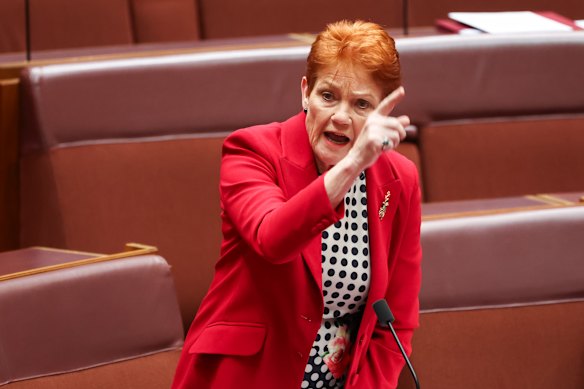
When Taylor announced plans to jail flag-burners for up to 12 months, the Coalition was widely seen as reacting to Hanson rather than leading. It was an anxious nod to a base that has already migrated.
At the same time, the 17 per cent share pulled from Labor represents the ongoing flight of culturally conservative, blue-collar workers who feel Anthony Albanese’s party has become a vehicle for inner-city professionals and public-sector administrators.
When more than seven in ten One Nation voters agree that the Prime Minister “says one thing and does another,” the cynicism runs too deep for a standard election-year cash handout to bridge.
3. Why This Story Matters: The Fragility of Preferential Voting
Pundits regularly dismiss One Nation’s chances of real power by pointing to Australia’s preferential, single-member voting system. They argue that even if Hanson hits 25 or 30 per cent on primary votes, preferential flows from major parties will freeze her out in two-candidate-preferred runoffs.
This assumption ignores electoral mechanics:
-
Once a minor party’s primary vote crosses 35 per cent in a seat—as seen with David Farley in Farrer (39.5%) and Luke Herdegen in Secret Harbour (39.1%)—preference walls collapse.
-
In a fragmented three-way contest where the Coalition sits under 20 per cent and Labor in the high 20s, One Nation only needs to edge past one legacy party to ride the other’s preferences into parliament.
The dam has already cracked. A lower-house presence in both federal parliament and state assemblies provides One Nation with parliamentary staffing budgets, public electoral funding, and legislative leverage. It transforms the party from an outsider protest lobby into a permanent political player.
4. The Unanswered Questions
-
Can One Nation survive its own organizational growth? The party’s history is littered with rapid rises followed by self-sabotage, erratic candidate behavior, and public splits. If it runs candidates in dozens of winnable seats, can Hanson maintain message discipline, or will internal squabbles sink the ship?
-
Will the Coalition splinter or capitulate? Does Angus Taylor pivot further right to reclaim the 38 per cent that fled to Hanson, risking the moderate, affluent suburban seats where teal independents wait to clean up? Or does the Coalition risk sliding into third-party irrelevance?
-
What happens when the outsider must deliver? Voting for a fiery outsider is easy; watching that outsider cast complex votes on supply bills, infrastructure appropriations, and taxation policy is another. As One Nation MPs take up their seats in Canberra and Perth, will their working-class base see actionable changes, or merely another layer of political theater?
Australia has quietly crossed a political line.
For three decades, the political establishment viewed Pauline Hanson as a passing weather event. They treated her voters as lost sheep who would wander back to the two-party fold once economic stability was restored or when the major parties adopted slightly tougher rhetoric on the border.
The Utting-Hawker findings make it clear that those days are behind us.
Half of Pauline Hanson’s voters have decided that One Nation is where they belong. They are not waiting for an apology from the Liberals, nor are they waiting for a gesture from Labor. They have watched the political machine in Canberra preside over high living costs, surging house prices, and overloaded infrastructure, and they have concluded that the machine itself is broken.
Whether One Nation can translate this support into stable, long-term governance remains an open question. But the illusion that Australia is immune to the populist realignments reshaping other Western democracies has evaporated. The voters in the outer suburbs and regional towns have stopped looking back.
As you watch traditional political parties offer their usual talking points, consider the deeper shift at work in the electorate:
When working citizens with jobs, mortgages, and stable lives decide the system no longer serves them, can the traditional parties ever win them back—or are we watching the permanent redraw of the Australian political landscape?