
Prime Minister Anthony Albanese Faces Growing Scrutiny Over National Security and Transparency
Australian Prime Minister Anthony Albanese is confronting a challenging political storm after a tense television interview collided with mounting questions over national security arrangements and government transparency.
What began as a pointed exchange on morning television over Australia’s top intelligence chief has quickly expanded into a broader debate over how key decisions are made behind closed doors.
With the opposition pressing for accountability and public trust hanging in the balance, the Albanese government is under intense pressure to explain internal security structures and policy reversals.

The unfolding controversy highlights the fragile boundary between legitimate executive confidentiality and the public’s right to know how national security and social welfare are managed.
A Tense Interview and the Mike Burgess Controversy
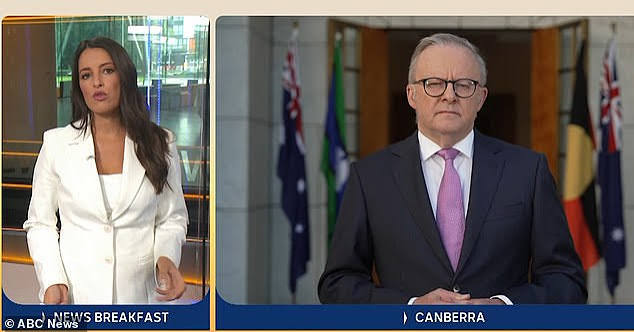
The current political friction intensified sharply following an interview between Prime Minister Anthony Albanese and ABC Breakfast host Olivia Caisley.
Caisley pressed the Prime Minister regarding reports concerning Mike Burgess, the Director-General of the Australian Security Intelligence Organisation, and his participation in the National Security Committee of Cabinet.
The questioning focused on reports that Burgess had ceased being a permanent member of the committee during the early months of the Labor government.
When pushed on the reasons behind the administrative shift, Albanese interrupted with a remark that instantly defined the media cycle:
“I’m sorry Olivia, I’m sorry, but you weren’t at the meetings, I was.”
The blunt retort quickly circulated across digital platforms, dividing public opinion.
Supporters viewed it as a prime minister rightly defending the confidentiality of cabinet deliberations against an intrusive line of questioning.
Critics, however, interpreted the remark as an attempt to deflect legitimate scrutiny over how intelligence leadership interacts with executive decision-making.
Why the National Security Committee Structure Matters
The National Security Committee handles the nation’s most sensitive issues, including counter-terrorism, defence strategy, and foreign affairs.

Because of the gravity of these responsibilities, the formal status and access of intelligence chiefs carry enormous weight.
The disclosure that Burgess had reportedly lost permanent membership status did not come from an official government announcement.
Instead, the detail emerged through a heavily redacted Freedom of Information request, immediately raising concerns about transparency.
The government maintained that Burgess continued to attend meetings whenever matters requiring his specific intelligence expertise were on the agenda.
Yet critics argued that demoting the ASIO chief’s formal status—even temporarily—sent the wrong signal regarding the integration of intelligence into high-level policy.
Further compounding the issue was the reported reinstatement of Burgess as a permanent member in early 2024, leaving observers to question why the initial change was made if the existing arrangement was already functioning effectively.
The Opposition Seizes the Initiative
The Coalition has seized upon the revelations to challenge the government’s competence on national security.
Shadow Home Affairs Minister James Paterson described the reported decision-making process as reckless, arguing that national security structures should remain stable and transparent.
For the opposition, the dispute offers a rare avenue to question executive judgment on terrain that is traditionally difficult for governments to navigate.
Because national security decisions are rarely debated openly in real time, any suggestion that internal protocols were weakened without adequate justification creates a powerful political narrative.
The government, meanwhile, insists that the characterisation of the arrangement as a security failure is inaccurate and misrepresents how cabinet functions in practice.
A Second Front: The Royal Commission Into Anti-Semitism
Compounding the government’s political challenges is the handling of rising anti-Semitic incidents and the subsequent decision to establish a federal Royal Commission.

Initially, the Albanese government resisted calls for such an inquiry, citing concerns over potential delays and the risk of providing a platform for further inflammatory material.
Following sustained public pressure from affected families and community leaders, the government reversed its position and appointed former High Court Justice Virginia Bell to lead the inquiry.
While the decision was welcomed by many community advocates, it triggered fresh political debate over government responsiveness.
Critics accused the administration of acting only in response to mounting political pressure rather than preemptive conviction, invoking past rhetoric about governing from conviction rather than convenience.
The government countered that careful legal and jurisdictional coordination with state authorities was essential before launching an inquiry of that magnitude, ensuring it would not interfere with ongoing criminal proceedings.
The Broader Question of Trust and Transparency
Although the ASIO committee structure and the Royal Commission involve entirely separate issues, they have converged in the public narrative around executive transparency.
In both instances, critics argue that the government has been reactive rather than proactive, disclosing critical operational details only after outside pressure or FOI releases forced the issue.
For Prime Minister Albanese, the core challenge moving forward is not merely managing individual media appearances, but rebuilding a narrative of openness and careful governance.
As Australia heads toward an increasingly contested political environment, the ability to reassure voters that sensitive national security and social issues are handled with rigorous accountability will remain a defining test of his leadership.
How do you think governments should balance the need for cabinet confidentiality with the public’s right to transparency on national security matters?