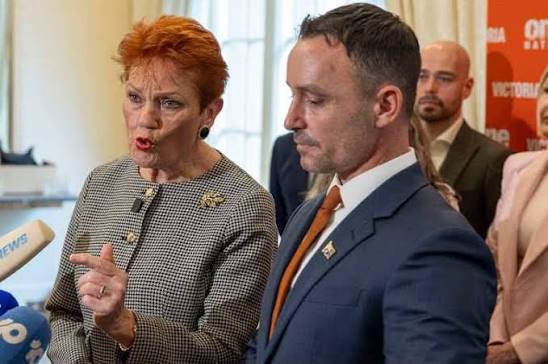
Hanson Sets Sights on Pakenham as One Nation Targets Labor Seat by Just 307 Votes. U1

The Subprime Reckoning: Inside Pauline Hanson’s Siege of Melbourne’s Mortgage Belt
Along the Princes Freeway, fifty kilometers southeast of Melbourne’s gleaming skyline, the landscape transitions from established commuter suburbs into a vast expanse of fresh asphalt, newly planted gum trees, and sprawling master-planned subdivisions.
Here in Pakenham, the Australian Dream was sold on installment. Tens of thousands of young families, tradespeople, and first-time homebuyers stretched their finances to the breaking point during the era of ultra-low interest rates, buying into house-and-land packages with minimal deposits.
Today, that promise has hit a wall of economic friction.
In postcode 3810, the monthly mortgage statement is no longer routine personal bookkeeping; it is an urgent political reckoning. As scheduled repayments absorb an ever-larger portion of household income and the price of everyday essentials continues to rise, the suburban tranquility of Melbourne’s outer southeast has given way to an atmosphere of deep-seated financial anxiety.
Recognizing this vulnerability, Pauline Hanson has brought her party’s national insurgency into the heart of Victoria’s mortgage belt. She is not chasing a ceremonial protest vote. She is attempting an electoral breach that could upend Victorian state politics.
Her target is the seat of Pakenham—an electorate held by the governing Labor Party by a microscopic margin of just 307 votes.
If One Nation can convert the acute, lived experience of mortgage distress into a disciplined anti-establishment vote on November 28, 2026, it will not merely claim a seat. It will establish a formidable new frontier for Australian populism: the outer-metropolitan mortgage belt.
The Crucible: Postcode 3810 and the Mechanics of Stress
The strategic focus on Pakenham is not an accident of scheduling; it is driven by cold demographic and financial realities.
In late August 2026, S&P Global Ratings published its quarterly residential mortgage arrears performance figures. Postcode 3810—encompassing Pakenham, Pakenham South, Pakenham Upper, and Rythdale—topped the national table.
According to the S&P data:
-
2.88 percent of residential mortgages in the postcode were officially recorded as being in arrears as of June 30.
-
Postcode 3810 edged out other heavily indebted suburban battlegrounds across the country, including Constitution Hill in New South Wales (2.42 percent) and Point Cook in Melbourne’s outer west (2.40 percent).
While an arrears rate of 2.88 percent does not signify widespread foreclosure, in credit-risk modeling it serves as a critical leading indicator of structural household insolvency.
As S&P Global Ratings director Erin Kitson noted, the distress is concentrated in outer-fringe corridors that expanded rapidly during property booms by offering entry-level price points.
These areas attracted young wage-earners who entered the market with high loan-to-value ratios (often 5 to 10 percent deposits) and have had minimal time to build an equity cushion.
When central banks raised borrowing costs and general inflation outpaced wage growth, these families had no margin for error.
Unlike older, inner-suburban homeowners who can absorb shocks or downsize with substantial capital gains, the outer-suburban mortgage holder who bought at the peak of the market faces stagnant equity and non-negotiable monthly debt obligations.
┌─────────────────────────────────────────────────────────────┐
│                 POSTCODE 3810: DEBT PROFILE                 │
├──────────────────────────────┬──────────────────────────────┤
│ Metric                       │ Value / Context              │
├──────────────────────────────┼──────────────────────────────┤
│ Mortgage Arrears Rate        │ 2.88% (Ranked #1 Nationally) │
│ Nearest Rivals               │ Constitution Hill (NSW) 2.42%│
│                              │ Point Cook (VIC) 2.40%       │
│ Demographic Composition      │ First-home buyers, tradies,  │
│                              │ young families, long commuters│
│ Equity Buffer                │ Low to negative; small       │
│                              │ entry deposits               │
└──────────────────────────────┴──────────────────────────────┘
The Electoral Razor: 307 Votes and an Open Seat
Against this precarious economic backdrop sits the most fragile parliamentary arithmetic in Victoria.
At the November 2022 state election, the newly created division of Pakenham produced a razor-thin finish:
-
Labor candidate Emma Vulin: 33.84 percent of primary votes (13,101 votes).
-
Liberal candidate David Farrelly: 32.43 percent of primary votes (12,556 votes).
-
One Nation candidate Angela Siladji: 3.40 percent of primary votes (1,317 votes).
When preferences were distributed through Victoria’s full preferential voting system, Vulin secured victory with 19,587 votes (50.39 percent) to Farrelly’s 19,280 votes (49.61 percent). The margin was an infinitesimal 307 votes—a 0.39-point buffer that made Pakenham one of the most marginal electorates in the country.
Compounding Labor’s defensive challenge is the loss of incumbency.
Emma Vulin, a community figure and former Country Fire Authority (CFA) volunteer who built deep personal relationships across the district, announced in September 2025 that she would not contest the 2026 election following a diagnosis of motor neurone disease (MND).
While Labor has preselected local campaigner Alessandra Soliven to defend the seat, the removal of Vulin’s personal vote strips the party of an essential shield.
The Hanson Incursion: The Barbecue in the ‘Burbs
Recognizing the opportunity, Pauline Hanson made a high-profile appearance in the electorate, captured by national broadcasters including ABC’s 7.30.
Flanked by smoke from a community sausage sizzle, Hanson campaigned alongside Warren Pickering, who is not only One Nation’s local candidate for Pakenham but also the party’s Victorian State Leader.
Pickering’s biography is tailored specifically for the demographic makeup of the electorate:
-
A regional upbringing on a Gippsland potato farm.
-
A decade of service in the Australian Army as a combat engineer with deployments to the Middle East.
-
Blue-collar credentials as a commercial bricklayer and mine worker in Queensland’s coal basins.
One Nation’s pitch to Pakenham bypasses traditional ideological rhetoric, zeroing in on hip-pocket realities:
-
Scrapping net-zero emissions targets and halting the closure of coal-fired generation stations to lower domestic power bills.
-
Overturning the state’s moratorium on nuclear power.
-
Drastically curbing net overseas migration to ease demand on outer-suburban infrastructure, local hospital waitlists, and public school enrollments.
-
Abolishing state-based property charges, emergency service levies, and bureaucratic taxes.
The Western Australian Precedent: The Shadow of Secret Harbour
The major parties cannot dismiss One Nation’s ambitions in Pakenham as political theater, primarily because of what occurred three months earlier on the opposite side of the continent.
On August 29, 2026, at the state by-election for the outer-suburban seat of Secret Harbour south of Perth, One Nation delivered a historic result. The electorate, held by Western Australian Labor on a comfortable margin of 11.5 percent, was considered safe government territory.
When the ballots were counted:
-
One Nation candidate Luke Herdegen captured 39.1 percent of the primary vote—a swing of 30.7 percentage points.
-
WA Labor’s primary vote cratered to 24.1 percent.
-
The Liberal Party was relegated to third place on 17.2 percent.
-
After preferences, Herdegen defeated Labor 57.2 percent to 42.8 percent, securing One Nation’s first-ever lower-house seat in Western Australian history.
Secret Harbour shared striking sociological similarities with Pakenham: a high concentration of young families, significant mortgage debt, a reliance on the trades and resource logistics, and widespread frustration with public infrastructure bottlenecks.
While seasoned analysts correctly caution that by-elections allow voters to punish governments without changing the administration, the Western Australian result demonstrated that under specific conditions of financial distress, outer-suburban working-class communities are willing to bypass both legacy parties entirely.
Covering political realignments across thirty years—from the collapse of the industrial Rust Belt in the American Midwest to the fall of the Red Wall in northern England and the fragmentation of Australia’s working-class suburbs—teaches you that major parties rarely lose power because of their opponents’ brilliance.
They lose power because they become blind to the shifting economic realities of their base.
What is unfolding in Pakenham is not an ordinary electoral contest. It is a real-time stress test of Australia’s political settlement. To understand the stakes, we must examine the subterranean currents that conventional polling commentary routinely overlooks.
┌─────────────────────────────────────────────────────────────┐
│                 THE SUBURBAN DISLOCATION LOOP               │
├─────────────────────────────────────────────────────────────┤
│ 1. Cheap credit drives working families to outer fringe.    │
│ 2. Rapid population growth strains local infrastructure.    │
│ 3. Interest rate hikes compress disposable income to zero.  │
│ 4. Major parties offer macro statistics instead of relief.  │
│ 5. Economic alienation transforms into anti-systemic vote.  │
└─────────────────────────────────────────────────────────────┘
1. What People Have Overlooked: The Failure of the “Mortgage Shield”
For decades, Australian political strategists operated on an ironclad axiom: homeowners vote conservative, while renters lean progressive.
The suburban homeowner with a thirty-year mortgage was considered the ultimate stabilizing force in politics. They were cautious, risk-averse, and heavily invested in preserving the institutional status quo. They did not vote for insurgent, radical, or anti-establishment parties because volatility was bad for property values and bad for business.
That political consensus is breaking down.
In postcodes like 3810, homeownership has shifted from a stabilizing asset into an economic burden. When a household allocates 45 to 55 percent of its after-tax income to service a variable-rate home loan, while paying inflated rates for vehicle fuel, grocery staples, and compulsory childcare, that household no longer feels like a proud stakeholder in the Australian economy.
They feel squeezed.
Former Labor strategist Kos Samaras, now director at RedBridge, identified this vulnerability when he classified Pakenham as “classic One Nation territory.”
His insight points to a reality that Westminster-style political parties struggle to process: The new populist voter is not the disenfranchised person living on social security; it is the employed, home-owning, tax-paying suburban worker who believes they have followed every rule of society and are still falling behind.
When a political class continually boasts about record low unemployment, aggregate national GDP growth, and strong corporate tax receipts, it triggers resentment in households that are skipping dental visits, canceling family insurance policies, and borrowing from parents to cover monthly mortgage shortfalls.
To tell a family under financial strain that the economy is fundamentally sound is to tell them that their struggle is an individual failure rather than a systemic policy issue.
2. The Deeper Meaning: The Geography of Disconnect
Look at the physical distance between the seat of government and the seat of stress.
Spring Street, the home of Victoria’s Parliament, sits nestled beside the manicured Treasury Gardens in central Melbourne. It is surrounded by high-density transit, leafy café precincts, corporate law firms, and university campuses. Within that five-kilometer radius, public policy debates are dominated by emissions reduction targets, social reform, cycle-lane funding, and planning overlays.
Fifty kilometers to the southeast, in Pakenham, life is defined by entirely different logistics:
-
The Commute: A two-hour daily trek along the congested Monash Freeway or aboard the Pakenham rail line to access employment centers.
-
Infrastructure Deficits: A community that has mushroomed in population over a single decade, where local primary schools rely on clusters of demountable classrooms and families wait hours in emergency triage.
-
Energy Dependency: Unlike inner-city residents who can rely on public transit and walk to services, outer-suburban families depend on two cars to keep their households functioning.
When state authorities announce levies on commercial enterprises, push rapid decarbonization timetables that increase household power bills, or implement regulatory compliance measures that fall directly on small subcontractors, the costs land disproportionately on the outer suburban rim.
Pauline Hanson’s political skill has never been the design of intricate, workable public policies. Her skill lies in locating the institutional blind spot.
By showing up at a suburban barbecue in Pakenham alongside a former combat engineer and bricklayer, Hanson delivers an explicit message to voters who feel ignored: The people running this state do not know you, they do not understand your lives, and they do not care about your struggles.
┌─────────────────────────────────────────────────────────────┐
│                 THE THREE-WAY ELECTORAL MATRIX              │
├──────────────────────────┬──────────────────────────────────┤
│ Party                    │ Strategic Proposition & Dilemma  │
├──────────────────────────┼──────────────────────────────────┤
│ Victorian Labor          │ • Deliver infrastructure spend   │
│ (Alessandra Soliven)     │   (hospital, level crossings).   │
│                          │ • Vulnerability: Defending macro │
│                          │   economic record without Vulin. │
├──────────────────────────┼──────────────────────────────────┤
│ Victorian Liberals       │ • Present as the only viable     │
│ (David Farrelly)         │   alternative government.        │
│                          │ • Vulnerability: Risk having its │
│                          │   base cannibalized by Hanson.   │
├──────────────────────────┼──────────────────────────────────┤
│ Pauline Hanson's ON      │ • Channel unvarnished financial  │
│ (Warren Pickering)       │   distress into a protest vote.  │
│                          │ • Vulnerability: Candidate       │
│                          │   scrutiny and preference flow.  │
└──────────────────────────┴──────────────────────────────────┘
3. The Preference Trap: How Preferential Voting Cuts Both Ways
Pundits often assume that Australia’s full preferential voting system serves as an insurmountable wall against minor-party breakthroughs in single-member lower-house seats.
The conventional wisdom argues that if One Nation runs third, its preferences will simply flow to the Liberal Party, handing the Coalition a marginal victory over Labor.
That assumption ignores the preference dynamics of a volatile electorate:
-
Scenario A (One Nation Stays Third): If Pickering captures 15 to 20 percent of the primary vote, the discipline of his preference distribution becomes decisive. While historically One Nation preferences lean 60-40 or 65-35 toward the Coalition, in Victoria’s outer-suburban working-class pockets, a notable portion of anti-establishment voters refuse to direct their preferences to the Liberal Party, which they view as equally culpable for their financial troubles.
-
Scenario B (The Secret Harbour Inversion): If the Coalition vote fractures and Pickering leapfrogs the Liberal candidate to take second place, the entire contest turns inside out. In that event, the Liberal candidate is eliminated, and Liberal preferences—driven by anti-Labor sentiment—flow heavily to One Nation, creating a path to victory against Labor on two-candidate-preferred terms.
The margin of 307 votes means that any shift—even a couple of hundred votes peeling off from either major party—can alter the outcome.
4. The Unanswered Questions That Demand Independent Scrutiny
Before anyone declares Pakenham a done deal for an insurgent takeover, several critical questions must be answered:
-
Can One Nation Build an Effective Ground Game?Winning a single-member lower-house seat requires more than national television hits and viral social media clips. It requires an army of disciplined, vetted volunteers to staff dozens of polling booths, distribute how-to-vote cards, and chase postal votes across an entire electorate. Does One Nation have the precinct-level machinery to execute a ground game against Labor’s union infrastructure and the Liberal Party’s branch network?
-
Will Warren Pickering’s Profile Withstand Scrutiny?As One Nation’s state leader, Pickering is stepping out of the relative obscurity of upper-house tickets and into the center of a high-stakes campaign. Every public statement, historic social media post, and past business association will be examined by the major parties’ opposition research units. Can he maintain disciplined message delivery under intense media pressure?
-
Does Tangible Infrastructure Outweigh Immediate Financial Pain?Labor is not entering this fight empty-handed. The government has poured hundreds of millions of dollars into Pakenham: removing level crossings, upgrading local rail infrastructure, building new primary schools, and funding the construction of the new Pakenham Community Hospital. Will voters in the polling booth choose to punish the government for high living costs, or will they credit Labor for concrete, localized capital investments?
The battle for Pakenham is not merely a regional contest for a single seat in the Victorian Legislative Assembly. It is an early indicator of where Australian politics is heading as the era of cheap money and suburban expansion gives way to persistent financial pressure.
For thirty years, Australia’s major parties treated populist politics as an issue confined to regional Queensland, the timber towns of the north, or dying industrial pockets. They comforted themselves with the belief that the modern, aspirational middle class in the major metropolitan capitals was immune to the appeals of Pauline Hanson.
Postcode 3810 is challenging that assumption.
When young, hard-working citizens buy a home, start a family, and work long hours, only to find themselves slipping into financial distress, their connection to mainstream institutions frays. They do not look at their mortgage statements through the lens of economic theory; they look at them as a broken promise.
If the major parties continue to respond to this stress with defensive talking points and bureaucratic explanations, they will discover that Pakenham is not an isolated outlier. It is a warning sign.
On November 28, the voters of Pakenham will enter the polling booths. Behind the privacy of the cardboard voting screens, they will hold the pencil in their hands and make a choice.
They will decide whether to maintain their faith in the traditional parties of government, or to take their frustration, their mortgage bills, and their uncertainty, and cast a vote that sends a message through the Australian political establishment.
Thirty years of reporting have shown that political realignments never start in the center of power; they start where the asphalt meets the paddocks, in the quiet suburbs where ordinary families sit around kitchen tables late at night trying to make the numbers work.
As you watch the campaign posters go up along the suburban arterials of Melbourne’s outer southeast, ask yourself the question the major parties are quietly dreading:
When the price of the Australian Dream becomes more than working families can afford to bear, what makes anyone think they will keep voting for the system that sold it to them?