The Anatomy of an Outrage: When Politics Treats the Inquiring Mind as an Adversary. u1

The Anatomy of an Outrage: When Politics Treats the Inquiring Mind as an Adversary
The Crucible in Canberra
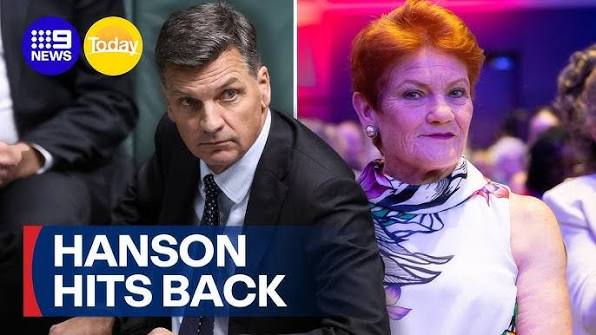
The political temperature along the shores of Lake Burley Griffin has crossed a threshold where rhetoric ceases to be policy debate and instead becomes open cultural warfare. In the halls of Australia’s Parliament House, Federal Opposition Leader Angus Taylor—battling to hold the center-right Coalition together against electoral erosion from Pauline Hanson’s ascendant One Nation—took aim directly at the nation’s schoolhouses.
The immediate catalyst was an address delivered at the National Press Club by Chanel Contos, the sexual violence prevention activist and founder of Teach Us Consent. Contos laid bare the modern architecture of digital radicalization: predatory algorithmic funnels, the industrial monetization of misogyny online, and the urgent imperative for school-based relationships and respectful consent education.
The institutional responses from Australia’s political establishment followed a volatile trajectory. While the Labor Government defended existing curriculum frameworks and pointed toward the regulation of online spaces, the Coalition benches erupted. Nationals figurehead Senator Matt Canavan ignited controversy by characterizing respectful relationships education as an ideological assault, alleging that a pervasive “anti-boy” culture within schools is actively driving young men into the toxic fringes of the online manosphere.
The Rhetorical Escalation
Where Canavan lit the fuse, Angus Taylor chose to pour fuel. Having issued preliminary warnings regarding alleged left-wing “agendas” within public education, the Opposition Leader sat down to clarify his grievances in an exchange that has sent shockwaves through the political press gallery.
Taylor broke sharply from the traditional conservative critique. Typically, center-right politicians frame their educational grievances around educational decline, arguing that schools ought to teach children how to think rather than what to think. Taylor, however, inverted the formula with startling bluntness:
“Look, I think it’s pretty safe to say that teachers are pushing agendas contrary to my political interests,” Taylor stated.
When questioned directly on whether the primary concern was ideological indoctrination around gender diversity or identity politics, Taylor brushed past the talking point:
“That is a worry, but no. It’s this thing called critical thinking which our teachers seem to be hell-bent on drumming into our kids,” he asserted. “Teaching them to ask things like, ‘Hey, why is this person saying this? What are they basing that on? Why do they want me to feel angry about something? Are there any facts we can actually look at regarding this?'”
He followed with an unvarnished diagnosis:
“That stuff is really, really dangerous in a modern world where politicians just want to have easy, convenient scapegoats to point at while trying to serve their own interests and the interests of their benefactors. And it needs to stop.”
The Political Flashpoint
The immediate fallout was instantaneous. Federal Education Minister Jason Clare moved quickly to rebuff the attack, defending educators as frontline public servants performing difficult work in strained environments, adding that teaching young boys fundamental respect toward girls is “not woke; it’s just common decency.” The Australian Education Union and state-level teaching federations slammed the Opposition’s statements, condemning the characterization of core pedagogical literacy as a partisan threat.
Yet beneath the immediate partisan skirmishing lies a deeper political dynamic:
-
The Electoral Squeeze: The Liberal-National Coalition remains under relentless pressure. Facing an entrenched Labor government, the Coalition finds its traditional electoral flank disintegrating to the right. One Nation’s populist attacks on “woke schools” and national identity have steadily siphoned primary votes, forcing the Coalition leadership to adopt culture-war positions to stem the bleeding.
-
The Transmutation of the Curriculum: The Australian Curriculum explicitly encodes “Critical and Creative Thinking” as a core capability across every discipline. By defining skepticism, factual verification, and interrogation of motive as hostile acts, the debate has shifted from technical outcomes to whether intellectual autonomy itself is an electoral hazard.
2. My Professional Perspective
Over three decades of covering elections, backroom power plays, and constitutional crises across Washington, Fleet Street, and Canberra, you develop an instinct for the exact moment a political movement drops its mask.
Most political discourse is managed theater. Advisers spend millions crafting slogans designed to flatter the intelligence of the voter while quietly insulting it in practice. When an elected leader stands before a recording device and states on the record that the habit of asking “What are they basing that on?” is fundamentally dangerous because it robs politicians of convenient scapegoats, every alarm bell in the newsroom should go off.
This is not a policy stumble. It is an inadvertent confession of modern political methodology.
       TRADITIONAL POLITICS               HYPER-POLARIZED POPULISM
┌─────────────────────────────────┐   ┌─────────────────────────────────┐
│  Voter as Civic Participant     │   │  Voter as Outrage Consumer      │
│  - Demands factual verification │   │  - Driven by affective emotion  │
│  - Interrogates policy claims   │   │  - Relies on pre-built villains │
│  - Tolerates nuance & debate    │   │  - Rejects source interrogation │
└─────────────────────────────────┘   └─────────────────────────────────┘
                 ▲                                     ▲
                 │                                     │
                 └──────── Critical Thinking ──────────┘
                            (The Dividing Line)
The Invisible Story: An Uncanny Parody and a Real Illness
First, let us lay out the investigative reality that many commentators completely missed: these quotes originate from a piece of razor-sharp political satire. Published by Australia’s premier satirical masthead, The Betoota Advocate, the article was built around a fabricated sit-down designed to skewer the Coalition’s escalating rhetoric following Chanel Contos’s actual National Press Club appearance.
Why did this piece of satire move through political circles and international wire syndicates like a wildfire, accepted by thousands as verbatim truth?
Because the parody sits so perilously close to the bone of current political behavior that it passed the plausibility test of the electorate. We have reached an era of democratic decay where the actual talking points used against teachers—claims that media literacy is “grooming,” that relationship respect programs are “anti-boy indoctrination,” and that teaching history induces “national self-hatred”—sound virtually indistinguishable from an absurdist farce. When the line between authentic political rhetoric and deadpan parody disappears, the tragedy is not that people believed a satire; the tragedy is that the political class made it entirely believable.
The Deeper Meaning: The Weaponization of the Classroom
For generations, the Australian Liberal Party presented itself as the sober steward of business, fiscal restraint, and institutional stability. But across the democratic West, traditional conservative parties are discovering that dry balance sheets no longer hold their voting coalitions together.
In the attention economy of digital media, outrage is the only currency that yields immediate dividends:
-
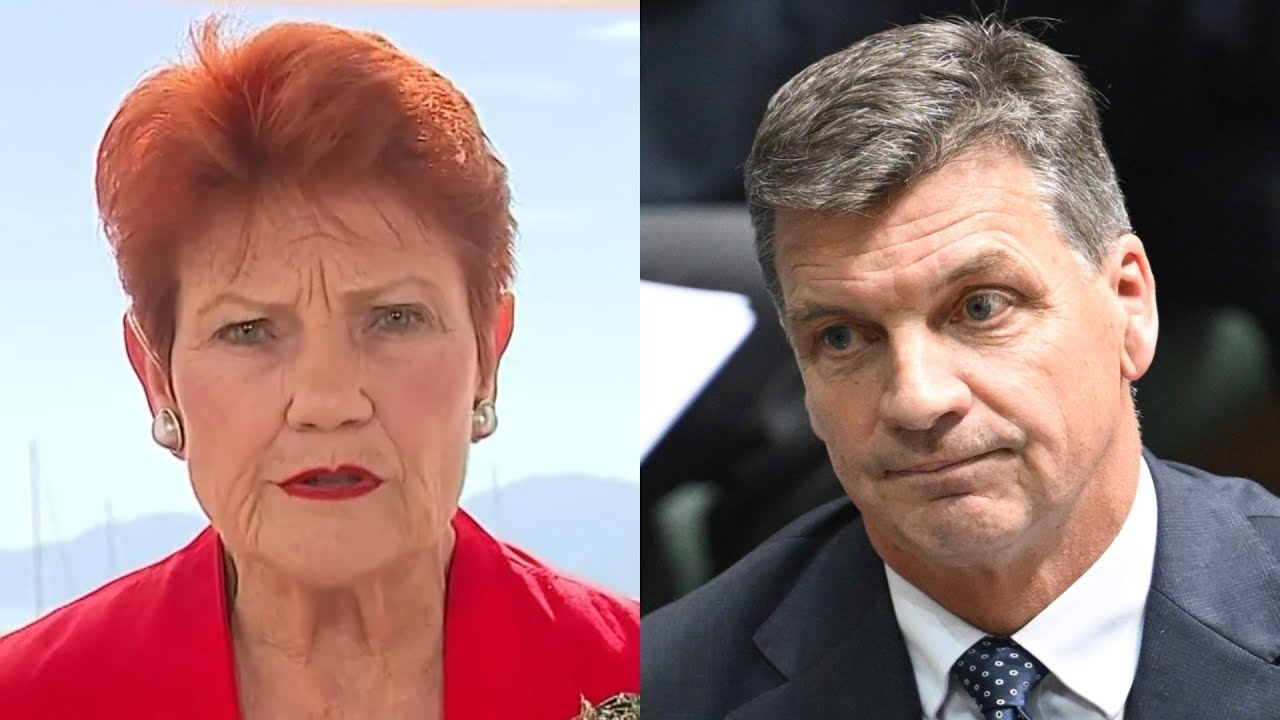
The One Nation Effect: Populist figures like Pauline Hanson do not need complex white papers on macroeconomic tax structures. They deal in grievance, identity, and the visceral emotional resonance of cultural dispossession.
-
The Hostage Situation: When the center-right tries to neutralize this populist insurgency by adopting its rhetoric, it inevitably loses. As veteran observers know, voters faced with a choice between the original and an anxious imitation will pick the genuine article every single time.
-
The Vulnerability of the Young: Classrooms make the ultimate proxy battlefield. Children cannot vote, schools are universal touchpoints for anxious parents, and curriculum material can easily be decontextualized into fifteen-second outrage clips for social media feeds.
What Remains Unanswered?
The question that the press corps rarely presses politicians on is simple: What does an education stripped of these capabilities actually produce?
If a school system stops teaching an adolescent to ask:
-
Who created this content?
-
What emotional reaction does this evoke, and who benefits from that reaction?
-
What verified evidence underpins this proposition?
…that system does not create “unbiased, patriotic students.” It creates defenseless targets for the very online algorithmic radicalization Chanel Contos warned about.
A boy who has never been taught to deconstruct an argument is an easy mark for an offshore algorithmic channel telling him that his loneliness is the fault of women, minorities, or conspiratorial elites. A populace untrained in fact-checking does not become more conservative; it becomes ungovernable, vulnerable to foreign disinformation operations, and utterly reliant on demagogues for its sense of reality.
We are witnessing a quiet, systemic assault on the foundational machinery of liberal democracy.
Whether delivered through the unfiltered candor of a political leader or through the biting mirror of political satire, the core premise hanging over modern politics is stark: an educated, inquisitive, media-literate electorate represents an existential threat to modern political marketing.
For thirty years, the battleground of political reporting was fought over policies, treaties, budgets, and corruption. Today, the battle line has been drawn through the human mind itself. We are asked to accept a politics built on convenient villains, maintained by benefactors, and protected by an enforced intellectual compliance.
The classroom is not failing because it teaches children to ask inconvenient questions. The crisis belongs entirely to an electoral ecosystem that can no longer survive the answers.
If a democracy decides that asking “Where is the evidence?” is a dangerous act of subversion, what kind of citizen are we really trying to build—and who stands to gain the moment they stop asking?