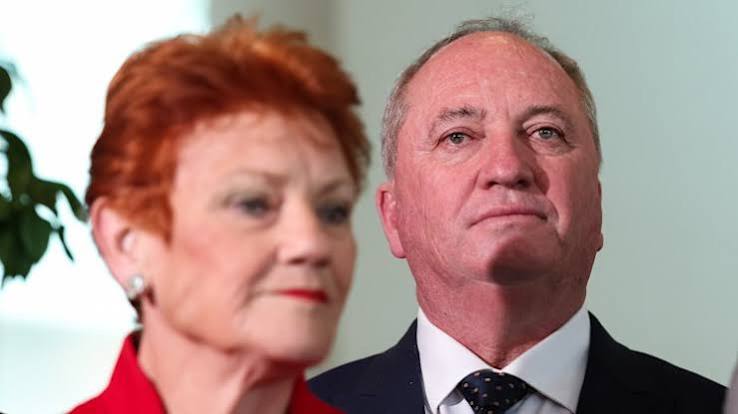

Pauline Hanson Eyes the Prime Ministership as One Nation Surges in Polls
One Nation leader Pauline Hanson has signaled a historic shift in her political ambitions, declaring she is ready to lead Australia while pushing for Trump-style deportations, strict immigration bans, and a hardline stance on national security.
What Happened
One Nation leader Pauline Hanson has made her boldest declaration yet regarding the nation’s highest office, telling a business audience she has “no doubt” she could serve as prime minister.
The remarks mark a major tactical shift for the veteran politician, whose party is currently polling in the high 20s or around 30 per cent on primary votes.
Speaking at a high-profile event, Hanson endorsed a Donald Trump-style approach to unlawful immigration, advocating for mass deportations and a total freeze on migration from what she termed “radical Islamic countries.”
She also criticized government spending, rejected pro-Palestinian protest marches on Australian streets, and opened the door to tactical cooperation with the Liberal-National Coalition to unseat the current Labor government.
The public pronouncements have intensified national debate, putting pressure on both major parties as scrutiny mounts over Hanson’s political record and surging popularity.
Why It Matters
The political rise of One Nation represents a fundamental reshaping of Australia’s electoral landscape.
As the party transitions from a traditional protest vehicle into a serious legislative force, its policy positions are no longer fringe commentary; they are actively dictating the national conversation on immigration, social cohesion, and border security.
For the governing Labor administration, Hanson’s surge highlights persistent voter discontent over cost-of-living pressures, foreign aid allocations, and community safety.
For the Liberal-National Coalition, the rising primary vote presents a complex strategic dilemma: whether to pursue tactical cooperation with One Nation to defeat Labor or maintain ideological distance to protect moderate voter support.
As Australia approaches its next electoral cycle, the balance of power in federal politics is increasingly being influenced by populist sentiment.
Trump-Style Deportations and Immigration Controls
A cornerstone of Hanson’s recent platform involves sweeping changes to Australia’s border management and immigration enforcement.
Detailing her admiration for U.S. President Donald Trump’s immigration policies, Hanson outlined a framework where undocumented individuals would be offered a structured exit window, with permanent re-entry bans for those who failed to comply.
When pressed on whether her proposed ban on immigration from “radical Islamic countries” mirrors historical exclusionary policies like the White Australia Act, Hanson rejected the comparison entirely.
She insisted that her motivation is strictly rooted in national security and social cohesion rather than race, correcting interviewers on the historical timeline of past migration policies.
Additionally, Hanson took direct aim at foreign aid, arguing that taxpayer funds directed toward nations like Papua New Guinea and Afghanistan should be redirected to domestic priorities.
Foreign Policy, Protests, and Parliamentary Cooperation
Hanson’s foreign policy positions extended to domestic demonstrations, where she stated she would have barred protest marches carrying Palestinian flags from public thoroughfares.
The comments arrived concurrently with Foreign Minister Penny Wong’s announcement of an additional $15 million in recovery funding for Palestinian territories, bringing total Australian aid to $80 million under the current administration while drawing criticism from conservative commentators over a lack of balanced regional allocations.
On the domestic political front, Hanson expressed willingness to work alongside Opposition Leader Angus Taylor to remove the Labor-Greens government.
With combined polling numbers for One Nation and the Coalition approaching or exceeding 50 percent of the primary vote in certain surveys, political alliances are facing heightened speculation.
However, Taylor swiftly downplayed any formal coalitions, stating that the Liberal Party would contest elections independently, particularly in South Australia.
Context: From Political Outsider to Frontrunner
Hanson’s entry into the conversation as a potential prime minister builds on nearly three decades of populist advocacy.
Initially surging into federal politics in the late 1990s on an anti-immigration platform, she spent years as a polarizing independent before founding One Nation and securing a Senate seat in 2016.
Historically viewed as a disruptor rather than a candidate for executive leadership, her current poll numbers reflect deep-seated public frustration with traditional party politics.
Economic headwinds, housing affordability crises, and community debates over multiculturalism have provided fertile ground for populist platforms to capture disillusioned voters outside major metropolitan centers.
Intensifying Scrutiny Over Attendance and Associations
As One Nation gains traction as a mainstream contender, increased public attention has turned toward Hanson’s personal parliamentary record and high-profile associations.
Official records indicate that since entering the Senate in 2016, Hanson has missed 76 sitting days, with 60 absences logged without leave.
Notable among these was a two-week period where she traveled to a conservative conference at Mar-a-Lago aboard mining billionaire Gina Rinehart’s private jet, missing eight sitting days and key votes.
When questioned about her relationship with Rinehart, Hanson declined to confirm whether travel expenses were privately covered, emphasizing that no public funds were utilized and noting that mainstream political leaders maintain similar high-net-worth associations without facing equivalent public censure.
What Different Sides Are Saying
The escalating debate has drawn sharp responses across the political spectrum:
-
One Nation Supporters: Proponents view Hanson as an authentic voice willing to challenge political correctness, prioritize Australian citizens, and enforce stringent border controls.
-
The Federal Government: Labor ministers argue that Hanson’s divisive rhetoric undermines social cohesion, international alliances, and Australia’s humanitarian commitments.
-
The Liberal-National Coalition: While acknowledging voter alignment on specific economic and security issues, Coalition leadership remains cautious about formalizing ties to avoid alienating centrist voters.
What Happens Next
The coming months will test whether One Nation can sustain its momentum while weathering the intense media scrutiny that accompanies frontrunner status.
With federal lawmakers preparing for upcoming electoral contests, both major parties are recalibrating their messaging on immigration and cost-of-living policies to counter populist gains.
As Hanson continues to campaign on a platform of strong executive leadership, voters will ultimately decide whether her brand of nationalist politics translates into tangible legislative power.
How do you think traditional political parties should respond to the rise of populist movements and changing voter priorities on national security?