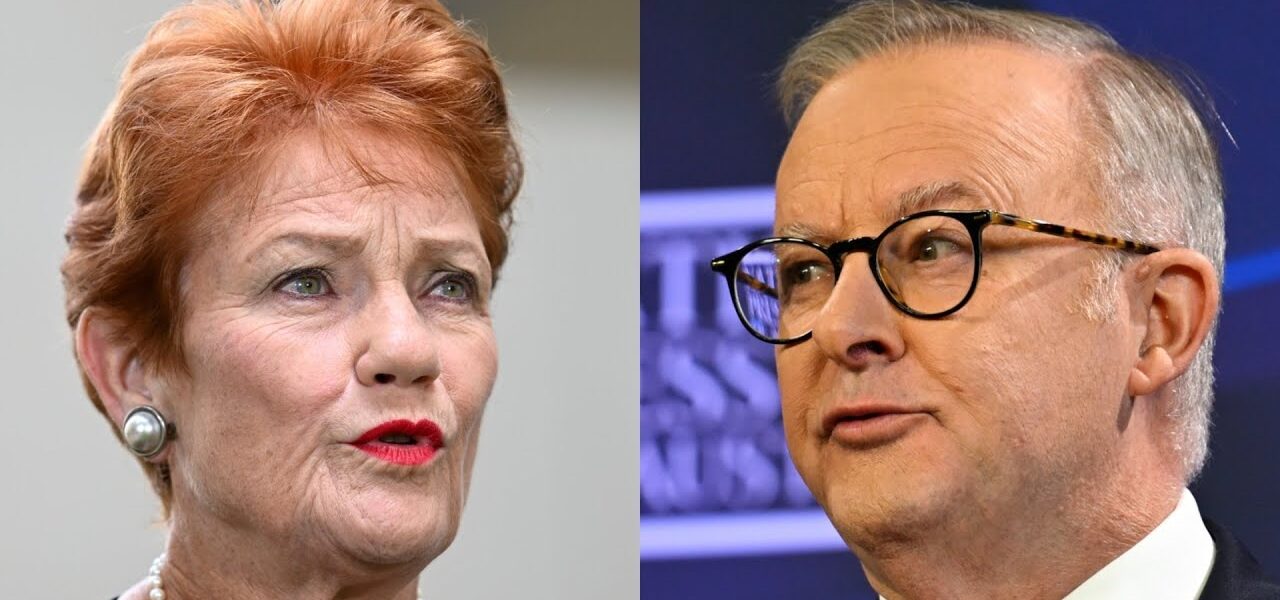

Australia Faces Deep Political Divide Over Gun Reform Following Bondi Beach Terrorist Attack
Prime Minister Anthony Albanese is pushing for sweeping firearm restrictions after a mass shooting at Sydney’s Bondi Beach killed 15 people, triggering a fierce national debate over national security, extremism, and the true roots of the tragedy.
Australia is navigating one of the most painful chapters in its modern history following a terrorist attack at Bondi Beach on December 14.
The atrocity, which targeted a peaceful Hanukkah celebration, left 15 people dead and dozens more injured.
Yet rather than sparking immediate, unified national solidarity akin to the response after the 1996 Port Arthur massacre, the tragedy has exposed a profound ideological fracture in Canberra.
At the center of the storm is Prime Minister Anthony Albanese, who is advancing a radical tightening of the nation’s firearm laws.

Opposing him are political figures who argue that focusing primarily on gun control misses the core threat of extremist radicalization.
What Happened: The Bondi Beach Massacre and the Legal Loophole
The attack unfolded during the “Chanukah by the Sea” gathering at Archer Park, where roughly 1,000 people had assembled.
Two gunmen—identified by authorities as 50-year-old Sagid Akram and his 24-year-old son, Nave—opened fire on the crowd.
The public shock intensified when investigators revealed that the elder Akram was a legal firearm owner with multiple high-powered rifles registered in his name.
Australia’s licensing system, historically regarded as among the most robust in the world, faced immediate scrutiny.
The fact that an individual could legally possess multiple high-powered weapons raised alarming questions about existing regulatory safeguards.
In response, Prime Minister Albanese convened the national cabinet to propose the country’s most significant legislative gun overhaul in nearly three decades.
The emergency federal package includes strict ownership caps limiting individuals to four standard firearms, a massive national gun buyback scheme modeled after the 1996 reforms, and targeted legislative crackdowns on 3D-printed weapons and unregulated digital-age imports.
Mr. Albanese insisted that licensing frameworks require urgent correction when legal pathways allow multi-weapon stockpiles.
Why It Matters: A Battle Over the Root Causes of National Security
While the government frames the crisis as a failure of firearm accessibility, critics argue that targeting legal gun owners is a political deflection.
One Nation leader Pauline Hanson delivered a sharp rebuke to the government’s strategy, arguing that authorities are reluctant to confront the ideological drivers of the violence.
Hanson contended that the debate should center squarely on religious extremism, immigration vetting failures, and the unchecked presence of radical preachers on domestic streets.
This counter-narrative found strong reinforcement across the conservative aisle.
Senator Andrew Hastie publicly characterized the emphasis on gun restrictions as a dangerous distraction from the attackers’ documented links to militant extremism.
Furthermore, former Prime Minister John Howard—the architect of Australia’s historic 1996 gun control framework—warned that legislative momentum must not sideline the urgent societal reckoning required to combat rising anti-Semitism and community hatred.
Acts of Heroism Amid the Chaos
Amid the national trauma, extraordinary individual bravery emerged as a powerful counterpoint to the violence.
Ahmed al-Ahmed, a Syrian Muslim shop owner operating locally, rushed into the line of fire while bullets were still active.
Despite sustaining a gunshot wound to the shoulder, al-Ahmed physically tackled and disarmed one of the attackers, preventing further loss of life before police neutralized the threat.
His actions have been widely praised as a testament to civic courage, cutting across polarized political narratives.

Background: A Politically Fragmented Landscape
Unlike the bipartisan consensus that followed the 1996 Port Arthur tragedy, the current political climate is defined by deep hostility and institutional mistrust.
One Nation has experienced a surge in public polling and has signaled its intent to block any new firearms legislation in the Senate.
Meanwhile, the federal government is attempting to advance parallel legislation addressing hate speech and community safety.
With trust between the major parties severely eroded, achieving a comprehensive legislative compromise appears increasingly difficult.
What Happens Next
The path forward remains fraught with political friction.
As Parliament prepares for contentious debates over firearm caps and national security measures, policymakers face an unforgiving reality: national safety depends equally on regulating instruments of violence and dismantling the ideologies that inspire them.
If political leaders continue to retreat into partisan corners, structural vulnerabilities will persist.

Australia’s broader challenge is forging an honest, transparent dialogue that ensures the 15 lives lost at Bondi Beach are not subsumed by endless political posturing.
Interactive Discussion Question
Do you think tightening gun ownership caps is an effective response to ideologically motivated terrorism, or should legislative focus be directed entirely toward intelligence and border security