Australia Energy Debate Intensifies as Joyce and Hanson Challenge Climate Policy .u1

Australia’s Energy and Climate Debate Escalates as Political Pressure Mounts Over Costs
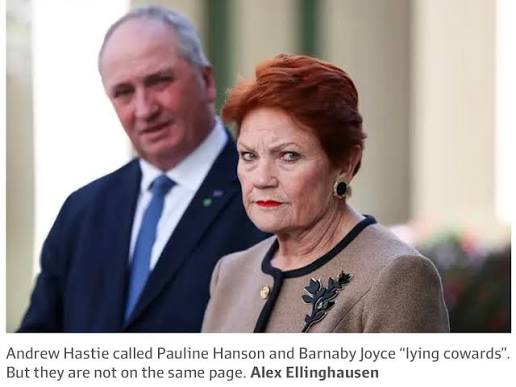
Former Deputy Prime Minister Barnaby Joyce’s warning and Pauline Hanson’s anticipated challenge have reignited a fierce national debate over energy prices, regional jobs, and the speed of Australia’s transition to lower emissions.
Australia’s political divide over climate and energy policy is intensifying as household budgets and regional industries face mounting pressure. Former Deputy Prime Minister Barnaby Joyce has delivered a blunt warning, suggesting that the nation is heading into dangerous territory over the direction and speed of its energy transition.
His intervention coincides with preparations by One Nation leader Pauline Hanson to mount a direct challenge in Canberra against current environmental policies. Together, these developments are transforming a technical policy debate into a high-stakes national confrontation over economic survival, energy security, and the country’s broader future.

Joyce’s Warning and the Cost-of-Living Squeeze
Joyce’s recent critique centers on whether Australia is moving too quickly to dismantle traditional energy sources without fully accounting for the financial impact on everyday citizens. For many households and businesses, the debate is no longer about distant emissions targets.
Instead, it is being experienced through immediate cost pressures, including rising electricity bills, soaring fuel prices, mortgage repayments, and general inflation. Supporters of Joyce’s perspective argue that Canberra has become disconnected from these economic realities.
They contend that replacing reliable, traditional power too rapidly creates severe vulnerabilities for regional manufacturing, agriculture, and mining communities. For voters facing tight financial constraints, the core question has become straightforward: Can ordinary Australians afford the current pace of climate policy?
Hanson’s Hardline Push Against the Climate Agenda
Pauline Hanson is preparing to push this political argument even further into the national spotlight. Her opposition focuses on what she and her supporters characterize as excessive, ideologically driven policymaking that undermines national sovereignty and economic stability.
A central message associated with her campaign challenges the very existence of dedicated government climate structures, calling for a complete rejection of current emissions frameworks. Supporters view this stance as a necessary pushback against policies they believe harm local industries and drive up power costs.
Critics, however, argue that abandoning climate targets would expose Australia to worsening environmental risks, higher long-term economic damage, and international isolation. This sharp divide reflects two fundamentally incompatible visions of national priority.
Why the Climate Debate Has Become a Cost-of-Living Flashpoint
The political potency of the current debate lies in its connection to everyday household economics. While proponents of rapid climate action view the transition as an unprecedented economic opportunity—pointing to green jobs, new technologies, and global market competitiveness—skeptics focus on immediate vulnerabilities.
Workers in resource-rich regional centers worry that promises of future renewable employment will not replace the stable livelihoods currently tied to traditional energy and mining sectors. Furthermore, global energy market volatility and supply disruptions have kept electricity prices high, leaving consumers acutely sensitive to any policy changes perceived to add to their financial burden.
Context: The Battle for Regional Australia
Australia’s economy has historically relied heavily on resource extraction and manufacturing, making regional communities the frontline of the energy debate. Entire towns depend on industries that face intense scrutiny as federal and state governments pursue net-zero targets.
This dynamic provides a powerful platform for politicians who champion traditional energy sources. By arguing that national energy security and affordability must come before international climate commitments, figures like Joyce and Hanson are appealing directly to voters who feel left behind by urban-centric policy decisions.
Conversely, environmental advocates maintain that delaying the transition will ultimately cost Australians much more through severe weather impacts, rising agricultural expenses, and soaring disaster insurance premiums.
Albanese Faces a Difficult Balancing Act
Prime Minister Anthony Albanese’s government is caught directly in the middle of this rising political storm. Canberra must navigate the delicate task of meeting its emissions reduction commitments while convincing businesses and households that the transition will not sacrifice affordability or reliability.

Simply announcing long-term targets is no longer sufficient to reassure voters who are struggling with immediate cost-of-living pressures. At the same time, opposition figures and minor parties face their own political risks.
While capitalizing on public frustration can be effective, politicians who reject environmental targets entirely risk alienating voters who recognize the reality of climate change and expect responsible governance.
What Happens Next in Australian Politics
The debate over climate and energy policy is rapidly becoming a defining issue for Australia’s political future. It is no longer confined to environmental circles; it touches every aspect of national identity, industrial strategy, and economic survival.
As Pauline Hanson takes her challenge to the Senate floor and economic pressures persist, the Albanese government will face sustained scrutiny over its ability to deliver both environmental progress and financial relief. The coming months will test whether a political consensus can survive an increasingly polarized electorate demanding answers on cost, reliability, and the nation’s economic direction.
How do you think the federal government should balance ambitious climate targets with the immediate need for affordable and reliable energy?