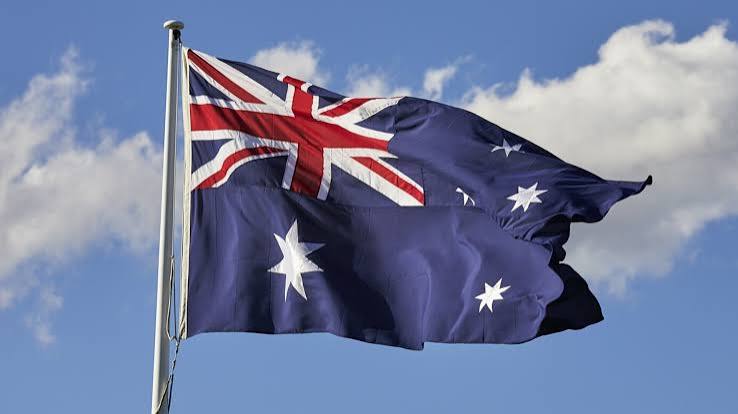

The Battle for the Cloth and the Stone: Inside Australia’s War Over Patriotism, Memory, and the Law
In the hushed, carpeted committee corridors of Parliament House in Canberra, political conflicts are often fought over tax brackets, budget forecasts, and regulatory footnotes. But every so often, the debate strips away the bloodless ledger of governance to confront the most volatile ingredients in any democracy: national identity, ancestral memory, and the physical cloth and stone under which a society organizes its soul.
That ideological collision arrived on the national stage when the Federal Coalition announced a legislative proposal: the Australian National Symbols and Heritage Protection Bill.
The bill, slated for formal introduction as soon as Federal Parliament resumes its sitting calendar, would make the serious public desecration of the Australian national flag a federal criminal offense, punishable by up to 12 months behind bars under specific legal thresholds. In the same statutory stroke, the legislation proposes federal prison sentences for the intentional damaging, defacing, desecrating, or destroying of war memorials and historical monuments. And, in a direct attempt to resolve Australia’s most bitter cultural debate, it seeks to formally enshrine January 26 as Australia Day in Commonwealth statute—locking the date in place unless altered by a direct vote in a national plebiscite.
The announcement was delivered by Opposition Leader Angus Taylor. Flanked by Shadow Attorney-General Senator Michaelia Cash and veterans’ advocate Phillip Thompson, Taylor framed the legislation not as a punitive crackdown on political thought, but as a long-overdue shield for the sacred relics of the Australian Commonwealth.

“Our flag represents the country we love,” Taylor declared, laying down the moral premise of his party’s bill. “Our war memorials honour Australians who put their lives on the line for us. Australia Day is our national day that unites us all. These things belong to the Australian people and they should not be torn down, smashed, desecrated, or quietly stripped of their significance”.
The Coalition’s intervention represents an effort to codify the boundaries of legitimate public protest, drawing a sharp line between spoken dissent and physical desecration.
                     PROPOSED LEGISLATIVE ARCHITECTURE
       [ Australian National Symbols and Heritage Protection Bill ]
                                    |
     +------------------------------+------------------------------+
     |                              |                              |
     v                              v                              v
[ FLAG DESECRATION ]      [ MEMORIAL VANDALISM ]         [ AUSTRALIA DAY ]
* Serious public act      * Deliberate destruction,     * Enshrined in law
* Reckless to violence,     defacing, or damage           as January 26
  hatred, or disorder     * War memorials, statues,     * Future changes
* Max: 12 months jail       and historic plaques          require national
                          * Up to 10 years jail           plebiscite
The Catalysts: From Small-Town Obelisks to City Squares
To understand the timing and ferocity of this legislative push, one must look outside the capital, away from the television studios of Sydney and Melbourne, to the quiet farming towns along the Western Highway in Victoria.
Over the mid-year months, a pattern of vandalism struck at the heart of rural Australian communities. In the tiny Western Victorian locality of Dobie, a stone monument commemorating local men who left sheep runs and wheat paddocks to fight in the trenches of the Western Front was attacked. Weeks earlier, in neighboring Beaufort, the town’s century-old cenotaph was defaced. Vandals used spray paint to scrawl slogans across the names of the fallen, including “death to Australia” and “death to the ADF”.
For the families of those towns, where every second surname on the granite plinth still matches a mailbox down a gravel road, the vandalism was felt as a personal violation. It wasn’t abstract political art; it was viewed as an assault on their forebears.
Simultaneously, footage from major urban centers added fuel to the fire. At the annual January 26 “Invasion Day” demonstrations in Brisbane and Melbourne, activists set Australian flags alight before cheering crowds and rolling cameras. The images circulated virally across digital platforms, generating outrage among conservative voters and serving as evidence for Coalition strategists that fringe political anger was boiling over into open contempt for the nation’s foundation.
Shadow Attorney-General Michaelia Cash argued that existing state property damage statutes and municipal bylaws treat these acts as mere graffiti or minor nuisance offenses, failing to recognize their deeper civic harm.
“Freedom of speech is fundamental in Australia, but freedom of speech does not mean freedom to destroy,” Senator Cash stated. “There is a clear difference between making a political argument and taking a can of spray paint to the names of Australians who fought and died for this country”.
The Mechanics of the Proposed Law
The draft legislation puts forward specific legal tests designed to withstand judicial scrutiny:
-
The Flag Desecration Threshold: The bill does not propose a blanket ban on all mistreatment of the national flag. Instead, it establishes a high legal bar: the public act of desecration must be committed in circumstances where the perpetrator is reckless as to whether their actions will incite hatred or violence, threaten public order, or cause a public disturbance. Where that threshold of public endangerment is proven by federal prosecutors beyond a reasonable doubt, the offense carries a maximum penalty of 12 months in federal prison.
-
Protection of Heritage and Memorials: The bill creates a distinct federal criminal regime for intentionally defacing, damaging, desecrating, or destroying war memorials, cenotaphs, historical plaques, and commemorative statues. Penalties escalate sharply depending on the severity of the damage, with maximum sentences reaching up to 10 years’ imprisonment for aggravated destruction of recognized national military shrines.
-
The Australia Day Plebiscite Lock: Moving beyond criminal law into constitutional politics, the bill seeks to legally anchor the date of Australia Day on January 26 within Commonwealth legislation. Under this statutory mechanism, no future prime minister, cabinet, or parliamentary majority could administratively alter the date of the national public holiday without first putting the question directly to the voting public via a nationwide plebiscite.
Taylor was at pains to emphasize that the bill was drafted to respect political discourse. “You are free to criticise Australia. You are free to disagree with our history, our institutions and our traditions,” he insisted. “People are welcome to make political statements on Australia, and they can criticise Australia all they like, but burning the flag goes a step further. It is a symbol, it is part of our nation and our heritage that really matters. But freedom does not mean there should be no consequences for deliberately attacking the symbols that unite us”.
The Gathering Pushback
While the legislation has been welcomed by veterans’ organizations, conservative commentators, and regional communities, it faces steep hurdles.
The bill is not currently law. To be enacted, it must navigate the parliamentary gauntlet, requiring passage through both the House of Representatives and a Senate where the Albanese Labor Government and crossbench parties hold sway.
Government figures have criticized the Coalition’s announcement, accusing the opposition of manufacturing an American-style culture war to shore up its conservative flank against Pauline Hanson’s One Nation ahead of upcoming electoral contests. Labor ministers have pointed out that existing state and territory criminal codes already outlaw criminal damage, arson, and behavior likely to breach the peace, arguing that creating bespoke federal offenses for specific political symbols is unnecessary and constitutionally risky.
Legal scholars, meanwhile, are already warning of an inevitable high-stakes clash in the High Court of Australia, where the nation’s implied constitutional freedom of political communication will be tested against the state’s desire to protect its national totems.
2. My Professional Perspective
What the Headlines Missed: The Subconscious Longing for the Sacred
After three decades of covering politics and social upheaval across Washington, London, and Canberra, I have learned that whenever a society begins arguing passionately about pieces of dyed bunting and bronze statues, the argument is never truly about the bunting or the bronze.
It is about an unspoken terror: the fear of social dissolution.
What the daily news cycle has largely missed in its coverage of Angus Taylor’s announcement is that Australia is experiencing a profound, unresolved crisis of civic faith. Over the past twenty years, traditional Australian secularism—once characterized by an easygoing, irreverent, live-and-let-live egalitarianism—has run headlong into the hyper-fragmented digital age.
Societies, like nature, abhor a spiritual vacuum. When traditional civic religion recedes, when the unifying narratives of the past are dismantled without a coherent replacement, the human need for the “sacred” does not evaporate. It migrates.
For progressive activists, the sacred has been reconstituted around the struggle against historical injustice, Indigenous dispossession, and colonialism. To them, setting an Australian flag alight or spray-painting a colonial monument is an act of purification—a ritualized rejection of an unresolved, bloody past.
For conservative, working-class, and regional Australians, however, the sacred remains localized in two physical vessels: the flag that draped the coffins of their grandfathers returning from Papua New Guinea, Vietnam, or Afghanistan, and the local stone war memorial where their families stand in the freezing predawn darkness every April 25 for the Anzac Day dawn service.
When an urban demonstrator burns that flag or paints “Death to the ADF” on a town memorial, they think they are attacking an abstract geopolitical entity—the Australian State. But the people living in Beaufort or Dobie do not experience it as an attack on the State. They experience it as a desecration of their family dead.
By framing this strictly as a partisan spat between Labor and the Liberals, the press misses the real human reality: a vast portion of the Australian electorate feels culturally dispossessed within their own country, feeling that the symbols that gave meaning to their ancestors’ sacrifices are being surrendered to public contempt.
                   THE DUAL SACRED: THE ROOTS OF THE DIVIDE
                                      |
      +-------------------------------+-------------------------------+
      |                                                               |
      v                                                               v
[ THE PROGRESSIVE SACRED ]                              [ THE TRADITIONAL SACRED ]
* Focus: Historical accountability,                     * Focus: Communal sacrifice, national
  Indigenous sovereignty, anti-colonialism.               heritage, shared Anzac identity.
* The Flag: A symbol of British dominion,               * The Flag: The pall that covered fallen
  unceded land, and frontier injustice.                   soldiers; a symbol of shelter and unity.
* The Act: Burning the cloth is an act                  * The Act: Burning the cloth is seen as
  of political speech and deconstruction.                 cultural sacrilege and civic betrayal.
The Constitutional Minefield: The Ghost of Texas v. Johnson
Any seasoned legal reporter looking at this draft bill will experience a sense of deja vu. The United States fought this exact war thirty-five years ago.
In 1989, the United States Supreme Court handed down its historic 5–4 decision in Texas v. Johnson, ruling that the burning of the American flag was a protected form of expressive conduct under the First Amendment. Justice William Brennan wrote what remains one of the most famous defenses of free expression in modern jurisprudence:
“If there is a bedrock principle underlying the First Amendment, it is that the government may not prohibit the expression of an idea simply because society finds the idea itself offensive or disagreeable.”
Subsequent attempts by the U.S. Congress to pass a federal Flag Protection Act were struck down as unconstitutional by the court the following year in United States v. Eichman.
Australia, however, does not possess an American-style constitutional Bill of Rights. There is no explicit First Amendment protecting absolute freedom of speech.
Instead, the Australian High Court established in the early 1990s that the Australian Constitution contains an implied freedom of political communication—an indispensable structural necessity for the functioning of representative and responsible government.
This implied freedom is not an absolute individual right; it is an immunity against unjustified government overreach. Under the legal precedent known as the Lange test (refined in Coleman v. Power and McCloy v. Brown), any law that burdens political communication must satisfy two rigorous tests:
-
Does the law effectively burden freedom of communication about government or political matters?
-
Is the purpose of the law legitimate, and are the means adopted proportionate and reasonably appropriate to achieve that purpose?
Here lies the Coalition’s legal strategy.
Notice the phrasing in Taylor’s bill: it does not make burning the flag an absolute offense. It adds a deliberate mens rea—a mental element: the offender must be reckless as to whether the act will incite hatred, violence, or cause a public disturbance.
The Coalition’s legal draftsmen have clearly designed this clause to survive a High Court challenge. They will argue before the seven justices that the law does not penalize political communication per se; rather, it regulates the manner and public safety risks of the conduct, analogizing it to laws prohibiting offensive behavior or incitement to riot.
Yet, this creates a major enforcement loophole.
What happens when an activist burns a flag in the middle of a deserted paddock, films it, and uploads the video to TikTok with the caption, “This flag does not represent my people”?
Under the bill’s public disorder threshold, that act may well be legal, because there was no imminent risk of physical public disturbance or violence on site. Conversely, if a solitary protester burns a flag on the steps of Parliament House in front of an angry mob of counter-demonstrators, the protester could face twelve months in a maximum-security prison because the surrounding crowd’s volatile reaction constitutes a “threat to public order”.
In legal terms, that approaches a heckler’s veto: the criminality of the speaker’s symbolic expression is determined not by their intrinsic conduct, but by the potential volatility of those observing it.
| Jurisdiction / Context | Legal Precedent / Mechanism | Legal Threshold for Protection | Punishment for Flag Desecration |
| United States | Texas v. Johnson (1989) / First Amendment | Absolute constitutional protection for expressive conduct. | Unconstitutional to penalize (0 months). |
| Australia (Current) | Common Law / State Summary Offenses | Treated under state laws as property damage or offensive behavior. | Fines, community service, or minor property charges. |
| Coalition Bill (Proposed) | Implied Freedom of Political Communication (Lange test) | Federal offense triggered if reckless to incitement, violence, or disorder. | Up to 12 months imprisonment. |
The War Memorial Exception: A Clear Line in the Granite
Where the Coalition stands on far firmer moral and constitutional ground is on the second plank of the bill: the protection of war memorials.
In modern political discourse, there has emerged a bizarre conflation between symbolic speech and criminal destruction. Burning an inexpensive mass-produced flag you purchased with your own money at an army disposal store is an act of symbolic expression. Spray-painting graffiti across a public monument erected with community funds to honor dead citizens is property destruction.
To blur those two concepts is an analytical error. No democratic legal system protects a citizen’s right to scrawl political slogans across the Tomb of the Unknown Soldier or the Cenotaph in Whitehall under the guise of free speech.
By binding flag desecration and war memorial defacement together in a single bill, Angus Taylor has executed a clever piece of legislative statecraft. He knows the Albanese Government cannot easily oppose the war memorial provisions without looking indifferent to the desecration of Anzac heritage.
Yet, by wedding the protection of the dead to the protection of the national cloth, the Coalition is daring Labor to vote against the entire package—providing the opposition with an attack line ahead of the next election.
The Plebiscite Trap: The Phantom of January 26
Then comes the final, audacious clause: requiring a national plebiscite before the date of Australia Day can be altered.
This is political theater, but it is effective political theater.
In Australia, public holidays are technically matters of state and territory jurisdiction, coordinated through national cabinet agreements. While the Commonwealth can declare public service holidays within its own federal jurisdiction, it cannot unilaterally prevent a state premier in Victoria or New South Wales from declaring an alternative civic holiday.
Why, then, propose a plebiscite lock in Commonwealth law?
Because the Coalition remembers the outcome of the October 2023 Indigenous Voice to Parliament referendum. In that historic vote, despite overwhelming initial corporate, institutional, and sporting endorsements for the “Yes” campaign, the Australian public decisively rejected the proposed constitutional alteration by over 60 percent.
The Coalition understands the electoral arithmetic. While Australia’s corporate elite, local municipal councils, and university faculties have increasingly moved away from celebrating January 26—branding it “Survival Day” or “Invasion Day”—the broad quiet majority of the country remains deeply attached to their national day or is simply resistant to top-down cultural mandates.
By proposing a national plebiscite, Angus Taylor is challenging the cultural vanguard. He is saying: If you want to move the date, you cannot do it by executive decree in a boardroom or an academic senate. You must ask the Australian public at the ballot box.
It is a mechanism explicitly engineered to weaponize the conservatism of the Australian electorate on constitutional and symbolic matters.
The Unanswered Questions
As this bill moves toward the parliamentary floor, several questions demand answers:
-
The Selective Sanctity Question: Under the proposal, war memorials and “significant historical memorials” are protected. Who decides what constitutes a “significant historical memorial”? If a statue of Captain James Cook or Governor Arthur Phillip is pulled down or spray-painted, does that trigger federal counter-terrorism-level penalties? And what of memorials commemorating the Frontier Wars—the bloody skirmishes between colonial forces and First Nations peoples? Will the Commonwealth protect those with equal zeal?
-
The Commercial Desecration Irony: In Australia, the national flag is routinely printed on disposable paper napkins, beach towels, board shorts, and cheap stubby holders, all of which are discarded in municipal garbage bins every January 26. Why does the law permit a flag to be sat upon or tossed into a landfill as commercial junk, but threatens a citizen with a prison sentence if they set it on fire as a political statement?
-
The Precedent of Compelled Reverence: If a democracy begins jailing citizens for destroying state symbols, where does the state stop? Does the national anthem require protection next? Does disrespecting the Sovereign or the Governor-General warrant legal sanction? History warns that when a nation relies on the criminal code to command respect for its symbols, it is admitting that the symbols are losing their voluntary authority over the hearts of its citizens.
A nation is an act of collective imagination. It is an unwritten agreement between the dead, the living, and the unborn to share a geography, a destiny, and a mutual code of citizenship.
When that agreement holds, symbols take care of themselves. The flag flies naturally over schools and town halls; the memorials stand undisturbed under the eucalyptus trees; the national day is celebrated without the need for riot police or statutory tripwires.
The arrival of the Australian National Symbols and Heritage Protection Bill in federal parliament is therefore not a triumph of national pride. It is an acknowledgment of national fracture.
The Coalition’s proposal exposes the growing divide between two distinct visions of Australia. One view sees the Commonwealth as an ongoing, triumphant project of pioneering courage, Anzac sacrifice, and democratic rule of law—an inheritance whose outward emblems must be defended against modern iconoclasm. The other view sees a nation built upon an unhealed original wound—a continent whose founding documents and colonial symbols represent dispossession, racial exclusion, and lingering injustice.
Both sides of this divide have staked out their battlegrounds in the public square. But when we turn to the criminal justice system to resolve questions of historical meaning, we risk losing the very thing that makes a free society worth defending.
True reverence cannot be legislated. You cannot jail a population into loving its flag. You cannot enforce respect for a memorial with police batons, and you cannot manufacture national unity by making a date on the calendar legally unalterable. A symbol that requires the threat of a prison cell to command respect has already forfeited its moral power.
Yet, those who claim that desecrating cenotaphs and burning flags is merely harmless political expression must also look into the mirror. A political movement that cannot communicate its grief or rage without defacing the names of boys from Beaufort and Dobie who died in the mud of the Somme is not offering a vision of justice. It is simply practicing its own form of cruelty.
As the parliament prepares to debate this contentious bill, the country stands at a crossroads. We must choose whether we are going to navigate our complex, difficult history through mutual persuasion, cultural empathy, and the friction of vigorous free debate, or whether we are going to hand the state the power to decide which ideas are permissible and which are criminal.
The cloth of the flag can survive the match. The granite of the memorial can be scrubbed clean of the spray paint.
The question every Australian must now answer is:
If we begin sending our own citizens to prison for burning a piece of cloth, are we actually protecting the freedom that our soldiers fought for—or are we slowly destroying the very liberty the flag is supposed to represent?