When Mourning Turned to Panic: The Ferguson Funeral Shooting That Injured Six and Shattered a Community.

Funerals are meant to be the last place violence enters.
They are meant to be spaces of quiet grief, where tears fall without fear and memories are shared without looking over your shoulder. They are where families gather not to celebrate chaos, but to say goodbye—to stand together in the aftermath of loss and try, somehow, to survive it.
On a cold afternoon in Ferguson, that promise was broken.
Hundreds of mourners had gathered at a funeral home to honor Steffon Marmon, a 19-year-old whose life had already ended too soon. He had been killed earlier that month while celebrating his birthday—an irony that weighed heavily on everyone who came to remember him. The service was supposed to be a pause from violence, a moment to lay grief down gently.
Instead, violence followed them inside.
Just before noon, gunshots erupted inside and outside the funeral home. What began as a service of mourning collapsed into panic. People ran. Chairs overturned. Cries replaced prayers. In seconds, a room filled with grief became a scene of terror.
Six people were injured.

Three were struck by bullets, suffering non-life-threatening injuries. Three more were hurt as mourners scrambled to escape—tripping, falling, pushing past one another in desperate attempts to get away from the sound of gunfire.
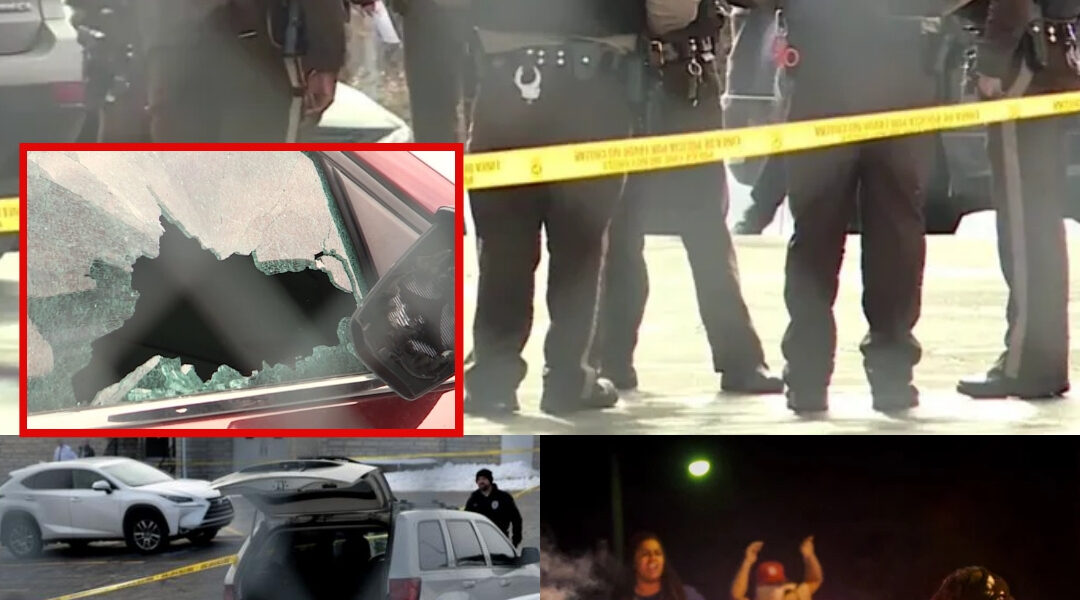
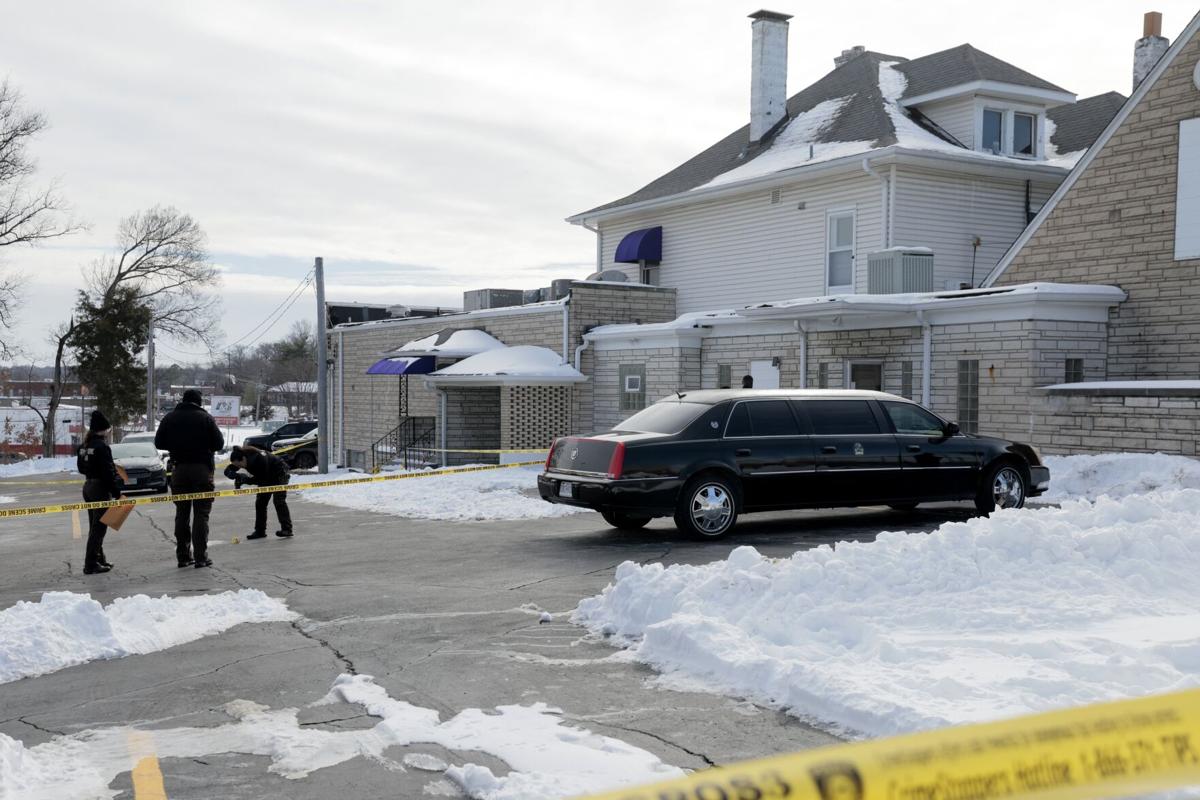
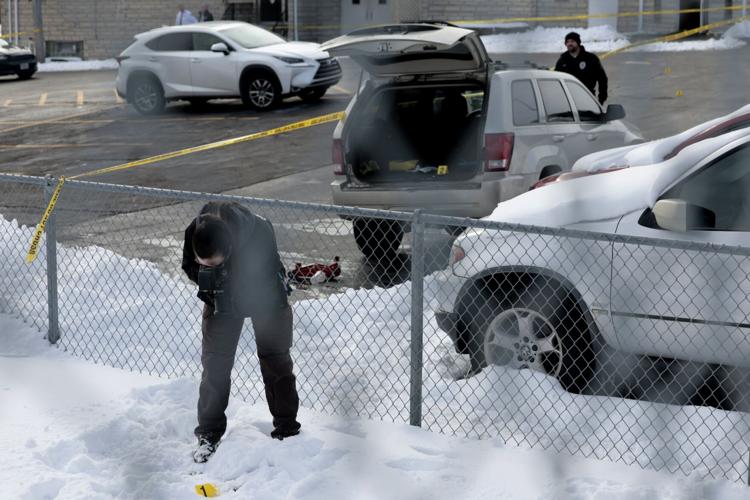
Outside, the evidence of chaos was immediate and undeniable. Shattered car windows. Bullet holes punched through windshields. Police evidence markers scattered across the parking lot like punctuation marks in a sentence no one wanted to read.
Across the street, Dawn Hall sat in her car, unaware that her ordinary afternoon was about to collide with someone else’s tragedy.
“I heard the gunshots,” she said later. “Then I saw all the people running out, yelling, ‘Run, they’re shooting in there.’”
Her voice carried disbelief more than fear—because disbelief is often the first response when violence breaks rules it was never supposed to cross.
A funeral.
For a teenager.
Who had already been killed.
The symbolism was impossible to ignore.
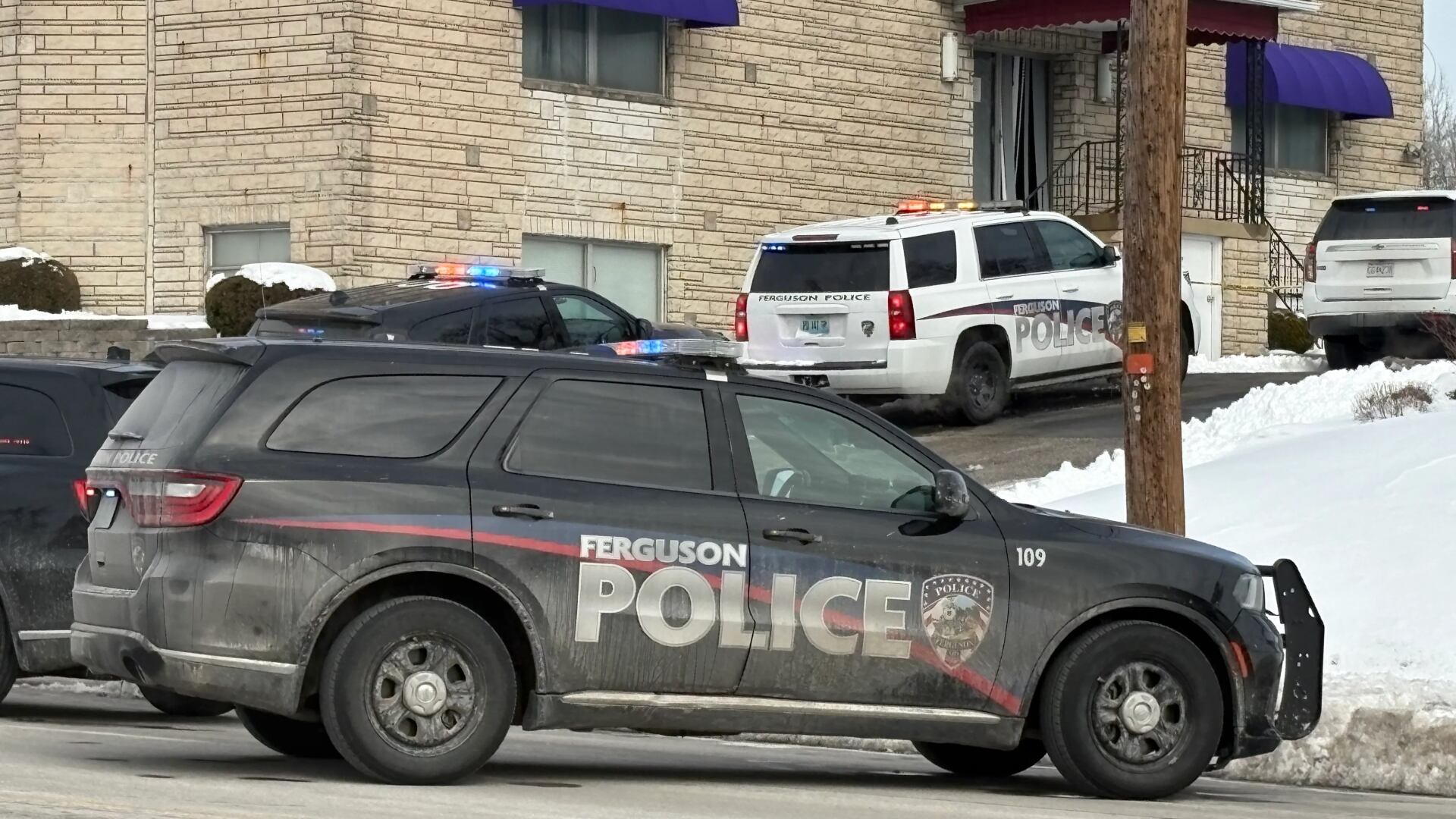
Police officers arrived to what they described as chaos. Hundreds of people were trying to flee at once, many unsure where the danger was coming from or whether it had stopped. The first responding officer immediately called for backup, recognizing how quickly panic could turn deadly even without bullets flying.
Within hours, police said they had taken several persons of interest into custody and recovered firearms. Witness statements were collected. Descriptions circulated. Investigators worked through the afternoon, trying to reconstruct how gunfire found its way into a space meant for mourning.
But by nightfall, no charges had been filed.
And that, too, became part of the controversy.
For the families involved—especially Steffon Marmon’s—there was a sense of cruel repetition. Violence had already taken their loved one once. Now it had returned, uninvited, to the place where they were supposed to grieve him safely.
“It’s very scary and disheartening,” Hall said. “And I’m sure it’s very, very sad for the family.”
Sad feels like an understatement.
To lose a child to gun violence is devastating. To then have that child’s funeral disrupted by more gunfire feels like a message no family should ever receive: that there is no safe place left, not even in death.
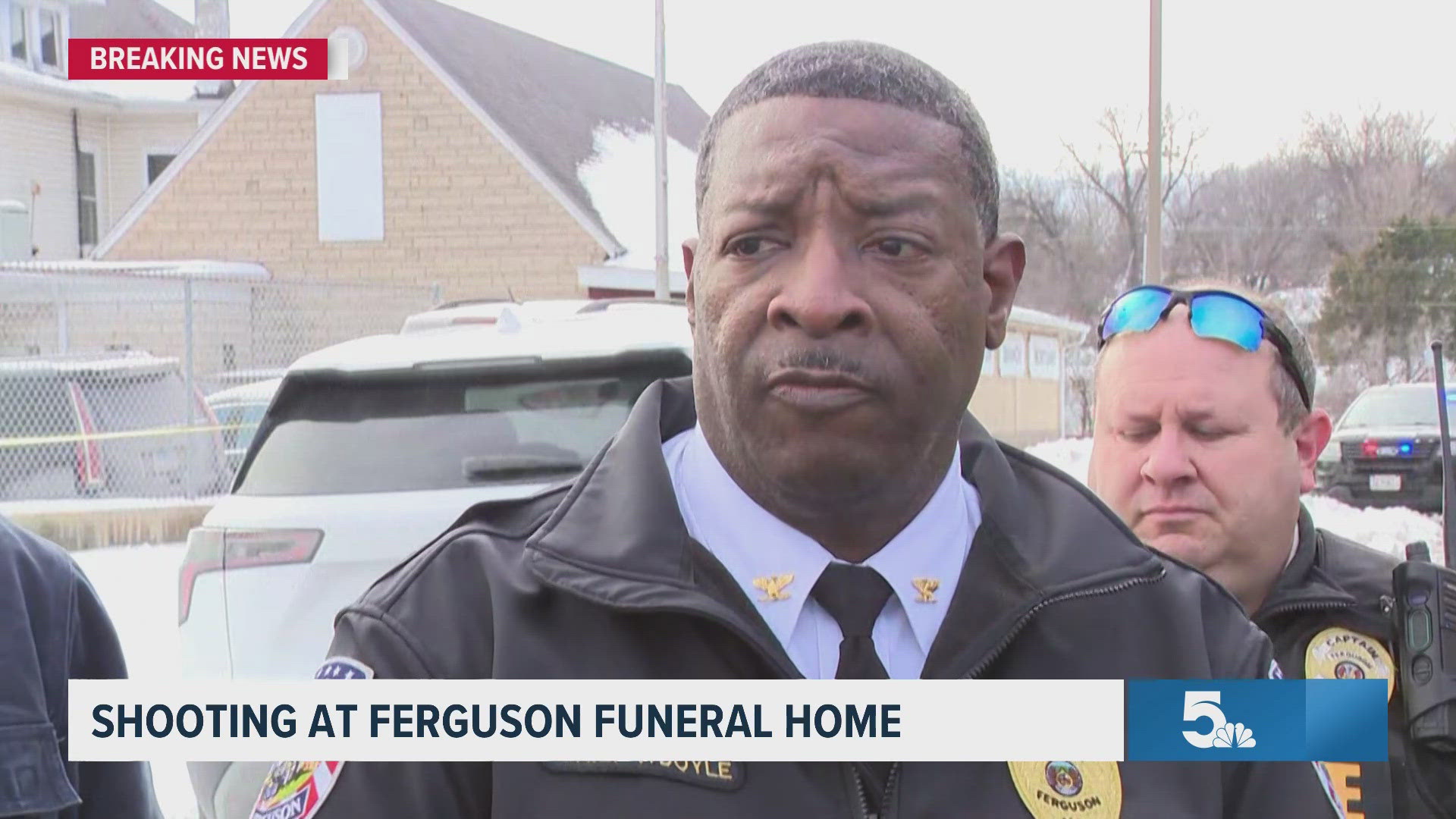
The Ferguson Police Chief called the incident “unfortunate,” noting how loved ones came together to grieve and instead were subjected to chaos. His words were measured, professional—but for many in the community, the moment demanded something heavier than condolences.
It demanded answers.
Why was someone armed at a funeral?
Why did tensions escalate in a place meant for peace?
Why does violence so often follow grief in the same neighborhoods, repeating itself like an echo that refuses to fade?
And perhaps the most uncomfortable question of all:
What does it say about a community when even mourning becomes dangerous?
Some residents argue this shooting is proof of a deeper failure—one where violence is so normalized that it spills into sacred spaces. Others caution against turning tragedy into condemnation, reminding people that funerals often bring together complex emotions, unresolved conflicts, and raw pain.
But pain does not justify gunfire.
And grief should never require bulletproof courage.
The incident has reignited debates across St. Louis County about gun access, security at large gatherings, and whether law enforcement presence prevents violence or simply arrives after damage is done. Some ask why more preventative measures weren’t in place. Others worry that increased police presence at funerals only reinforces the idea that violence is expected.
Both sides agree on one thing: this should never have happened.
Steffon Marmon’s name now carries two layers of tragedy. First, the loss of a 19-year-old life. Second, the violent disruption of the moment meant to honor him.
For the injured, recovery will be physical and psychological. Gunshot wounds heal slowly. Panic lingers longer. For those who escaped unharmed, the memory of running from bullets during a funeral will not fade easily.
And for the family at the center of it all, grief has become even heavier.
They did not just bury a son, a brother, a friend.
They watched his farewell become another crime scene.
As investigators continue questioning persons of interest and reviewing evidence, the community waits—not just for arrests, but for reassurance that mourning will not always be met with gunfire.
Because if funerals are no longer safe, where does grief go?
Violence has a way of invading spaces it doesn’t belong. But when it enters a room full of people already broken by loss, it leaves behind something worse than fear.
It leaves behind the feeling that peace itself is under threat.
And until accountability is clear, until answers come, Ferguson will carry the weight of a question no one should have to ask after attending a funeral:
How did we get here—and how do we stop this from happening again?