When Help Knocked Too Softly: The Warning Signs at Rob Reiner’s Home That the World Didn’t Hear.

There are tragedies that feel sudden—violent ruptures that seem to come without warning. And then there are tragedies that unfold more slowly, leaving behind a trail of moments that only make sense in hindsight.
The deaths of Rob Reiner and his wife, Michele Singer Reiner, belong to the second kind.
Because years before the bloodshed, before headlines and handcuffs and court dates, there were calls for help. Quiet ones. Procedural ones. The kind that rarely make the news and almost never spark action beyond a report number and a cleared scene.
In 2019, police came to Rob Reiner’s home not once, but twice.
And then, in December 2025, Rob and Michele were dead.
:max_bytes(150000):strip_icc():focal(992x279:994x281)/rob-reiner-michelle-singer-home-121525-3e5eff95e07b442e844a14e57eacc132.jpg)
A Home the World Thought It Knew
To the public, Rob Reiner’s life looked enviably complete. A legendary filmmaker. A sharp political voice. A man whose work shaped generations—Stand by Me, The Princess Bride, When Harry Met Sally… Stories about friendship, love, loyalty, and moral courage.
His marriage to Michele Singer Reiner, which began in 1989, was often described as enduring and affectionate. Friends spoke of warmth, humor, and deep partnership. Their family appeared close, accomplished, and grounded despite fame.
But private homes are not the same as public images.
And safety, it turns out, can be an illusion.
The Calls No One Heard
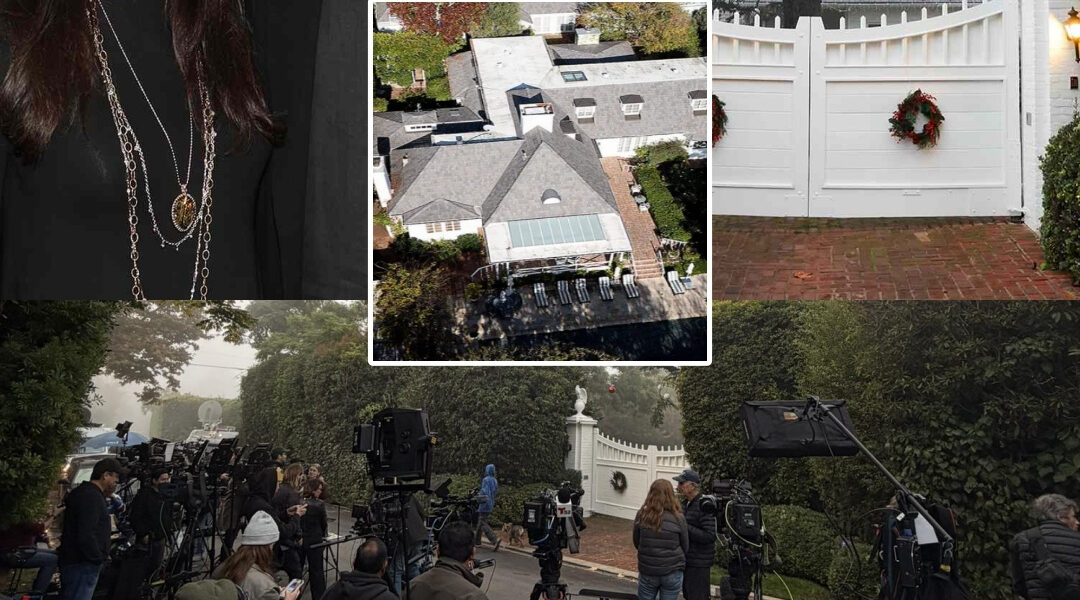
LAPD records later reviewed by PEOPLE revealed something few outside the family knew: police had been called to the Reiners’ Brentwood home twice in 2019.
The first call came late at night—9:51 p.m. on February 25, 2019. It was classified as a welfare check, instructing officers to “go to” a woman at the residence. Officers arrived about twenty minutes later, completed the call, and notified a supervisor. No public details followed. No names. No explanation.
Just a box checked.
A visit logged.
A file closed.
Seven months later, on September 27, 2019, police returned—this time for a mental health–related call involving a male individual. Officers arrived and later reported finding “no indication of mental illness.”
Again, the record ended there.
No further action.
No follow-up made public.
No visible intervention.
The law had done what it was asked to do.
And then it left.
The Son No One Could Save
Years later, investigators would charge Rob and Michele’s son, Nick Reiner, with their murders.
Nick, 32, had lived on the property. He had spoken publicly in the past about addiction, homelessness, and mental health struggles that began when he was still a teenager. According to sources close to the family, he had been diagnosed with schizophrenia and was receiving treatment at various points in his life.
Friends say Rob and Michele tried everything.
They tried distance.
They tried closeness.
They tried structure.
They tried compassion.
“They did what every parent does when their child is suffering,” one source told PEOPLE. “They kept hoping the next approach would be the one that worked.”
But hope, without the right support, can become a trap.
The Night Before Everything Ended
On December 13, 2025—the night before the killings—sources say Rob and Nick were involved in a “very loud argument” at a party hosted by Conan O’Brien.
It was not brushed off as playful.
It was not subtle.
It was loud enough for people to notice.
And yet, like so many moments before tragedy, it ended without immediate consequence.
Arguments happen.
Families fight.
People move on.
Until one day, they don’t.
December 14, 2025
In the early morning hours of Sunday, December 14, Rob Reiner, 78, and Michele Singer Reiner, 70, were killed inside their home.
The medical examiner later confirmed they died from multiple sharp-force injuries. Their deaths were ruled homicides.
Roughly six hours after their bodies were discovered, Nick Reiner was arrested near the University of Southern California. He remains in custody without bail, facing two counts of first-degree murder.
Authorities have not publicly disclosed a motive.
And perhaps that silence is part of the cruelty of it all.
The Questions That Refuse to Stay Quiet
In the aftermath, grief came first. Shock followed close behind. Friends spoke of love, of kindness, of a couple who were “holding hands forever.”
But beneath the condolences, another conversation began to simmer—one that made people uncomfortable.
What if those earlier police visits mattered more than anyone realized?
What if the welfare check in 2019 was not just a moment, but a warning?
What if the mental health call that ended with “no indication” missed something subtle, something developing, something dangerous not yet visible in the way police are trained to see?
The records do not say who called.
They do not say who the subject was.
They do not say what anyone felt when officers left.
And that absence is where the controversy lives.
When the System Sees — and Still Walks Away
This story forces a question society has never answered well:
What do we do when someone is struggling, but not struggling enough to trigger intervention?
Police are not mental health professionals.
Wellness checks are not treatment.
And “no indication at this time” does not mean “no risk in the future.”
Families often live for years in the gray space between crisis and catastrophe—calling for help, then being told there is nothing actionable to do.
Too sick to ignore.
Not sick enough to detain.
Too volatile to feel safe.
Not violent enough to stop.
Until one day, that line is crossed forever.
Parents Caught in an Impossible Role
Rob and Michele were not just victims of violence.
They were parents who loved a son they could not fix.
They lived the nightmare many families fear but few speak about openly: the slow realization that love alone is not enough to stop mental illness, addiction, or rage when it deepens beyond reach.
They carried that burden privately.
They carried it for years.
And now, the world is left asking whether the systems designed to help families like theirs arrived too late—or never fully arrived at all.
The Cost of Silence
Jake and Romy Reiner, Rob and Michele’s surviving children, released a statement describing the loss as “unimaginable pain we are experiencing every moment of the day.”
They asked for privacy.
They thanked the public.
They did not speculate.
But their grief exists alongside a public reckoning.
Because when a tragedy like this unfolds, it is never just about one family.
It is about how many other homes have made the same calls.
How many officers have left saying, “Nothing we can do.”
How many parents are still hoping the next crisis doesn’t become the last.
A Legacy Complicated by Truth
Rob Reiner’s films taught audiences about loyalty, justice, and moral courage. His death now forces a harder lesson—one with no easy ending.
That even privilege does not guarantee protection.
That fame does not prevent isolation.
That systems designed to intervene often react instead of prevent.
And that mental health crises do not always look dangerous—until they are.
After the Headlines Fade
Courts will proceed.
Evidence will be weighed.
A verdict will eventually come.
But verdicts do not answer the most haunting question of all:
What if someone had stayed longer in 2019?
What if follow-up had been mandatory?
What if “wellness” had meant more than a visit?
Rob and Michele Reiner should still be alive.
Their deaths were not inevitable.
And the warning signs—however faint—were there.
The tragedy is not only what happened.
It is what almost happened, years earlier, and was allowed to pass unnoticed.
And that may be the most unsettling part of all.