
Minneapolis did not sleep that night.
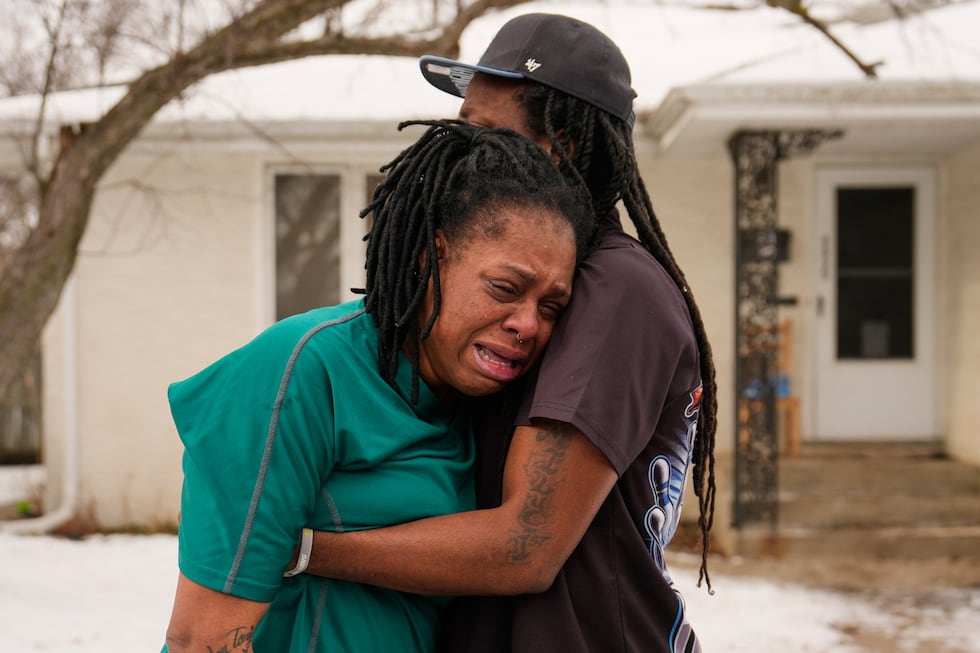
The city was already tense, already grieving, already on edge after the fatal shooting of a woman days earlier. But by Sunday morning, fear had settled into neighborhoods like a second winter—quiet, sharp, and impossible to ignore.
In a residential street lined with single-family homes, federal immigration agents arrived without warning. Heavily armed. Purposeful. Silent.
Then the door came down.
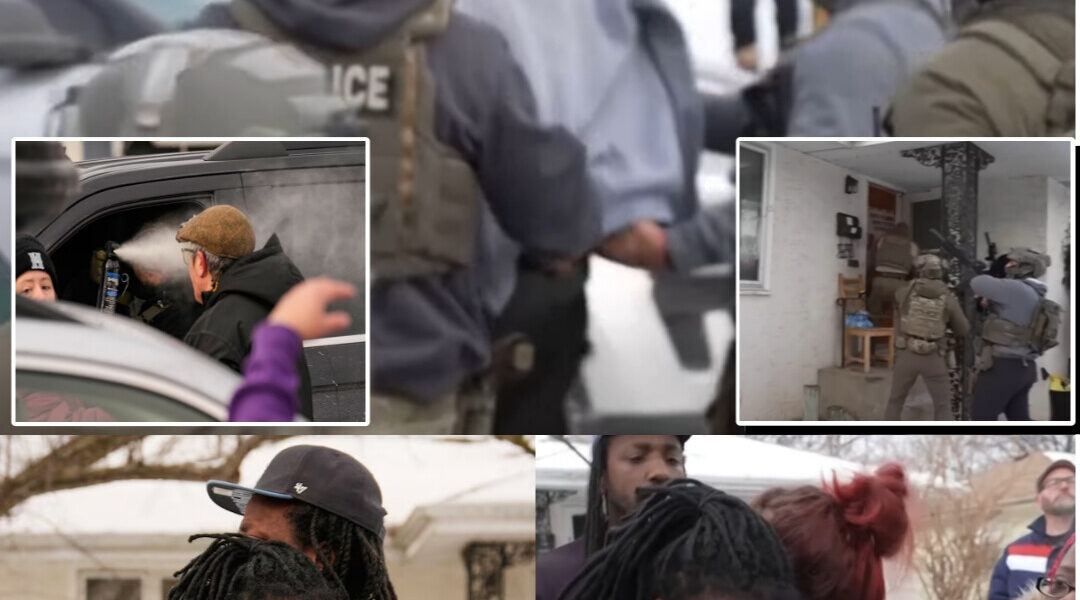
Witnesses watched as agents rammed their way into a home, forcing entry within minutes. Outside, the street erupted—not in violence, but in alarm. Neighbors honked car horns. Protesters banged drums, blew whistles, shouted warnings. Some rushed forward, others recorded with shaking hands.
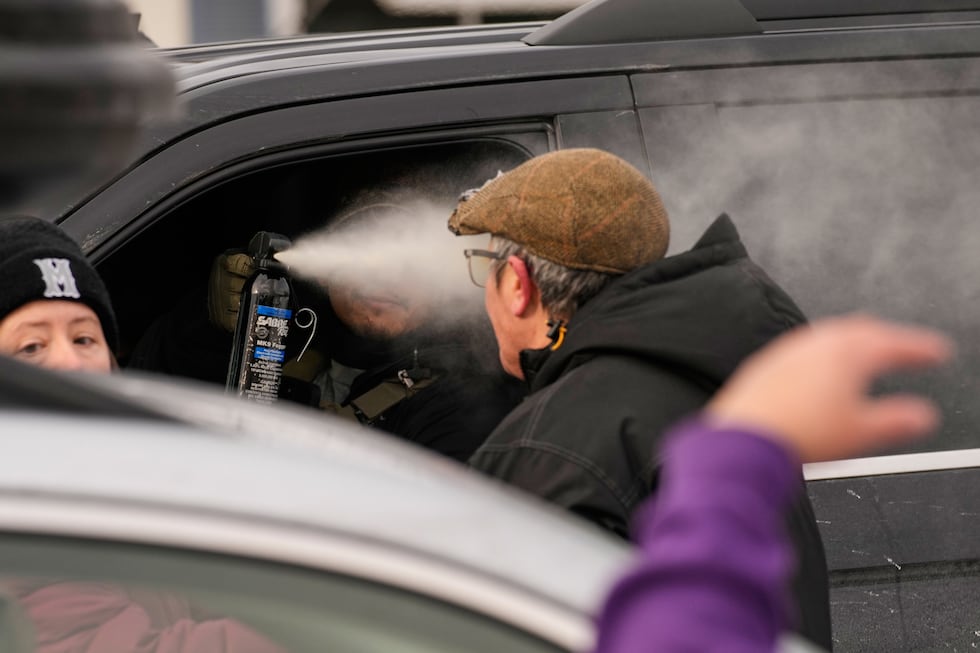
Moments earlier, federal agents had deployed pepper spray against protesters who confronted them, burning eyes and throats in the freezing air. The smell still lingered when a man was led out of the house in handcuffs.
A woman followed, distraught, holding a document the agents had presented to justify the arrest. It was not a judge-signed warrant. It bore the signature of an immigration officer—paperwork that authorizes arrest in public spaces, not forced entry into a private home.
But the door was already broken.
The man was already gone.
Across Minneapolis, scenes like this have become disturbingly familiar.
More than 2,000 immigration arrests have been made in Minnesota since the enforcement operation began in early December—what the Department of Homeland Security has described as the largest operation of its kind in history. Federal vehicles appear suddenly in neighborhoods. Agents move fast. Families are left stunned in their wake.
For immigrant advocacy groups, this moment has been years in the making.
They have spent months training residents in “know-your-rights” campaigns—urging people not to open their doors unless agents present a court order signed by a judge. They teach neighbors how to document arrests, how to observe without interfering, how to be present when fear takes hold.
More than 20,000 Minnesotans have volunteered to serve as observers since the 2024 election. They stand on corners in freezing temperatures, whistles in hand, watching for federal vehicles. Not because they want confrontation—but because they believe visibility matters.
“It’s a role people choose voluntarily,” said one organizer. “Because they choose to look out for their neighbors.”
That sense of vigilance has only intensified since the killing of Renee Good, a 37-year-old woman shot and killed by a federal immigration officer days earlier. The Twin Cities have not recovered from that shock.
Good was not an abstraction. She was a mother. A neighbor. A name now spoken in candlelight vigils and hushed conversations.
Federal officials say the officer acted in self-defense, claiming Good “weaponized” her vehicle. Critics say that explanation arrived too quickly, too cleanly, before an independent investigation could even begin.
Minneapolis Mayor Jacob Frey and U.S. Senator Tina Smith—both Democrats—have publicly questioned whether the federal government should be allowed to investigate itself.
“How can we trust an objective investigation,” Smith asked, “when the federal government has already announced exactly what it believes happened?”
Their concerns echo across the city.
Schools have responded to the unrest by shifting to remote learning, not because of weather or illness, but because parents fear sending their children outside. Administrators worry about students seeing arrests on their way to class. About trauma compounding trauma.
Federal officials insist the operations will continue.
Homeland Security Secretary Kristi Noem said more agents would be sent to Minnesota to protect officers and sustain enforcement. ICE leadership has argued that these actions would be unnecessary if local jurisdictions cooperated more fully by turning over people deemed public safety threats.
But that framing is precisely what angers critics.
Because in the videos shared online—many filmed by the Associated Press and residents themselves—the people being arrested are not faceless threats. They are fathers, sons, partners. People pulled from homes while neighbors watch in disbelief.
The protests that followed Good’s killing and Sunday’s arrest spread quickly across the country—New York, Los Angeles, Washington D.C., Oakland. Different cities. Same unease.
Supporters of the enforcement say the law must be upheld. That borders, orders, and safety require force when cooperation fails. They argue that officers face split-second decisions in dangerous conditions.
Opponents say something more fundamental is being eroded.
They point to doors being rammed without judicial warrants. To children watching parents taken away. To communities living in constant anticipation of flashing lights at dawn.
They ask a question that no policy briefing can fully answer:
Who is safe in their own home?
In Minneapolis, that question hangs heavy.
Neighbors share live locations of federal vehicles. Parents rehearse what to tell their kids if agents knock. People memorize the difference between a judge’s signature and an officer’s.
This is not normal life.
And yet, for many, it has become routine.
By Sunday afternoon, the street where the door had been broken returned to quiet. The shattered frame was repaired. The crowd dispersed. Traffic resumed.
But nothing felt restored.
Because when a door is forced open, it isn’t just wood and locks that break. Trust fractures. Boundaries blur. Fear settles deeper into the walls.
Minneapolis is no stranger to protest, to national scrutiny, to pain that forces uncomfortable reckoning. But this moment feels different to many residents—less explosive, more corrosive.
A slow, grinding uncertainty.
The federal government says it is enforcing the law.
Residents say the law is being stretched beyond recognition.
Between those claims are real people—standing in the cold with whistles, keeping children home from school, staring at their doors a little longer before unlocking them.
This is no longer just an immigration story.
It is a story about power.
About accountability.
About how much force a democracy tolerates in the name of order.
And about a city holding its breath, wondering not what happened—but what comes next.