
The moment an elephant calf is born, there is no pause to celebrate, no quiet stretch of time to rest. Life, in the wild, does not wait.
The newborn arrives with a heavy thud — nearly three feet to the ground — blinking into a world that demands strength immediately. Its legs tremble, unfamiliar with their own weight. At barely minutes old, the calf weighs more than many adult humans, yet it must do what survival requires: stand up.
This is where the mother steps in.
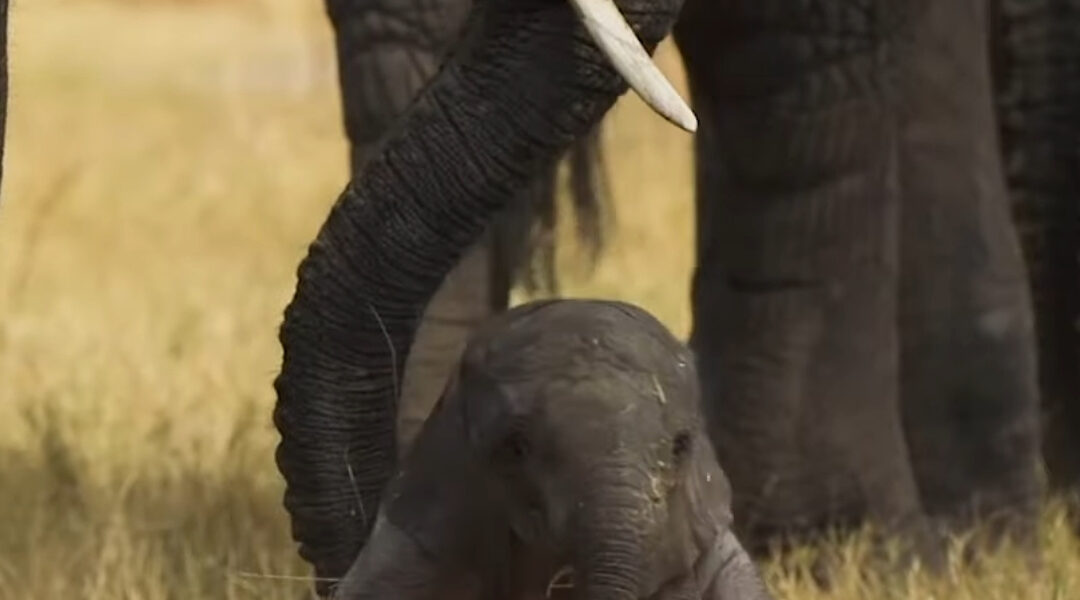
In a video that has quietly captured hearts around the world, a mother elephant stands close to her newborn, her massive body forming a shield as her calf struggles to rise. The baby sways, knees buckling, unsure of how to carry itself. Each attempt ends in a soft collapse, dust rising around its tiny, wrinkled form.
The mother does not rush. She does not panic.
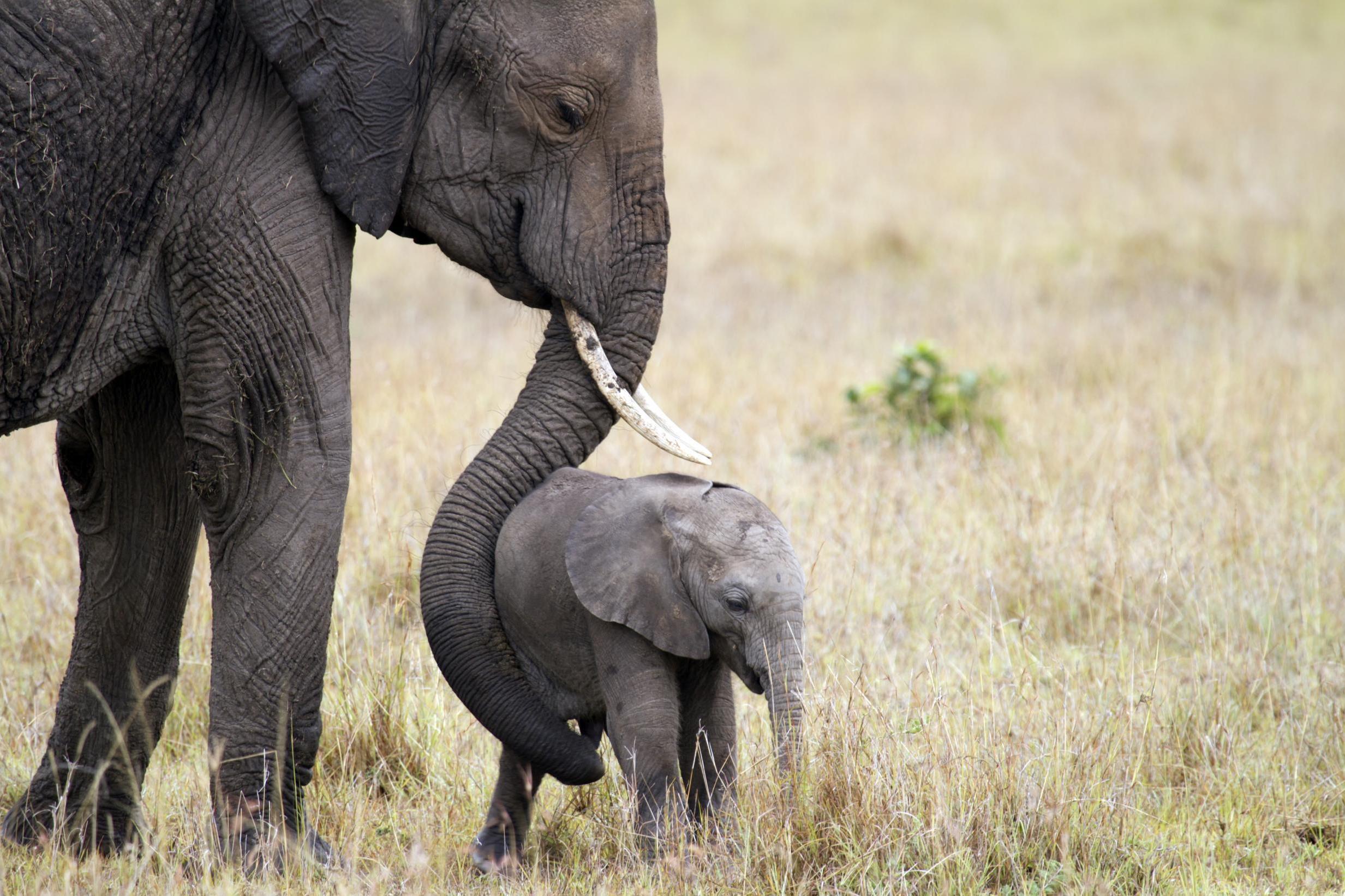
Instead, she lowers her trunk gently, wrapping it around her calf’s body — not to lift, but to guide. To steady. To say, I’m here.
Elephants are born into motion. Unlike human babies, who take months to crawl and nearly a year to walk, elephant calves must stand within minutes of birth. In the wild, hesitation can mean danger. Predators watch. The herd must keep moving. The calf must learn quickly or be left vulnerable.
But learning does not happen alone.
The mother nudges her baby again, patient and precise. The calf leans into her touch, trusting it instinctively. Its legs straighten just a little longer this time. The ground feels different now — less threatening, more familiar. The calf stumbles forward one step, then another, before collapsing once more.
Still, the mother stays.
Around them, the herd gathers. Aunts and sisters step closer, forming a protective circle. They do not interfere, but they watch closely, ready to help if needed. This is how elephants raise their young — together, through shared memory and collective care.
The calf tries again.
This time, the mother braces her trunk against the calf’s chest, adjusting her position so the baby can find balance. The calf’s legs shake violently, but they hold. For a brief moment, the newborn stands.
It is not graceful.
It is not steady.
But it is enough.
That first stand marks the beginning of a life that will stretch across decades — a life shaped by migration routes remembered by elders, by water holes passed down through generations, by constant touch and quiet communication.
The mother rumbles softly, a sound too low for humans to fully hear, but rich with reassurance. The calf responds by leaning closer, pressing its small body against her leg as if anchoring itself to the world.
Walking will come soon enough. Confidence will grow. Strength will follow.
But in this moment, what matters most is not the milestone — it is the bond.
The video does not show struggle as something cruel or harsh. It shows learning as something shared. It shows that even in a world where survival demands early strength, gentleness still has a place.
Elephant mothers do not push their calves forward and walk away. They stay close. They slow down. They guide, protect, and wait.
And as the calf finally manages a few unsteady steps, the herd begins to move — carefully, deliberately — adjusting their pace to the smallest member among them.
Because in elephant families, no one is left behind.
What we witness in those first steps is more than instinct. It is love shaped by necessity, patience forged by experience, and a quiet reminder that even in the wild, growth happens best when someone steady is close enough to lean on.
The calf will walk far in its lifetime.
But it will never forget who helped it stand.
D