Video Analysis Offers Context on Shooting of Alex Pretti by Federal Immigration Officers.

The morning began like countless others—cars inching through traffic, pedestrians crossing without thinking twice, the ordinary rhythm of a city waking up. No one expected that within minutes, a man would be dead in the street, and a nation would be arguing over what justice, fear, and authority look like when captured on video.
Alex Pretti was 37 years old.
To federal officials, he would soon become “the deceased.”
To investigators, a subject in a rapidly evolving incident.
To his parents, he was their son.
To his colleagues, he was an intensive care unit nurse—the kind who held strangers’ hands while machines breathed for them, who walked families through the worst moments of their lives.
And to bystanders that morning, he was a man trying to slow traffic and protect someone he didn’t even know.
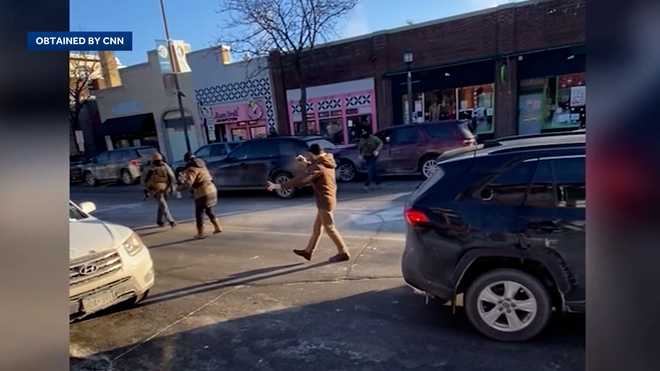
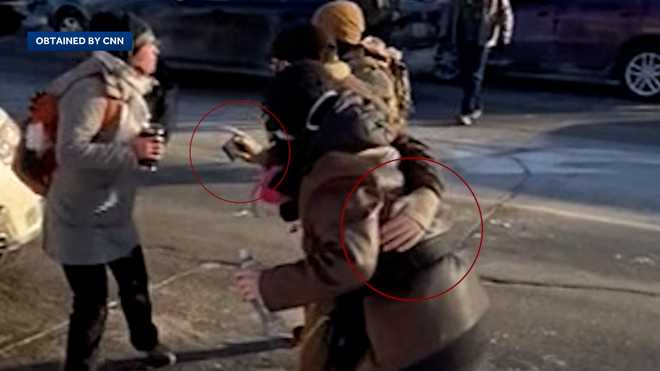
Multiple videos now circulating online do not begin with chaos. They begin with Alex stepping calmly into the street, raising his arm to wave a car around ongoing federal immigration activity. He isn’t yelling. He isn’t charging. He is holding a phone. His other hand is empty.
Seconds later, the tension sharpens.
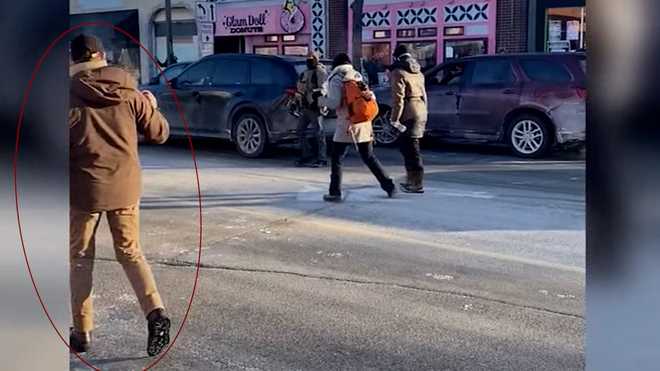
Alex moves toward a woman in the road as a federal immigration officer approaches her. Witness footage shows the interaction growing heated quickly—voices rising, bodies closing distance. In another angle, an officer shoves Alex. Instead of striking back, he shifts his body between the officer and the woman, one arm around her shoulders, the other still holding his phone.
This moment is where the debate begins.
Supporters of law enforcement say Alex interfered with a federal operation. Critics say he intervened to stop excessive force. The videos do not show him punching, kicking, or reaching for a weapon. They do show him shielding a woman as another officer sprays chemical irritant—twice—hitting Alex and those around him.
The crowd tightens. More officers rush in.
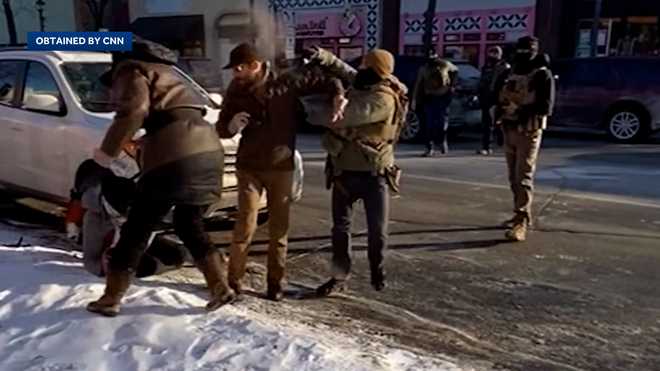
The situation collapses into a scuffle.
Alex goes to the ground.
This is where the footage becomes the most contested—and the most haunting.
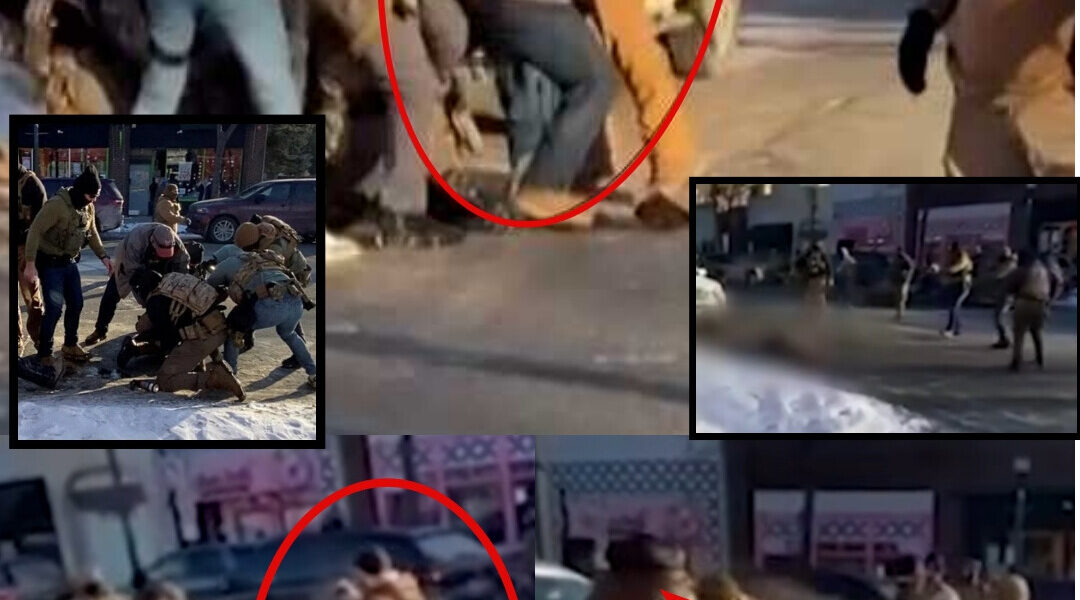
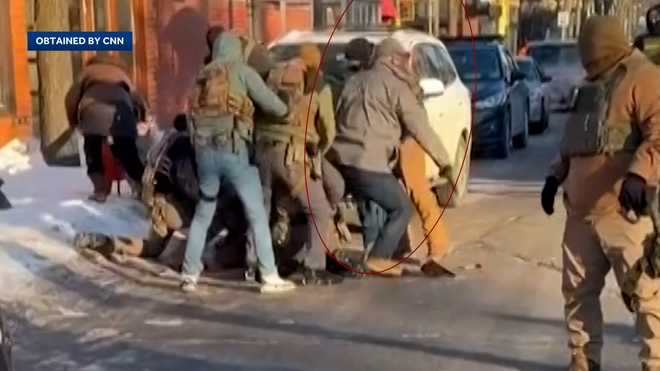
From a third angle, an officer dressed in gray is seen reaching into Alex’s waistband while Alex is down. The officer appears to pull something free and immediately runs away as gunshots ring out. Moments later, in yet another video, an officer crouches near Alex’s body, searching him while asking, “Where’s the gun?”
From off-camera, another voice answers: “I’ve got the gun.”
That gun, authorities later confirmed, was legally owned and legally carried by Alex Pretti.
What the videos do not show is Alex ever drawing it.
They do not show him pointing it.
They do not show him threatening anyone with it.
That absence is what has ignited national outrage.
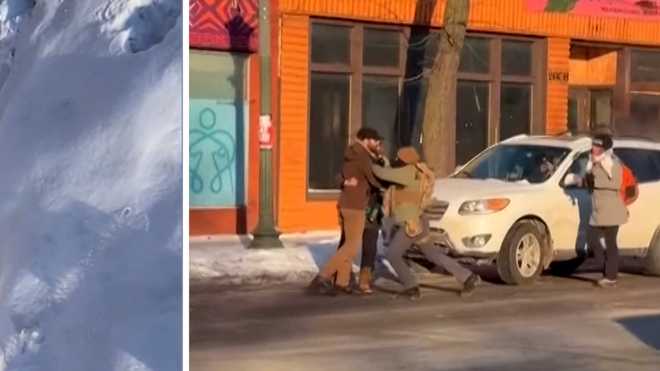
Federal officials initially stated that officers feared for their lives. That Alex was armed. That the shooting was justified. But video by video, frame by frame, a more complicated story emerges—one that raises questions no press release can silence.
Why was deadly force used after Alex was already on the ground?
Why was the weapon removed before shots were fired?
Why does no footage show him brandishing the gun officials cite as justification?
And perhaps most troubling: if Alex had survived that moment, what would the narrative have been?
His parents learned of his death not through a phone call from his employer or colleagues, but through law enforcement. They described him not as a threat, but as a protector—someone who stepped forward when others stepped back. Someone who spent his life keeping people alive.
“He ran toward danger,” one friend said later. “That’s what ICU nurses do.”
To supporters of immigration enforcement, the shooting reflects the dangers officers face daily. They argue that split-second decisions cannot be judged calmly after the fact. They warn that civilians interfering with federal operations put everyone at risk.
To critics, Alex Pretti’s death represents something darker: a system that escalates first and explains later. A system where possession of a legal firearm becomes a death sentence depending on who holds authority in the moment. A system where video evidence contradicts official narratives, yet accountability remains uncertain.
The controversy is not just about one shooting.
It is about whether bystanders have the right to intervene when they believe force is excessive.
It is about whether legally armed citizens lose their right to life the moment fear enters an officer’s mind.
It is about whether video evidence changes outcomes—or simply fuels arguments.
Online, the footage has been slowed, paused, annotated, debated endlessly. Some viewers focus on Alex stepping into the street. Others fixate on the officer’s hand disappearing into his waistband. Some say, “He should have stayed back.” Others reply, “He shouldn’t be dead.”
In the center of it all is a man who cannot explain his intentions, cannot defend his actions, cannot correct the record.
Alex Pretti will never testify.
What remains is silence, footage, and grief.
Colleagues from the hospital where he worked gathered quietly days later. Nurses who had seen death up close stood stunned that one of their own was gone—not from illness or accident, but from bullets fired in a moment that might have ended differently.
“He saved lives for a living,” one coworker said. “Now we’re arguing whether he deserved to die.”
Federal investigations continue. Internal reviews are promised. Statements are refined. Language is carefully chosen.
But the videos remain unchanged.

They show a man with a phone in one hand and a woman under the other arm.
They show pepper spray, a fall, a hand reaching into a waistband.
They show gunshots after the weapon appears to be removed.
And they show something else, harder to quantify: a moment where humanity, authority, fear, and power collided—and only one walked away alive.
Whether the shooting was justified may eventually be decided in courtrooms and reports.
But in the public conscience, the question lingers, unresolved and uncomfortable:
If Alex Pretti had never stepped forward—would he still be alive?
And if stepping forward is enough to get you killed, what does that say about the world we are building?
This is why the footage matters.
This is why people are angry.
This is why the story refuses to fade.
Because behind every frame is a life that ended—and a truth that still hasn’t settled.