
On the morning of March 8, 2025, Bell Mountain looked the way it always does.

Mist drifted slowly above the overlook. The lake below reflected a pale sky. Visitors who made the drive up the winding road came for the same reason they always had—to pause, to breathe, to take in a view that felt larger than everyday life.
By midday, that quiet beauty was broken.
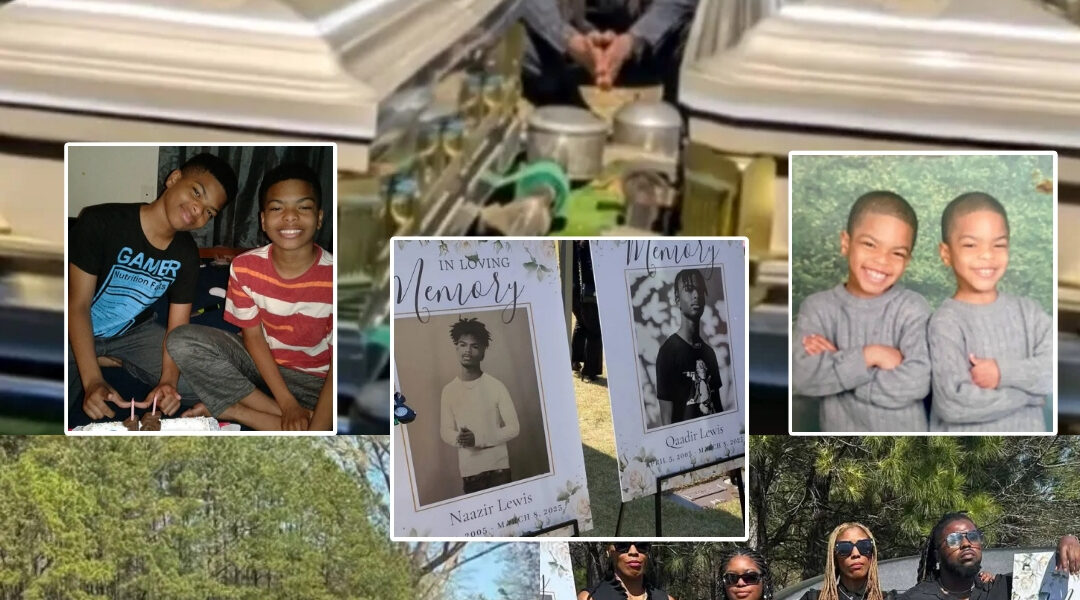
At 11:05 a.m., the Towns County 911 Center received a call reporting two people found near the summit. When deputies arrived, they discovered the bodies of twin brothers—Qaadir Malik Lewis and Naazir Rahim Lewis, both just 19 years old.
They were from Lawrenceville, in Gwinnett County. Metro Atlanta kids. Teenagers who should have been worrying about school, work, friends, and futures still unfolding.
Instead, their lives ended on a remote North Georgia mountain.

The Georgia Bureau of Investigation was called in almost immediately. Agents confirmed both brothers had died from gunshot wounds. In the earliest hours of the investigation, the case was described as a suspected murder-suicide, a provisional assessment while autopsies and forensic testing were still pending.
That initial framing sent shockwaves through the Lewis family.
Twin brothers are not just siblings. They are mirrors. They grow together, speak their own shorthand, move through the world side by side. For those who knew Qaadir and Naazir, the idea that one could kill the other—or that both could choose to die together—felt impossible to reconcile with the boys they loved.
Questions came fast.

Why Bell Mountain?
Why that day?
Why no note?
Why no warning?
For weeks, the case sat in a space between grief and uncertainty. Social media lit up with speculation. Community members debated possibilities. Family members pleaded for answers that felt human, not just procedural.
On May 21, 2025, the GBI announced it had completed its investigation.
The ruling stunned many.
Suicide–suicide.

According to the agency, the conclusion was based on what it described as a comprehensive body of evidence. Cellphone location data showed a clear timeline from the twins’ home in Gwinnett County to Bell Mountain. Video footage at corresponding locations showed only the brothers, no one else.
Investigators said records showed only Naazir had gone to the airport the day before, March 7, intending to fly. He did not board the flight and returned home. He was also the only one with a ticket.
Ammunition used in the firearm had been purchased by Naazir and delivered to the home days earlier. Internet searches on the brothers’ phones included how to load a gun and suicide-related queries. Forensic testing indicated that both brothers fired a weapon.
The medical examiner’s findings, combined with digital and physical evidence, led investigators to conclude the fatal injuries were self-inflicted.
The case, they said, would soon be formally closed.
But closure is not a switch you flip.

For the Lewis family, the announcement did not bring peace. It brought a different kind of pain—the ache of being told what happened without being able to understand why.
They questioned the absence of a message. They questioned the choice of location. They questioned how two young men could make such a decision without anyone noticing the storm building inside them.
Grief does not argue facts. It argues meaning.

Investigators emphasized that their conclusions were grounded in evidence, not assumptions. But grief does not operate on evidence. It operates on memory—on who the boys were at family gatherings, on jokes shared, on plans discussed, on futures imagined.
In the midst of that heartbreak, another wound was inflicted.
On March 18, 2025, the GBI announced the arrest of a local volunteer firefighter, Scott Kerlin, charging him with misdemeanor obstruction. Authorities said he had taken photos of the twins’ death scene and shared them publicly.
For the family, that act felt like a violation layered on top of loss. Their sons’ final moments—already the subject of scrutiny—had been exposed in a way that stripped away dignity.

The images spread faster than truth ever does.
And once something like that enters the world, it cannot be taken back.
For the community around Hiawassee, Bell Mountain changed overnight.
A place known for sunsets and proposals and quiet reflection became inseparable from tragedy. Locals spoke of it in hushed tones. Visitors stood at the overlook unaware of the weight it carried for others.
For those who followed the case from Gwinnett County and beyond, it became something larger than a single incident. It became a conversation about mental health, about young men suffering silently, about how little we sometimes know about the people closest to us.

And about how official answers don’t always satisfy emotional truth.
Qaadir Malik Lewis and Naazir Rahim Lewis are no longer just names in a report.
They are sons.
They are brothers.
They are teenagers whose lives ended before they could fully begin.

Their story sits at the intersection of grief and investigation, of facts and feelings, of what authorities can conclude and what families must somehow live with.
Bell Mountain still offers its sweeping view. The lake still glimmers below. The wind still moves through the trees.
But for one family—and for many who have watched this story unfold—that overlook will never be just a scenic stop again.

It will always be the place where two brothers’ lives ended, and where the space between answers and acceptance remains painfully wide.
Because sometimes, even when a case is closed, the story is not.
And sometimes, the hardest part is learning to live with questions that may never feel fully answered.