Two young lives were lost to gun violence on a cold December night in Omaha.
Long before headlines and court dates, it was just a family trying to make a life inside a modest townhouse near 108th and Ida Streets.
Inside those walls, the story was not about crime or legal arguments, but about a young mother and her little girl.
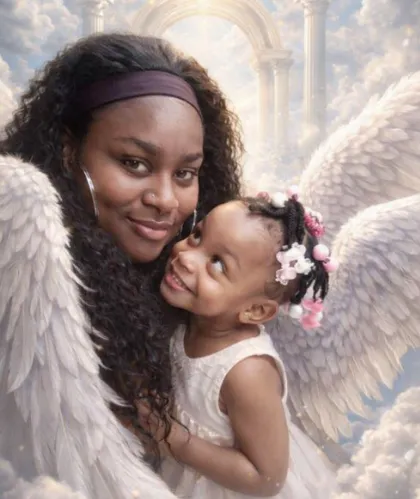
At twenty-two, Destacia Straughn was still piecing together the future she wanted.
She balanced bills and responsibilities with laughter and late-night talks, doing her best to be both strong and soft for the people who depended on her.
She was learning, as so many young mothers do, how to carry worry in one hand and hope in the other.
Her daughter, two-year-old Kenacia Amerson-Straughn, didn’t know any of that.
Her world was made of smaller, brighter things—favorite cups, stuffed animals, and the familiar rhythm of her mother’s footsteps.
She measured time not in days and months, but in naps and cartoons and the warmth of arms that held her tight.
Their home was not perfect, but it was theirs.
The townhouse held pictures taped to walls, scattered toys, half-folded laundry, and the lingering smell of meals cooked while music played from a phone on the counter.
It was a space built from moments and memories, not statistics or headlines.
Outside that home, life was more complicated.
Relationships frayed, tempers rose, and choices were made that could not be unmade.
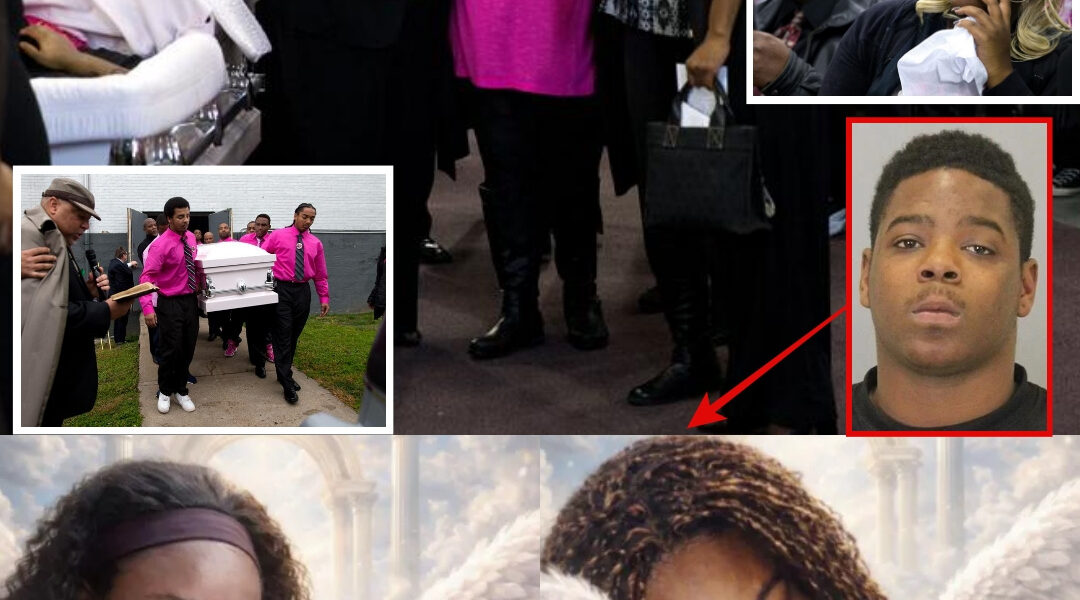
One of those broken threads was the relationship between Destacia and her estranged boyfriend, twenty-four-year-old Dontevous D. Loyd.
What had once been closeness had turned into distance, and then into fear.
Authorities would later say that tension had escalated over accusations, anger, and control.
Behind the legal language lay a simple, painful truth: she had tried to step away.
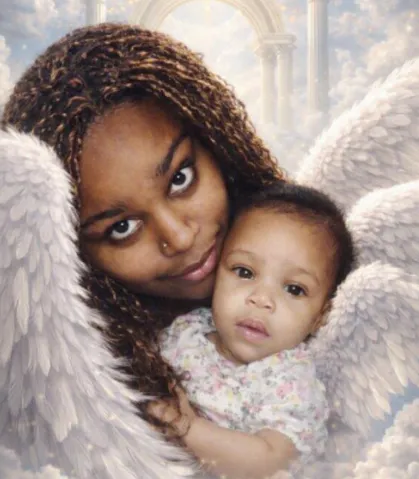
Earlier, she had reported that he had stolen her car.
It was a decision that took courage, a step toward protecting herself and her child.
But it was also a decision that, according to police, sparked his rage.
On the night of December 6, the townhouse was alive with quiet activity.
Several women were there together, a small circle of companionship against the cold outside.
They were not expecting danger—just another night, another set of conversations, another bedtime to get through.
Kenacia fought sleep the way toddlers do, protesting with small bursts of energy.
She climbed into laps, reached for snacks, and clung to her mother’s shirt with drowsy fingers.
Eventually, the pull of exhaustion tugged her closer to dreams.
For a moment, the scene was ordinary.
The kind of ordinary that people rush through, never thinking how precious it might be.
No one knew that these would be among their final shared minutes.
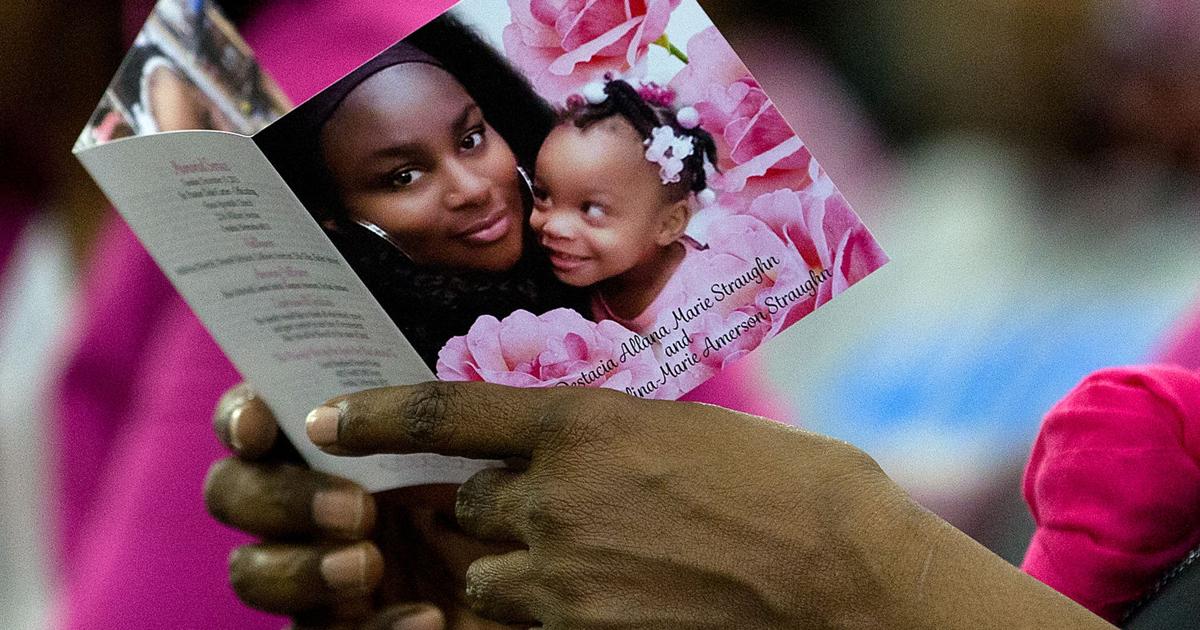
Around 11 p.m., the night shifted.
Authorities say Loyd came to the townhouse, his anger fueled by the earlier report about the car.
The air itself seemed to tighten as his presence crossed the threshold.
Words were exchanged, sharp and heated, the kind that leave no room for calm.
Fear began to bloom in the room, thin at first, then undeniable.
The women present could feel danger gathering like a storm just beyond the window.
What happened next would later be described in court documents and police statements.
Authorities say that as he opened fire, he yelled “no witnesses,” a phrase that still echoes in the memories of those who survived.
In a matter of moments, the ordinary night was shattered.
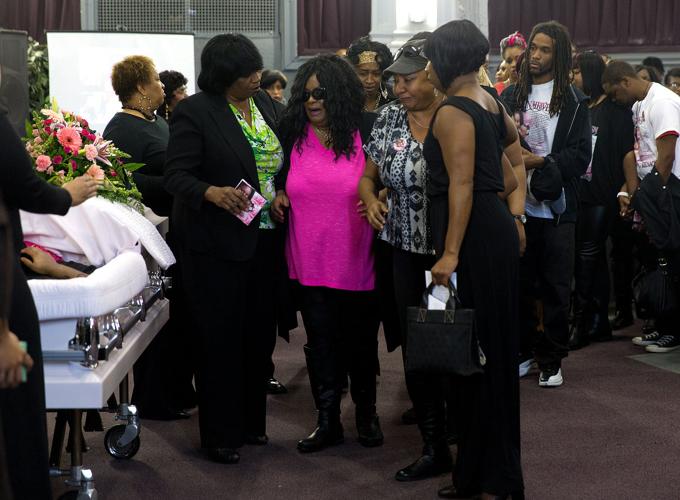
Gunshots tore through the fragile peace.
The sound was sudden, violent, and final, leaving no time to think, only to react.
For those inside, there was nowhere to run that didn’t already feel too close to the danger.
When the noise stopped, silence did not bring relief.
It brought the unbearable reality of what had just happened.
Two young lives had been taken—Destacia and her little daughter, gone before help could reach them.
Three other women were left alive.
They survived, but survival is not the same as being untouched.
They carried with them the image of that night, imprinted too deeply to fade.
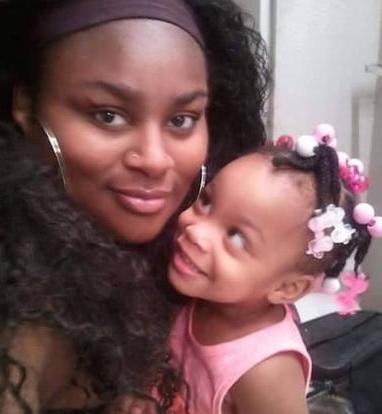
Outside, the world kept turning.
Cars drove past the quiet townhouse, their drivers unaware of the tragedy sealed behind closed doors.
In some homes, people were already asleep, never knowing that a family nearby had just been broken forever.
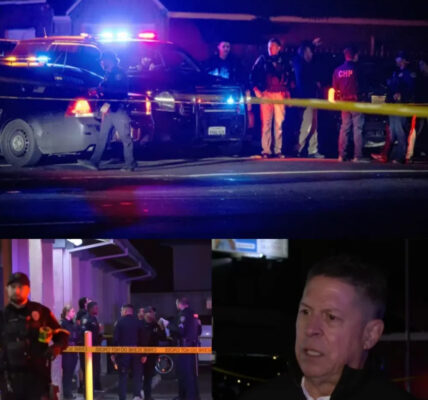
Then came the sirens.
Red and blue lights washed across the street, painting the walls and windows in flashing color.
First responders stepped into a scene that would linger in their minds long after they left.
Police began to piece together what had happened.
They spoke with witnesses, collected evidence, and followed the trail left by fear and violence.
Within hours, the narrative began to take shape in official reports.

Prosecutors later said that Loyd had not only killed his estranged girlfriend and her daughter, but also tried to kill the three other women inside.
The three survivors became both living proof of what happened and the voices for those who could no longer speak.
Their accounts would carry the weight of the lost.
Douglas County Attorney Don Kleine filed notice of four aggravating circumstances in the case against Loyd.
These factors included the allegation that he killed to conceal a crime, that multiple people were slain, that his actions put others at great risk, and that he had a history of violent behavior.
With those filings, the case crossed into the realm of the most severe consequences the law allows.

The possibility of the death penalty entered the conversation.
It was a legal term, heavy and clinical, layered with moral and emotional complexity.
For the families of the victims, no sentence could ever feel like enough to weigh against the lives lost.
Douglas County District Judge Greg Schatz set a tentative trial date for December.
On paper, it was just a line on a calendar, words in a docket.
For the families, it was another marker in a timeline they never asked to live through.
In the days and weeks that followed the killings, grief moved through the community like a cold wind.
Neighbors who had seen Destacia carrying groceries or buckling her daughter into a car seat now saw news alerts and crime scene tape.
The familiar became unrecognizable.
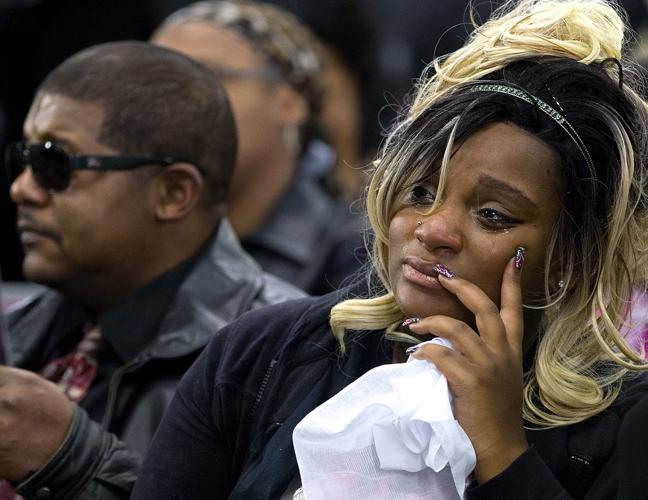
Family members faced tasks that no one should ever have to perform.
They chose photos for obituaries and memorials, trying to capture entire lives in a handful of images.
They sat together, telling stories that alternated between laughter and tears, because both were now tied to the same memories.
There were toys left behind that no small hands would ever pick up again.
Tiny shoes, outgrown clothes, and half-finished drawings became relics of a life paused mid-sentence.
Every room in the townhouse held echoes of footsteps that would not return.
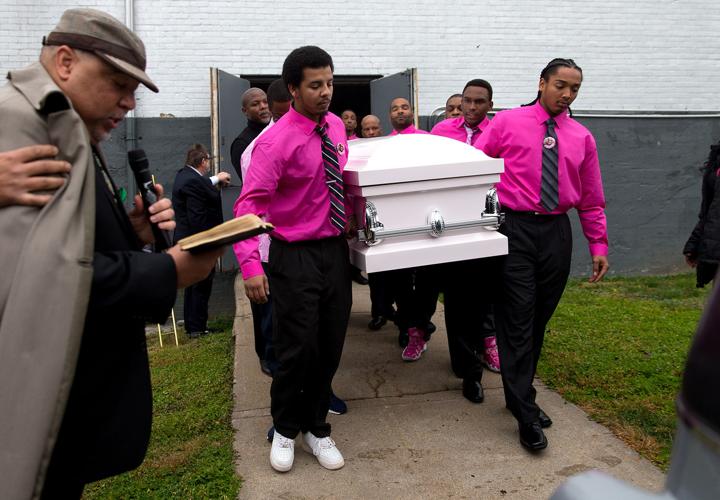
Friends and relatives gathered to mourn.
They spoke about who Destacia had been beyond the headlines—a young woman with dreams, flaws, jokes, and love to give.
They spoke about Kenacia, whose whole personality had been a promise of the person she might someday become.
Candlelight vigils flickered against the dark.
People stood shoulder to shoulder, their breath visible in the cold night air.
They said the names Destacia and Kenacia out loud, refusing to let them be swallowed by statistics.
In living rooms and at kitchen tables, conversations turned toward gun violence and intimate partner violence.
Some wondered whether anything could have been done differently—if earlier intervention, stronger support, or clearer warning signs might have changed the outcome.
Others sat in quiet, knowing that such questions have no easy answers.
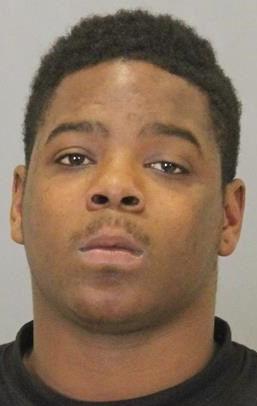
The survivors of the attack faced their own long road forward.
They were alive because bullets missed them, or because they moved just in time, or simply because chance decided to spare them.
But survival came with nightmares, flashbacks, and the heavy burden of remembrance.
Each court hearing, each new piece of information, reopened the wound.
They would likely be called upon to testify, to recount in detail what they had spent months trying not to relive.
Their testimony would be necessary, but not without cost.
As the legal process moved on, the rest of the world’s attention shifted.
New stories rose to the surface, new tragedies took up space on screens and front pages.
But for those who loved Destacia and Kenacia, time did not erase or replace their loss.

Family members continued to mark dates differently.
Birthdays that no longer had a guest of honor.
Holidays with empty chairs that no one wanted to fill.
Sometimes, the hardest part was not the big days, but the small, unremarkable ones.
A random Tuesday afternoon when a certain song played, or a commercial showed a mother lifting her child, or someone drove past that townhouse corner.
Grief lives in those small moments as much as in the obvious ones.
Two young lives were lost in gun violence that night.
One was a woman at the threshold of adulthood, the other a child barely beginning to understand the world.
Their stories should not end in fear and pain, but continue in the memories and actions of those left behind.

When we speak of them, we are reminded that every statistic has a face.
Behind every “case” are people who laughed, argued, loved, and dreamed.
Behind every headline are empty beds, ringing phones that no one picks up, and families trying to learn how to live around a void.
My heartfelt sympathy goes out to the family and friends who still carry this loss.
Their sadness is not a single moment, but a long journey they did not choose.
Their courage lies in remembering, in speaking the names, in loving what remains.
May Destacia Straughn be remembered as more than a victim, but as a young woman whose life mattered.
May little Kenacia Amerson-Straughn be remembered as more than a number, but as a child whose light was stolen too soon.
And may they both rest peacefully, wrapped now in a safety no violence can ever touch again. ✨