
The phone rang, and everything that followed unraveled from that single sound.
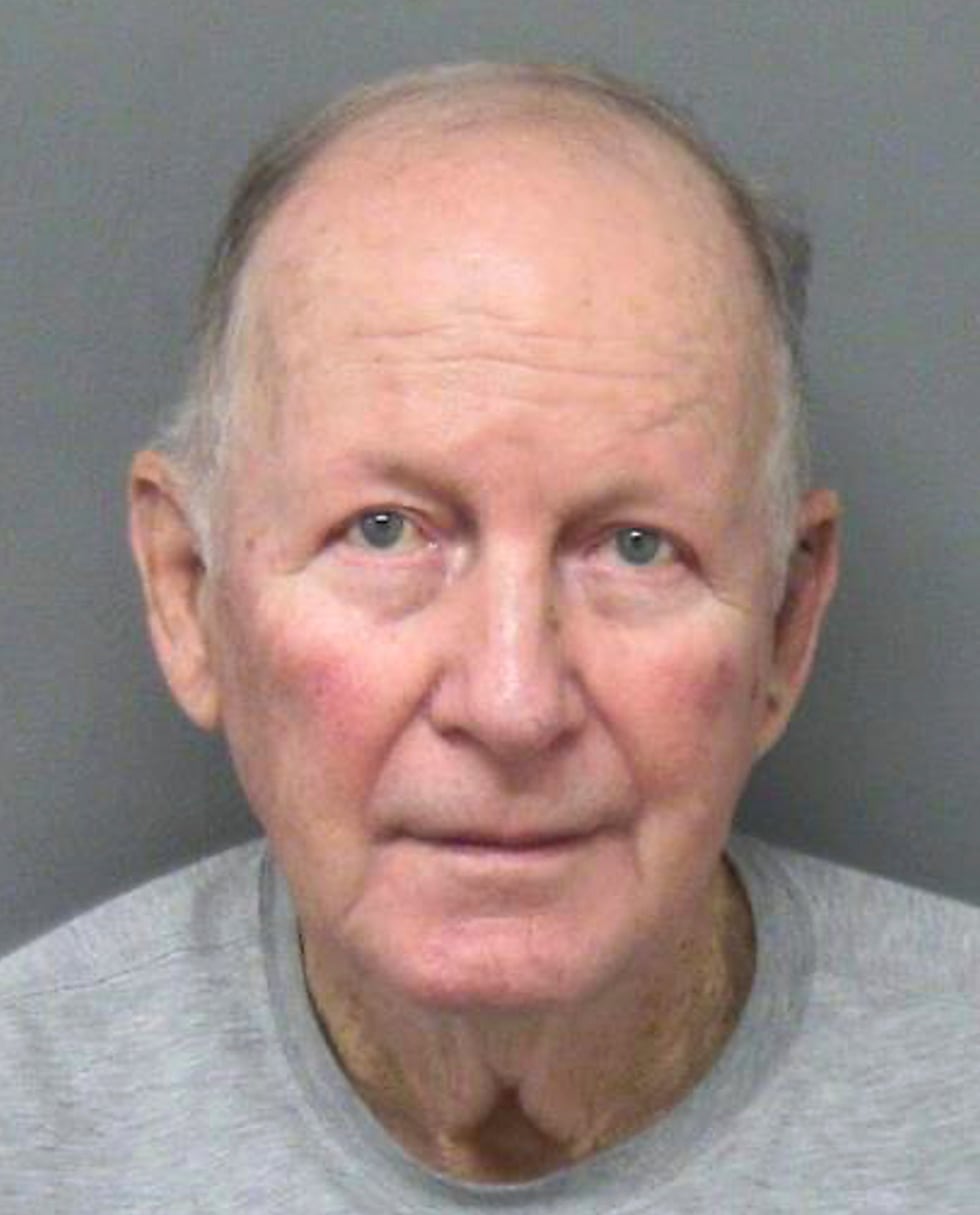
William J. Brock was 83 years old, living quietly in South Charleston, Ohio, when the call came. On the other end was a voice filled with urgency and menace, telling him that a loved one was in trouble and that money—$12,000 in bond—was needed immediately. The caller threatened harm. The details were convincing. The fear was real.
Brock believed it.
He did not know that the voice on the phone belonged to a scammer, someone who had already perfected the art of turning panic into profit. He did not know that this same scammer was reaching out to someone else at the exact same time—an Uber driver who believed she was simply doing her job.
Her name was Lo-Letha Toland-Hall.
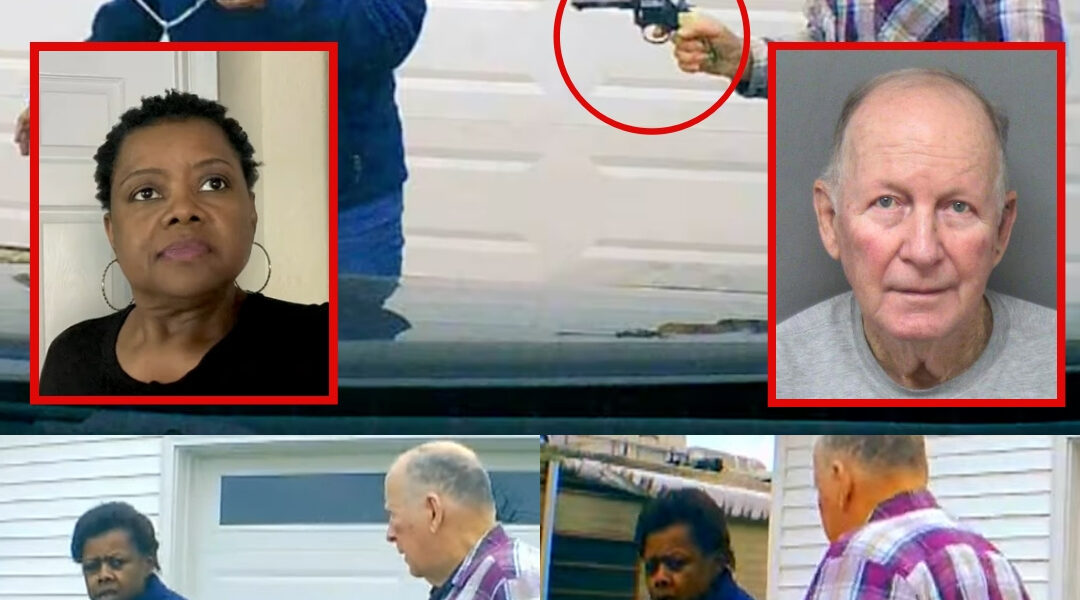
She was 61 years old, from Dublin, a suburb of Columbus. A mother. A grandmother. A woman who drove for Uber to earn extra income, the way so many people do—trusting an app, a destination, and the assumption that a routine pickup would end safely.
Investigators say the scammer instructed Hall to drive to Brock’s home to pick up a package for delivery. She was told nothing about threats. Nothing about fear. Nothing about a man on the other end of the line being told his family was in danger.
She was walking into the same lie.
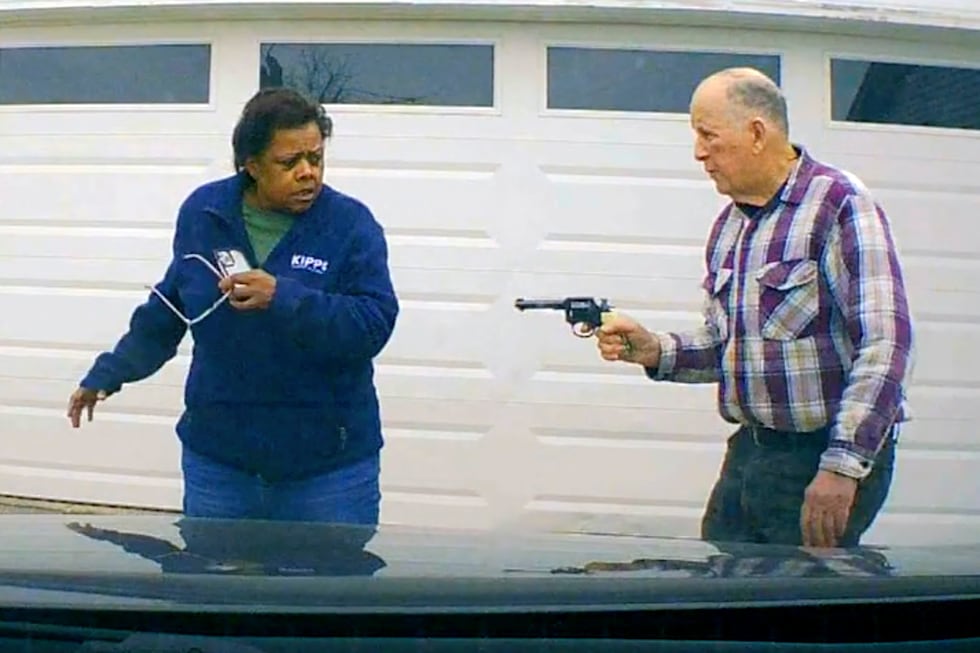
On a March day in 2024, Hall arrived at Brock’s home, just as she had been directed. Dashcam video from her Uber vehicle would later show the final moments—an image now frozen in court records and public memory. Brock confronted her outside his house, holding a firearm.
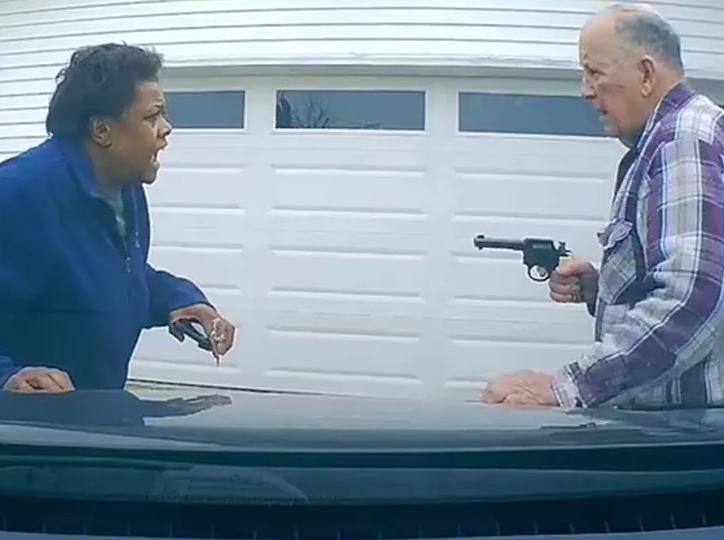
In Brock’s mind, the story the scammer had spun was already complete. He believed the driver was part of the plot. He believed she was there to take his money. He believed he was protecting himself and his family.
Seconds mattered. Fear moved faster than reason.
Authorities say Brock fired six shots.
Lo-Letha Toland-Hall was unarmed. She posed no threat. She had no idea why the man she had come to meet was pointing a gun at her.
She died there, in a place she had never been before, because she trusted a job assignment that should have been ordinary.
When police arrived, the truth began to surface—but too late to save anyone.
Investigators uncovered the scam call Brock had received. They pieced together how the same criminal had manipulated both sides of the encounter, placing them on a collision course without either understanding what was happening. Brock had been terrified. Hall had been unsuspecting.

Two people, strangers to each other, bound together by a crime committed remotely—by someone who never showed their face and has still not been caught.
The case moved slowly through the justice system. Brock was charged, and his defense argued that he had acted in self-defense. His attorney said the scammer had threatened Brock and his family, leaving the elderly man convinced he was in immediate danger.
Brock testified that he felt his life was at risk when Hall arrived.
Prosecutors told a different story.
They emphasized that Hall was an innocent victim—unarmed, unaware, and simply doing her job. They argued that fear, no matter how intense, did not justify what happened next. That a mistake fueled by deception still carried irreversible consequences.
This week, a jury agreed.
On Wednesday, Brock was convicted of murder, felonious assault, and kidnapping. He is scheduled to be sentenced next week.
For the courtroom, the verdict brought legal closure. For the families involved, it brought something far more complicated.
Clark County Prosecutor Daniel Driscoll addressed reporters after the verdict with words that reflected the weight of the case.
“The really sad part about this,” he said, “is that we know there are still criminals out there. We know that the scammers, the folks who started this, haven’t been brought to justice.”
His words underscored the quiet truth at the center of the tragedy: the person who orchestrated it all never had to pull a trigger. Never stood in the driveway. Never saw the fear on either face.
Yet two families lost loved ones.
Lo-Letha Toland-Hall’s family lost a woman who should have come home from work. A driver who expected another routine fare. Someone whose life ended because of a lie she never even heard.
William Brock’s family lost a man who will now spend the end of his life defined not by decades lived, but by one moment shaped by fear and deception.
Both were victims.
The scammer remains free.
Across the country, similar scams continue to spread—calls claiming relatives are in jail, demands for cash, threats meant to override logic. Law enforcement agencies warn about them constantly. But warnings often arrive after damage is done.
This case has become a cautionary story not just about violence, but about how modern crime works—how criminals exploit trust, age, technology, and fear from a distance, leaving devastation behind while remaining invisible.
An elderly man answered a phone.
A driver accepted a job.
A criminal set the stage and disappeared.
Nothing about the encounter had to end the way it did. And yet, once fear took control, there was no rewind.
In the end, a jury delivered accountability where it could. But justice, in its fullest sense, remains incomplete.
Because the person who caused it all—the voice on the phone—has not been found.
And because no verdict can restore what was lost.
This was not just a murder case. It was a reminder of how fragile safety can be when fear is weaponized, and how easily ordinary lives can be pulled into extraordinary tragedy by a crime that begins with nothing more than a ringing phone.