
Melodee Buzzard was nine years old.

At an age when children are supposed to be known for scraped knees, favorite songs, and loud laughter, Melodee instead became known for something no child ever should be—a disappearance that stretched across state lines, weeks of unanswered questions, and an ending that left a nation stunned.
Her story did not begin with sirens or headlines. It began quietly, the way many tragedies do.
In early October, Melodee stopped showing up to school.
At first, it didn’t raise immediate alarm. Children get sick. Families travel. Absences happen. But as the days passed, concern grew. By October 14, school officials could no longer ignore the silence. Melodee had been gone too long.
They called the police.
What followed was a search filled with unease from the very beginning.
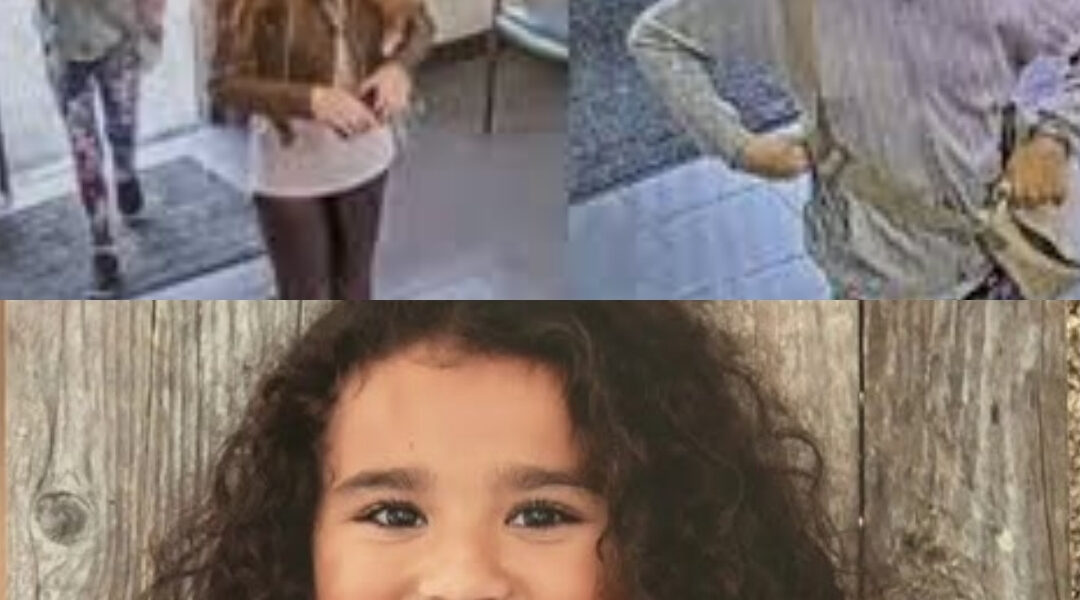
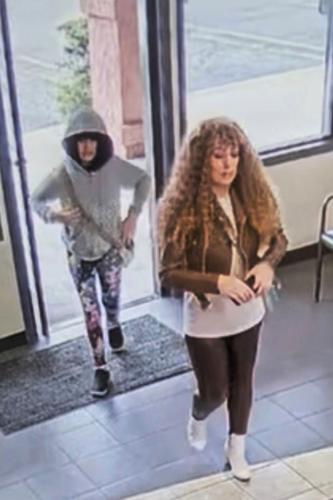
Investigators learned that Melodee had last been seen days earlier, traveling with her mother, Ashlee Buzzard. Surveillance footage showed the two together at a car rental business. Melodee wore a hoodie. Her hair—once long and full of curls—was short and wavy. Almost unrecognizable compared to the smiling photos later shared in missing-person posters.

Authorities would later allege the wig was no coincidence.
It may have been meant to hide her.
From that moment on, the case felt different. Darker. As police traced the road trip, they uncovered a disturbing timeline: Ashlee and Melodee had traveled through multiple states beginning on October 7. But when Ashlee returned home on October 10, her daughter was no longer with her.
No explanation followed.
Instead, investigators say Ashlee became increasingly uncooperative. Questions went unanswered. Details shifted. Family members told police they had been cut off from Melodee for years, kept at a distance, denied contact. Her father had died in a car accident when she was a baby. Now, even the people who loved her most were locked out of her life.
Still, hope remained.
Search efforts expanded across California, Colorado, and Utah. Volunteers shared flyers. Strangers memorized Melodee’s face. People watched the news hoping for the moment they would hear she had been found alive.
Weeks passed.
Then, in early December, hope collapsed into heartbreak.
In a remote area of Wayne County, Utah—far from the places Melodee once called familiar—human remains were discovered. The land was quiet. Isolated. Unforgiving. The kind of place where secrets are easily buried.
DNA testing confirmed what everyone feared.
The remains belonged to Melodee Buzzard.
Her body was badly decomposed. But investigators were able to determine something no one wanted to hear: Melodee had been shot in the head. Gunshot wounds were listed as her cause of death. Authorities believe she was killed back in October, not long after she vanished.
She did not wander off.
She was not lost.
She was taken.
Three weeks after the remains were found, police arrested Ashlee Buzzard. She was charged with first-degree murder and is being held without bail.
The silence that had surrounded Melodee was finally broken—but not in the way anyone hoped.
For those who followed the case, the details were devastating not just for their brutality, but for their intimacy. This was not a random act. This was not an accident. According to authorities, the last person with Melodee—the one meant to protect her—was the one now accused of ending her life.
Melodee’s grandmother later said the girl’s mother had tried to cut her off from “the entire world.” And in a way, she succeeded.
Melodee vanished quietly.
She suffered unseen.
And she was found far from home, long after anyone could save her.
The image that haunts many is not just the discovery of her remains—but the surveillance footage. A small girl walking beside her mother, her appearance altered, her identity partially erased. It is impossible not to wonder what she was thinking. Whether she was confused. Afraid. Whether she understood something was wrong.
Nine-year-olds are old enough to sense danger—but too young to escape it.
As the investigation unfolded, more troubling details emerged. Ashlee had been arrested weeks earlier on unrelated charges that were later dropped. There were allegations of erratic behavior. Reports of distress. Warnings that, in hindsight, feel heavy with regret.
And yet, none of it stopped what happened to Melodee.
Her death forces difficult questions into the open.
How does a child disappear without immediate intervention?
How many warning signs are missed when family dynamics are hidden from view?
How often does isolation become the perfect cover for violence?
Melodee’s story is not just about a crime. It is about vulnerability. About how completely children depend on adults for safety—and how catastrophic the consequences are when that trust is betrayed.
She had no way to call for help.
No power to leave.
No choice in where she went or who she stayed with.
Her life was measured by others’ decisions.
Now, the legal process will move forward. Evidence will be presented. Arguments will be made. Courts will decide guilt.
But no outcome can restore what was taken.
Melodee will never return to school.
She will never grow into her teenage years.
She will never choose who she wants to be.
What remains is memory—and responsibility.
Responsibility to remember her not as a case number or headline, but as a little girl who mattered. Responsibility to listen more closely when children disappear from routine places like classrooms. Responsibility to act when isolation replaces connection.
And responsibility to say her name.
Melodee Buzzard was nine years old.
She deserved protection.
She deserved honesty.
She deserved a future.
Instead, she became a reminder of how fragile childhood can be—and how devastating the cost is when the people meant to guard it become its greatest threat.
Her story does not end in a courtroom.
It lives on in the questions we ask, the systems we examine, and the vigilance we owe to children who cannot protect themselves.
Because Melodee should still be here.
And forgetting her would be the final injustice of all.