Mom Accused of Killing Daughter by Poisoning Her Wine at Thanksgiving Dinner, Officials Say.

Thanksgiving is supposed to be a day of warmth — a day where families gather around a table, share food, exchange small smiles, and hold onto the fragile belief that whatever has gone wrong in the year might soften, just for one evening.

In November 2025, a family in North Carolina gathered for what should have been one of those ordinary, forgettable holidays. Twelve people sat together. Plates were passed. Glasses were filled. Conversation flowed in the way it always does when relatives try to hold tradition together.
No one at that table knew they were stepping into something far darker.
According to investigators, the danger did not come from outside the home. It came from the person hosting the meal.
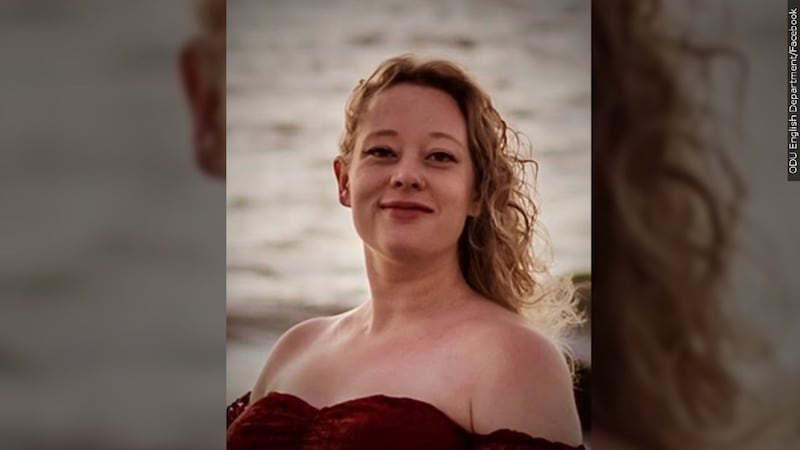
Authorities say Gudrun Casper-Leinenkugel, a 52-year-old mother, deliberately poisoned a bottle of wine served at her Thanksgiving dinner — wine shared by her daughter, another daughter, and her daughter’s boyfriend.
The substance, officials allege, was acetonitrile — a clear, colorless chemical most people would never recognize, let alone suspect in a glass of wine.
Three people drank from that bottle.
And slowly, quietly, their bodies began to fail.
Thanksgiving ended. The dishes were cleared. Guests went home. But something was terribly wrong.

Soon after the meal, the three who had shared the wine began feeling sick. At first, the symptoms may have seemed vague — nausea, weakness, discomfort. The kind of illness people often try to endure, hoping it will pass.
It did not.
One of them, Leela Livis, never recovered.
She died on December 1, 2025.
For a family already fractured by grief, the loss of a daughter is unbearable. For a mother, it is often described as a pain that rewrites the soul.
But investigators now allege something almost impossible to comprehend: that this grief was not accidental — that it was engineered.
According to court documents, the wine consumed at the dinner was poisoned with acetonitrile, a chemical used industrially as a solvent and in manufacturing processes such as lithium battery production. It has no obvious taste or color that would immediately warn someone drinking it.
In other words, it could hide in plain sight.
Health authorities say exposure to acetonitrile can cause irritation, neurological symptoms, and — depending on dose and exposure — death. It is not a substance anyone would expect to encounter at a family meal.
Yet investigators say it was there, waiting in a bottle meant for celebration.
What makes the allegation even more chilling is what officials claim happened before the dinner.
According to the state, Casper-Leinenkugel’s internet search history included a haunting question: “What happens if I accidentally ingest acetonitrile?”
To prosecutors, that search suggests knowledge. Planning. Curiosity sharpened into intent.
By the time authorities began piecing the case together, the story had grown far larger than one poisoned bottle of wine.
On January 16, Casper-Leinenkugel was arrested and charged with two counts of first-degree murder, two counts of attempted murder, and three counts of distributing prohibited food and beverages. She was denied bond and now faces the possibility of the death penalty.
But the Thanksgiving poisoning was not the only shadow hovering over the courtroom.
Investigators with the Henderson County Sheriff’s Office revealed that evidence also links Casper-Leinenkugel to a man named Michael Schmidt, who died in a house fire in 2007. That death, once considered in isolation, has now been pulled back into the light.
During hearings, authorities disclosed that Casper-Leinenkugel may be connected to additional deaths — cases still under investigation.
Each revelation has widened the scope of fear surrounding the case. What once appeared to be an isolated tragedy now looks, to investigators, like a pattern still unfolding.
At the center of it all is a question that has no easy answer:
How does a family meal become a crime scene?
Thanksgiving carries powerful symbolism. It is about trust — trusting that the food placed in front of you is safe, that the person pouring your drink means no harm, that family, no matter how complicated, is still a place of refuge.
If prosecutors’ allegations are proven true, that trust was weaponized.
Leela Livis did not die in a dark alley or at the hands of a stranger. She died after sharing a meal prepared by her own mother.
For the surviving victims — the daughter and boyfriend who also drank the poisoned wine — recovery is not just physical. It is psychological. Every sip, every shared memory, every holiday going forward may now carry the weight of suspicion and trauma.
Experts say betrayal by a parent is among the deepest forms of psychological harm. It fractures a person’s understanding of safety at its most fundamental level.
This case has shaken the community not only because of its brutality, but because of its setting. Crimes committed in public spaces are easier to distance ourselves from. Crimes committed at the dinner table are not.
They force us to ask questions we do not want to ask.
What happens when danger wears the face of someone we love?
What happens when tradition becomes a trap?
What happens when the person meant to protect becomes the threat?
As the legal process continues, Casper-Leinenkugel is scheduled to return to court for a probable cause hearing on February 10. Prosecutors will lay out their evidence. Defense attorneys will respond. The system will move forward as it always does — slowly, methodically, without emotion.
But outside the courtroom, a family has already been destroyed.
There will be no do-over Thanksgiving. No empty chair that feels temporary. No explanation that can restore what was lost.
Leela Livis will remain gone — remembered not only as a victim of poisoning, but as a daughter whose final moments were spent trusting the person who raised her.
And for everyone who hears this story, one truth lingers with painful clarity:
Sometimes, the most dangerous place is not the street outside —
but the table where we believe we are safest.