
That night was supposed to be simple.
A game, some cheering, a tired ride home. Nothing dramatic. Nothing that would turn into a memory burned so deeply it would still bring tears years later.
But after the Rangers game ended, everything unraveled.
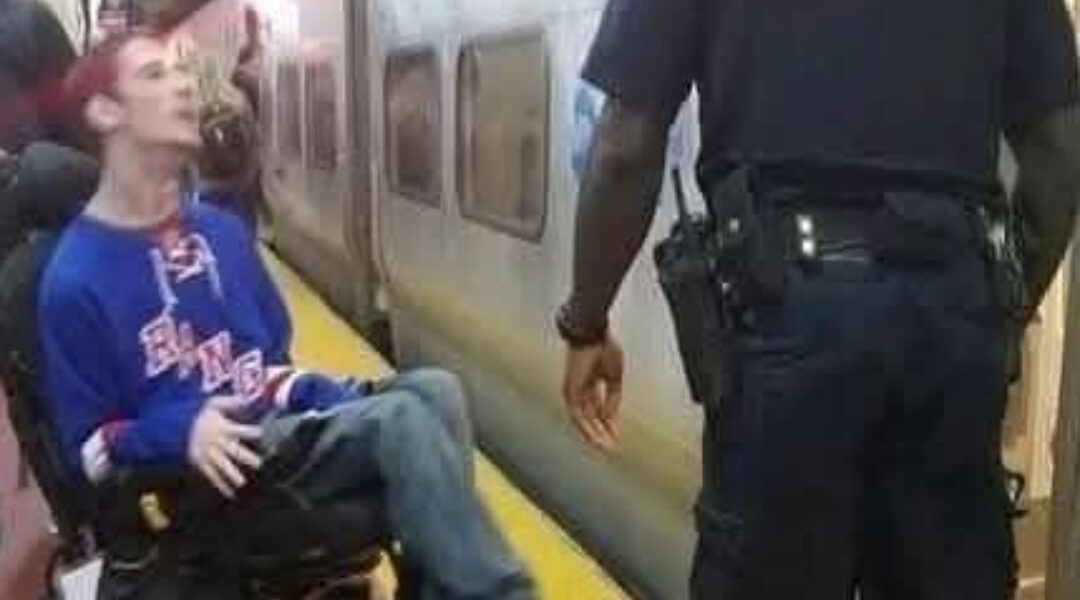
The elevator—the one thing Christopher depended on—was out of service.
For most people, a broken elevator is an inconvenience. For Christopher, it was a wall. He sat in a 350-pound wheelchair. Stairs weren’t an option. Escalators weren’t an option. It was elevator or nothing.
And suddenly, “nothing” felt terrifyingly real.
The crowd kept moving. Trains came and went. People rushed past with no idea that a mother and her son were standing there, stranded, trying not to panic. Every minute made the station louder, tighter, more overwhelming.
That’s when Monica noticed a police officer nearby.
Officer Mears.

She didn’t expect miracles. She just hoped for guidance—maybe directions, maybe a suggestion. Instead, she found something far rarer.
Without hesitation, Officer Mears stopped everything he was doing. He listened. Really listened. Then he said, calmly and confidently, “Don’t worry. We’ll figure this out.”
And he meant we.
He didn’t point and walk away. He didn’t hand them off to someone else. He personally walked them through the station, searching until he found a working elevator—inside a Kmart, of all places. When they reached it, he stayed. When they got underground, he stayed.
At the LIRR platform, he went further.
He checked the tracks before commuters were even informed. He made sure Christopher would board safely. He brought them down ahead of the rush. He personally set up the ramp so Christopher could get on the train without fear, without pressure, without being treated like an obstacle.
Only later did Monica learn why this officer moved with such instinctive care.
Officer Mears had spent six years working with people with disabilities before becoming a police officer.
“That’s where my heart is,” he told her.
And it showed—in every step, every choice, every quiet moment of dignity he gave her son.
That night, Officer Mears didn’t just help them catch a train.
He removed fear.
He restored dignity.
He turned a nightmare into proof that compassion still exists in crowded places.
Monica says she can’t say enough about what he did.
But maybe this says it best:
Sometimes, heroes don’t wear capes.
Sometimes, they wear a badge—and they move mountains for people who can’t.