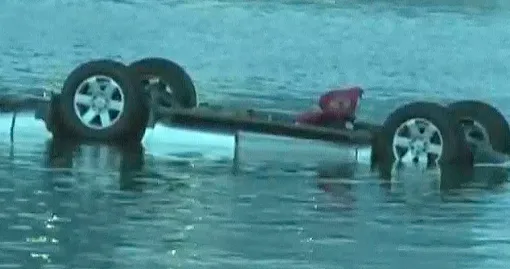
The SUV slowed as it approached the lake.
There was time, even then, for another choice, another turn, another ending to this story.
But instead, the vehicle suddenly accelerated, gaining speed as it shot toward the dark, still water that had reflected so many ordinary days.
To people nearby, it took a split second to realize what was happening.
A car pushing faster instead of braking, angling toward the lake instead of away from it, like a question nobody wanted answered.
Then the sickening clarity arrived, a rush of understanding followed by the splash of metal and glass disappearing beneath the surface.
The sound of the crash ripped across the open air.
Water surged over the hood, swallowing the vehicle as if the lake itself had opened its arms in a terrible embrace.
Inside, babies were strapped into car seats, a mother was reaching, a father was locked inside the ruin of his own decision.
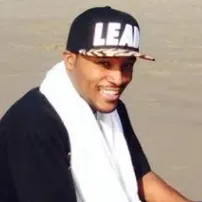
Two witnesses did not stop to think about what this would mean for them.
They kicked off shoes, dropped whatever they were holding, and ran toward the water with the desperate speed of people who refuse to stand still while others drown.
Without hesitating, they dove into the lake, cold shock wrapping around them as they fought their way toward the sinking SUV.
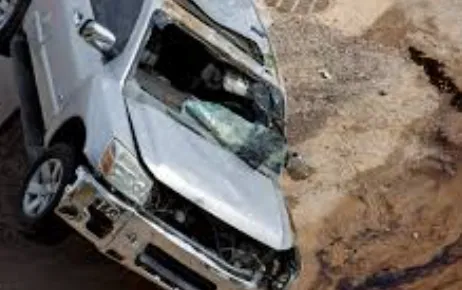
The Nissan had flipped before landing in the water.
It lay awkwardly beneath the surface, heavy and unnatural, like something that had never belonged there.
The witnesses grabbed at handles and glass and metal, searching for any way to tear open the barrier between life and death.
They pulled Danica out first.
Her body was limp, her clothes soaked, her dark hair plastered to her face as they dragged her toward the shore and into the waiting hands of first responders.
No one on that shore saw her as a separated wife, or a woman in conflict—they saw a mother whose life was slipping away.
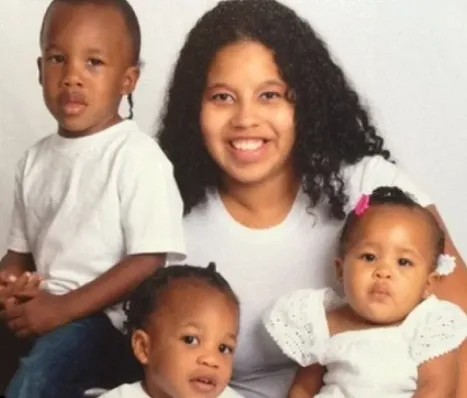
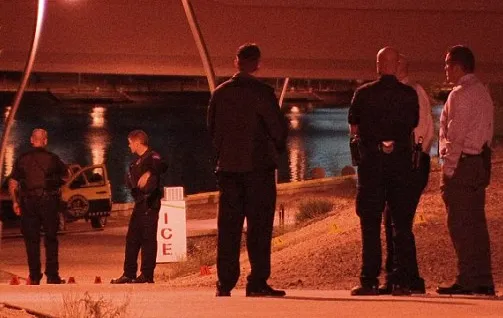
Police and firefighters arrived in seconds that felt like hours.
Sirens pierced the air, lights strobed across the water, and radios crackled with orders and location updates that felt almost too small for the enormity of what was unfolding.
Officers shed gear and boots and dove in, joining the frantic effort to find everyone inside that sinking vehicle.
They found little Zariyah.
She was pulled from the water, still so tiny, her body that had barely begun to live now caught between earth and something beyond it.
Hands that had trained for rescue moved quickly, pressing her chest, tilting her head, whispering commands and prayers under their breath.
They found her big brother, two-year-old Nazyiah.
His small frame was lifted from the water like something impossibly fragile, a child who should have been home watching cartoons, not being carried through flashing lights and shouted orders.
Rescuers did everything they knew how to do, fighting against minutes and oxygen and the weight of the water that had claimed him.
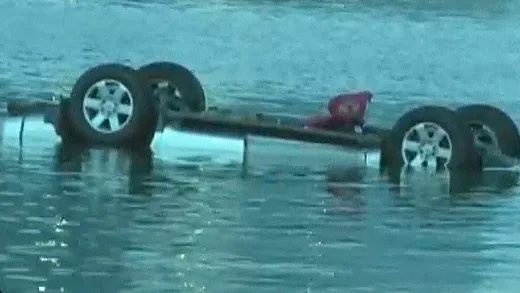
They pulled Glenn Baxter out too.
The man at the center of it all, the one who had driven toward the lake instead of away from it, was laid out on the same ground as his victims.
Machines and medics moved around him, because that is what they are trained to do—save every life they can, even when the choices that led there defy understanding.
At the hospital, time narrowed into heart monitors and whispered updates.
Doctors and nurses moved like a practiced orchestra, each action precise, each second vital, trying to undo what had been done on that drive to the water.
But some injuries, some decisions, are too deep to reverse.
One by one, the news spread through hallways and waiting rooms.
Danica did not make it.
Neither did little Zariyah, or 2-year-old Nazyiah, or Glenn Baxter, whose last act had been to drag his family into the lake with him.
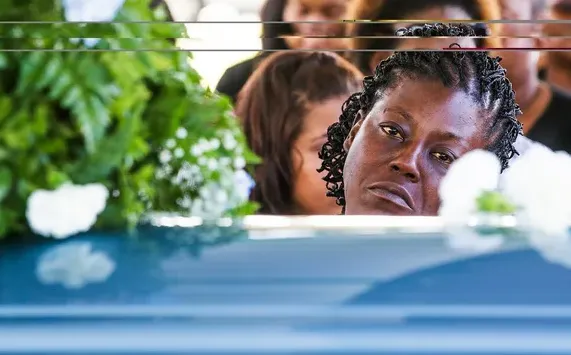
In the aftermath, the air felt thinner.
Officers stepped outside to breathe against the weight of what they had witnessed, the sound of crying echoing faintly from down the hall.
Reporters began to gather details, piecing together the facts, unaware of how much sorrow could live behind a few simple lines of text.
For a few hours, there was still one question left hanging in the air.
Where was three-year-old Reighn.
His name moved from mouth to mouth—dispatchers, officers, hospital staff, investigators—each repetition tightening the fear around everyone’s ribs.
“We didn’t know where he was,” one officer later said.
Those words carried a quiet terror, the kind that comes when logic whispers the answer but the heart refuses to accept it.
The worst fear was simple and unbearable—that he was still inside the vehicle, unseen, unheard, waiting in a silence no one could reach.
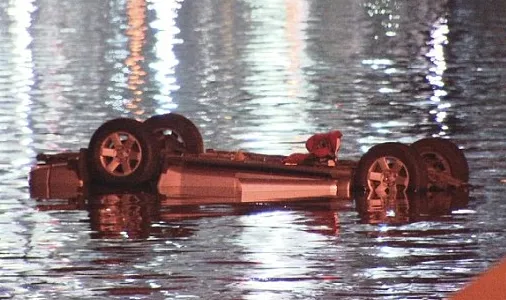
The next morning, divers went back into the lake.
The water looked calm again, as if nothing extraordinary had happened there, but beneath the surface lay the final chapter of the story they hadn’t finished reading.
The submerged Nissan waited, motionless and mute, holding its darkest secret.
Inside the very backseat, in the third row, they found him.
Three-year-old Reighn was still strapped into his car seat, the same way his mother had buckled him in, believing the belt was a promise of safety.
He was still wearing his pajamas, the soft fabric turned into a kind of final photograph that no camera would ever capture.
The divers lifted him out as gently as if he were still breathing.
They carried him through the water with a care that said everything words could not.
Above the surface, the world seemed quieter, as if Arizona itself had paused to listen.
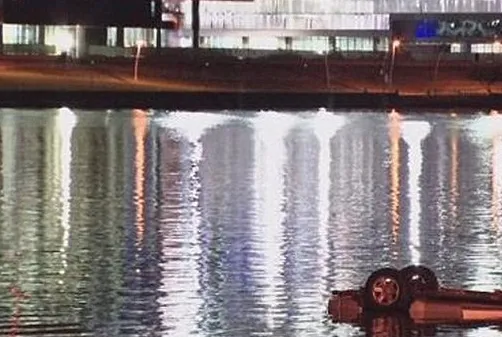
News of his discovery spread like a second, softer shockwave.
People who had already mourned four lives now had to make room in their grief for a fifth.
A whole family—mother, father, three children under four—had been erased in less than a day.
Investigators called it what it was.
A murder-suicide.
Words that tried to contain something far too vast and cruel, a label that could never fully explain how one person’s despair or rage could drag four others into the grave.
They found a handgun inside the SUV.
It lay there like a question that would never fully be answered, though no one in the car had been shot.
Violence had visited this family not through bullets, but through the deliberate act of turning a steering wheel and pressing a pedal to the floor.
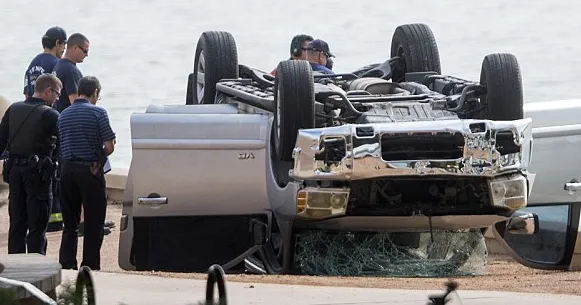
In the days that followed, the story circled through news stations and social media feeds.
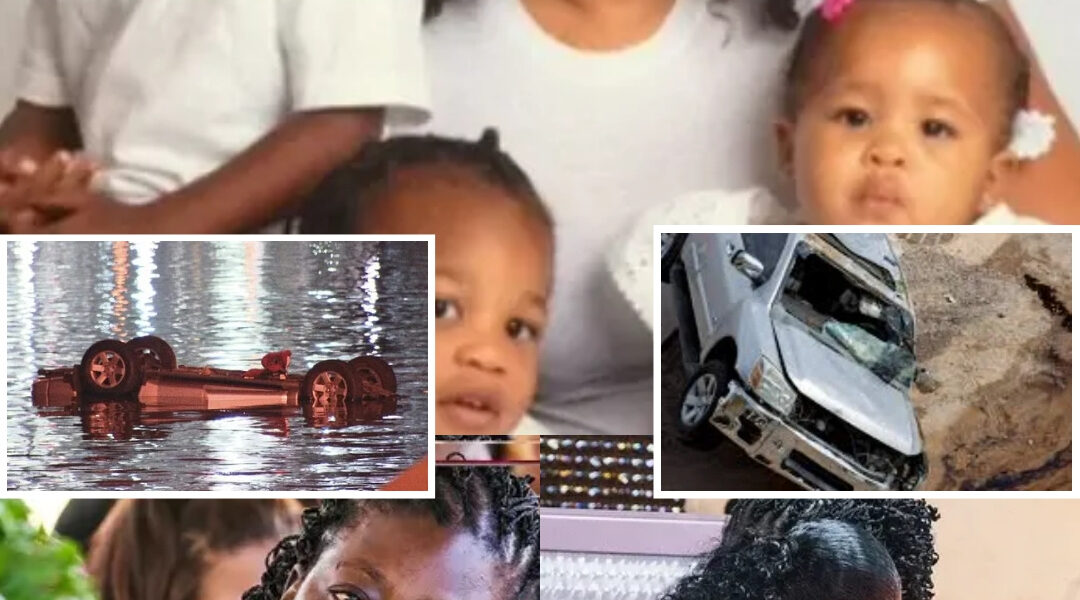
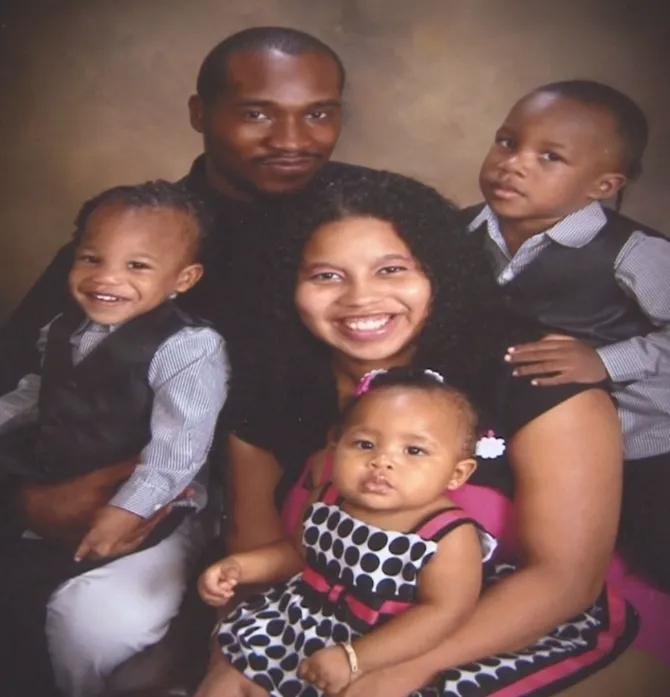
Faces appeared on screens—Danica’s, Glenn’s, and three small children whose eyes sparkled in photos taken long before the lake.
Strangers read their names out loud: Reighn, Nazyiah, and Zariyah, three lives that should have been learning letters and colors, not memorialized in headlines.
People argued in comment sections about why and how.
Some spoke of mental health, of warning signs that might have been missed, of systems that fail families in crisis.
Others could only say that nothing—no pain, no heartbreak, no argument—could ever justify driving children into the water.
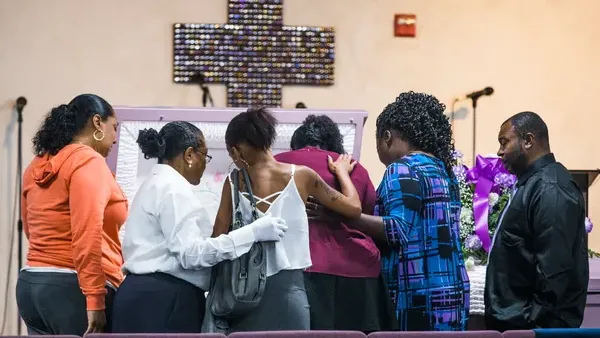
But beyond the debates and theories, there were those who simply wept.
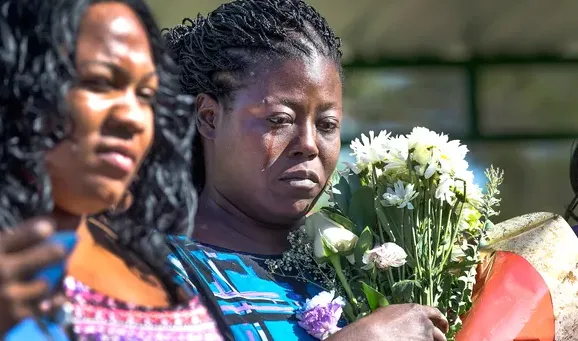
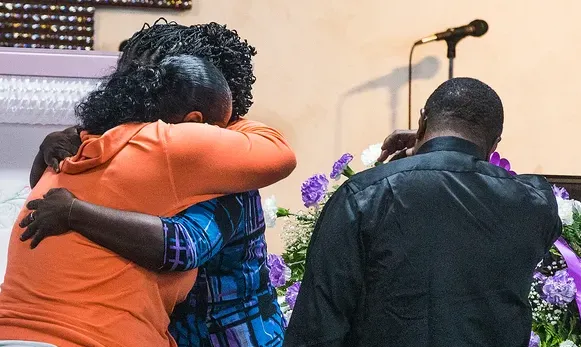
Grandparents and cousins and friends who had held those children in their arms now had to hold their memory instead.
Neighbors who had heard laughter floating from the windows now listened to a silence that settled like dust.
There were toys that would never be played with again.
Tiny shoes lined up by the door that no one would outgrow.
Car seats that had once meant safety now turned into symbols of everything that had gone wrong.
For the witnesses who dove into the lake, the memory would not leave.
They would remember the weight of soaked clothing, the taste of the water, the terrifying knowledge that they were racing time and losing.
They would lie awake wondering if one more second, one more breath, one more moment of courage could have changed the ending.
For the officers and medics, the case file would be closed, but the images would not.
They would carry the faces of those children in the quiet hours of their lives, when uniforms were hung up and radios were silent.
They knew that some calls never really end, even when the paperwork is done.
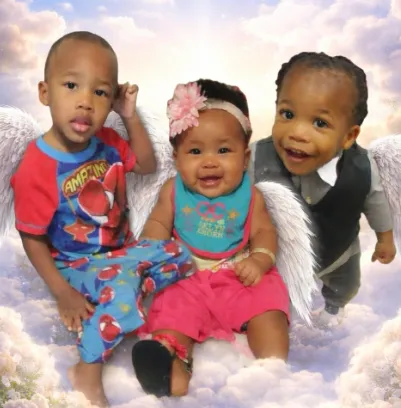
Somewhere, photos of the Baxter children remained tucked into drawers and frames.
Reighn with his gentle, thoughtful eyes.
Nazyiah with his toddler mischief and half-formed words.
Baby Zariyah, whose first birthday had not long passed, whose world was still made of being carried and cuddled and soothed.
Their mother Danica, who had tried to navigate separation and safety and motherhood all at once, making choices in a world that gave her too few good options.
Their lives did not vanish with the SUV; they lived on in the people who loved them, in stories whispered at kitchen tables and cried out in the dark.
This was not just a headline.
It was not just surveillance footage or police statements or time stamps on a report.
It was a family that once sat around a table, a mother who once folded little shirts, children who once fell asleep in the backseat, dreaming simple, innocent dreams.
When we speak their names, we give back a small piece of what was taken.
We remember that they were here, that they laughed and cried and clung to their mother’s legs when they were scared.
We remember that they deserved mornings that did not end in water and sirens.
My heart aches for these innocent children.
For three-year-old Reighn, still in his pajamas in the third-row seat.
For little Nazyiah and baby Zariyah, taken long before they ever had a chance to understand how wide the world could be.

My heart aches for their mother, Danica, whose final moments were spent inside a nightmare she did not choose.
For the loved ones left behind, carrying birthdays that will never be celebrated and holidays that will never feel whole again.
For everyone who has to keep breathing in a world that allowed this to happen.
Heartfelt sympathies are with Reighn, Nazyiah, and Zariyah, and with their mother’s loved ones.
May the memory of these children be a soft, unending light against the darkness of the way they were taken.
May we hold their names gently, and never forget that their lives mattered.