

On a quiet Saturday afternoon, when the world outside felt slow and unhurried, my doorbell rang with the kind of sharp insistence that told me someone small—or someone hopeful—was waiting on the other side.
When I opened the door, I saw two boys standing on my porch. They couldn’t have been more than eleven or twelve. Their rakes were almost taller than they were. Both of them wore oversized jackets, hand-me-down gloves, and sneakers that had seen better days.
But what struck me most was their bravery—two kids standing at a stranger’s door, trying to earn something honest.
The taller boy cleared his throat, shifting from foot to foot as if afraid to seem too eager.
“Excuse me, sir,” he said. “Would you like us to rake your yard? We’ll do the whole thing for ten dollars.”
Ten dollars.
I glanced out at my lawn. A thick blanket of leaves covered it from end to end. It wasn’t a small task—it was two, maybe three hours of steady work. The kind of job most adults would try to avoid.
“Ten dollars each?” I asked gently.
The boys exchanged a glance. The shorter one shook his head.
“No sir… ten dollars total. We, um… we’ll split it.”
Five dollars each. Barely enough for a sandwich.
They stood there with that mix of courage and worry that only kids trying to earn something real can show. And for a moment, I saw myself—eleven years old, nervous, knocking on doors with lawn tools that felt too heavy and dreams that felt too big.
I could’ve said yes and gotten a full yard cleanup for almost nothing. Some people would’ve done exactly that.
But something in the way they stood—polite, determined, hopeful—stopped me.
“Alright,” I said. “You’ve got a deal. Go ahead.”
The boys smiled with relief. Not wild excitement—just quiet gratitude. They weren’t looking for a handout. They were looking for a chance.
For the next two and a half hours, I watched them from the window.
They didn’t slack.
They didn’t take breaks.
They didn’t complain.
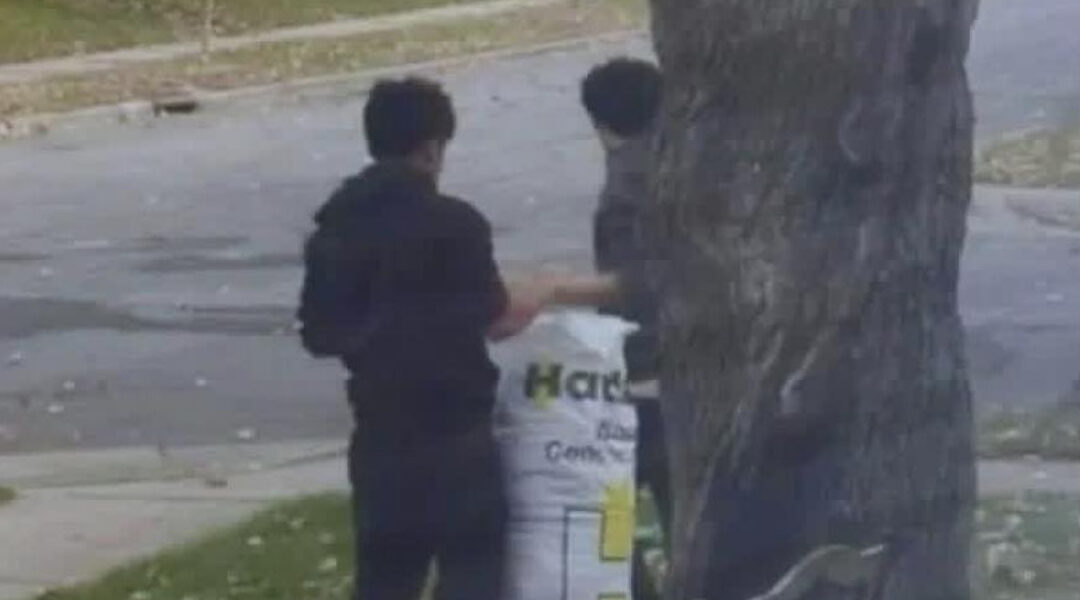
They raked every corner of the yard, even the spots behind the bushes where the leaves piled thick. They bagged everything neatly, tying each bag with careful knots. When they finished the backyard, they didn’t stop—they moved to the driveway and started sweeping, even though I hadn’t asked them to.
Sweeping.
Two little boys, giving more than they promised.
Every few minutes, one would straighten up, stretch his small back, then get right back to work.
They reminded me of the way hard work looks before the world teaches you to resent it—when it’s just a chance to try, to grow, to feel proud.
When they finally knocked again, they were exhausted—faces red from the cold, hair stuck to their foreheads, gloves covered in dirt. But they were smiling. The kind of smile that says, We did it. We earned this.
The taller one spoke first.
“We’re done, sir.”
I stepped outside and looked at the yard. It was spotless—cleaner than I had seen it in a long time. They had done the work with the pride of grown men.
“You boys did incredible work,” I said.
Their faces lit up.
Then I reached into my wallet and handed them four twenty-dollar bills—an eighty-dollar payment for a ten-dollar job.
The taller boy’s eyes widened. He looked like the world had tilted.
“Sir—sir, we said ten.”
“I know what you said,” I told him. “But I also know what your work is worth. You earned every dollar of this.”
The shorter boy held the money like it was something fragile. Something unbelievable. Something he’d remember forever.
“Thank you,” he whispered. “Really… thank you.”
They began walking down the street, talking excitedly, their tired steps suddenly light. They didn’t know I could hear them.
“I can buy Mom the thing she wanted…”
“And I can get school supplies…”
“Dude, we actually did it!”
Their voices faded, but their excitement stayed with me.
After they left, I stood in the quiet yard, thinking about what had just happened—how easily things could have gone differently. I could have given them ten dollars and felt like I’d done them a favor.
But that wasn’t what they needed.
We talk a lot about teaching kids the value of hard work, but we don’t often show them that hard work is valued. Those boys didn’t ask for charity. They offered labor. They offered effort. They showed up at my door ready to work for far less than their time was worth.
And I wanted them to walk away knowing this:
Hard work deserves respect.
Effort deserves reward.
Goodness deserves to be seen.
I wanted them to know that in a world that sometimes feels unfair and indifferent, there are still people who recognize genuine effort.
Because the truth is simple:
Kids who learn that hard work is appreciated grow into adults who believe in themselves.
Kids who are rewarded for dedication grow into adults who take pride in what they do.
Kids who feel seen grow into adults who don’t stop trying.
Somewhere out there, two boys went home that day believing something they didn’t fully believe that morning:
Hard work matters.
And they matter.
Years from now, when they’re older and maybe teaching their own kids about responsibility, they might remember that afternoon. They might remember the sweating, the blisters forming under their gloves… and the stranger who handed them more than money.
Someone who told them, without ever saying the words:
“I see you. I see your effort. And I believe in your future.”
Maybe they’ll pay it forward.
Maybe they’ll help another kid who needs encouragement.
Maybe this tiny moment will be part of the foundation they build their character on.
All I know is this:
I didn’t just hire two boys to rake my yard.
I got to teach them a lesson they’ll carry long after the leaves grown back.
A lesson that might shape how they work, how they hope, and how they treat others.
Because sometimes the smallest gestures—an unexpected payment, a stranger’s kindness, a moment of recognition—become memories that last a lifetime.
And sometimes, without planning to, you become part of someone’s story…
the part that reminds them to keep going.