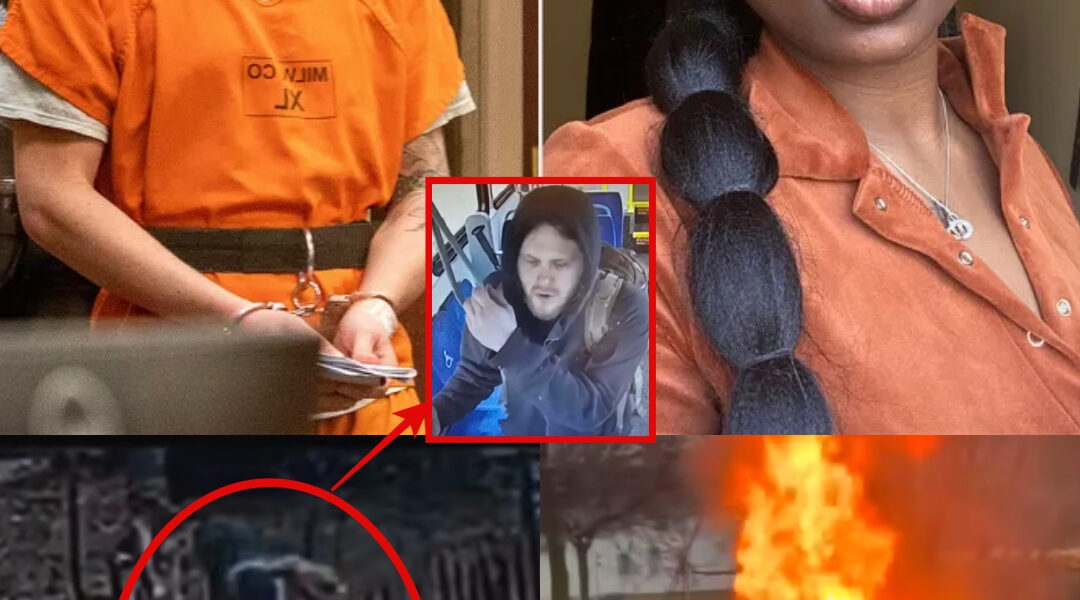

Sade Carleena Robinson was nineteen years old, and the world still felt open in front of her.

She was the kind of young woman who planned ahead—not in rigid lines, but in hopeful ones. A criminal justice student, she talked about fairness, about accountability, about helping people who felt unseen. She worked, studied, laughed easily, and carried herself with the quiet confidence of someone who believed her life was only beginning.
On April 1, 2024, Sade got dressed for a first date.
It wasn’t supposed to be anything extraordinary. Just a night out. A chance to meet someone new. The kind of ordinary moment young people step into every day without fear—because fear is not supposed to be part of dating, and survival is not supposed to be something you have to plan for.
She told people where she was going. She didn’t disappear quietly. She didn’t vanish by choice.
She simply never came home.
By the next day, worry had already begun to spread. Phone calls went unanswered. Messages sat unread. The familiar panic of “something is wrong” crept into her family’s bones, the kind that doesn’t arrive all at once, but grows heavier with every passing hour.
Then they found her car.
Burned.
Charred metal where her laughter had been only hours before. A vehicle meant to carry her forward now standing as a silent, violent warning that whatever had happened was not accidental—and not survivable.
The search for Sade became a nightmare unfolding in pieces.
Not answers. Not closure.
Pieces.
In the weeks that followed, investigators recovered her remains across multiple locations. A leg. A torso. Arms. Parts of her body found miles apart, even across state lines. Each discovery delivered like a fresh wound, forcing her family to grieve her over and over again—not once, not cleanly, but in fragments.
The truth emerged slowly, painfully.

Sade Robinson had been murdered after that first date. Her body dismembered. Hidden. Burned. Scattered.
The brutality of it shook Milwaukee—and far beyond it.
But for her family, the shock was personal, intimate, unbearable.
They weren’t reading headlines.
They were living them.
Sade was not a statistic to them. She was a daughter who used to call. A young woman who had inside jokes. A girl whose bedroom still smelled like her shampoo. Someone who should have been arguing about homework, planning her future, worrying about ordinary things.
Instead, they were learning the language of courtrooms and evidence, of charges and autopsies, of words no parent should ever have to understand.
The man she went on that date with, Maxwell Anderson, was arrested and charged.
The trial that followed was swift in its clarity and devastating in its detail. Prosecutors laid out the evidence piece by piece. Jurors listened. The room carried the weight of knowing that whatever verdict came next would never restore what had been taken.
When the jury returned its decision—guilty on all counts—it took less than an hour.
That speed did not feel like efficiency.
It felt like certainty.
First-degree intentional homicide. Mutilation of a corpse. Hiding a corpse. Arson.
Each charge was a sentence. Each word confirmed what Sade’s family already knew: this was not a mistake. This was not an accident. This was an act of violence so extreme it left no room for doubt.
At sentencing, the judge did not soften the truth. The actions were described as unconscionable. Irredeemable. A life sentence without the possibility of parole followed.
The courtroom was silent.
Justice, when it arrives after this kind of loss, does not feel like relief. It feels like gravity. Heavy. Final. Necessary—but never enough.
As Maxwell Anderson was led away, Sade did not come back.
Her family left the courthouse carrying a verdict, not their daughter.
Even after the criminal case closed, the aftermath continued. Appeals were filed. Civil lawsuits pursued. Questions raised about responsibility, about oversight, about the systems that failed to protect a young woman who should never have been vulnerable in the first place.
But Sade’s story did not end in court.
Her mother, Sheena Scarbrough, refused to let her daughter be remembered only for how she died. She became an advocate—speaking, organizing, demanding change. From that grief came a call for reform, now known as “Sade’s Law,” aimed at improving how missing persons cases are handled, especially in the crucial early hours when urgency can mean the difference between rescue and recovery.
Sade’s absence began shaping policy.
Her life began shaping action.
In Milwaukee, her name did not fade.
A mural rose in her honor, painted on the wall near the place where she once worked. Her smile—captured in color—looked out over the city that had failed to keep her safe but refused to forget her. Plans for a public memorial were derailed by cruelty of a different kind, but her family persisted, choosing remembrance over retreat.
They would not let hatred erase her.
They would not let indifference bury her twice.
People who never met Sade began to say her name. To learn who she was. To talk about safety, about dating, about violence that hides behind normalcy until it’s too late. Young women listened more carefully. Parents held their daughters tighter. Conversations shifted.
Sade mattered.
She mattered before the trial. Before the charges. Before the headlines.
She mattered when she was nineteen and alive and excited about her future.
She mattered because she was human.
Today, her story lives on not only in legal records, but in advocacy, in memory, in the insistence that young women deserve to come home from first dates. That trust should not be a death sentence. That accountability should not arrive only after devastation.
Her family continues to grieve—not loudly, not theatrically, but with the quiet persistence of love that refuses to disappear.
They remember her laugh. Her kindness. Her plans.
They remember the daughter who never should have been lost.
Sade Carleena Robinson did not choose to become a symbol.
She was forced into one.
But through her, a city changed. Laws were questioned. Voices rose. Silence was broken.
And though justice came too late to save her, her legacy now stands as a warning, a demand, and a promise:
That she was here.
That she mattered.
And that her life—far more than her death—will continue to shape the world she was taken from far too soon.