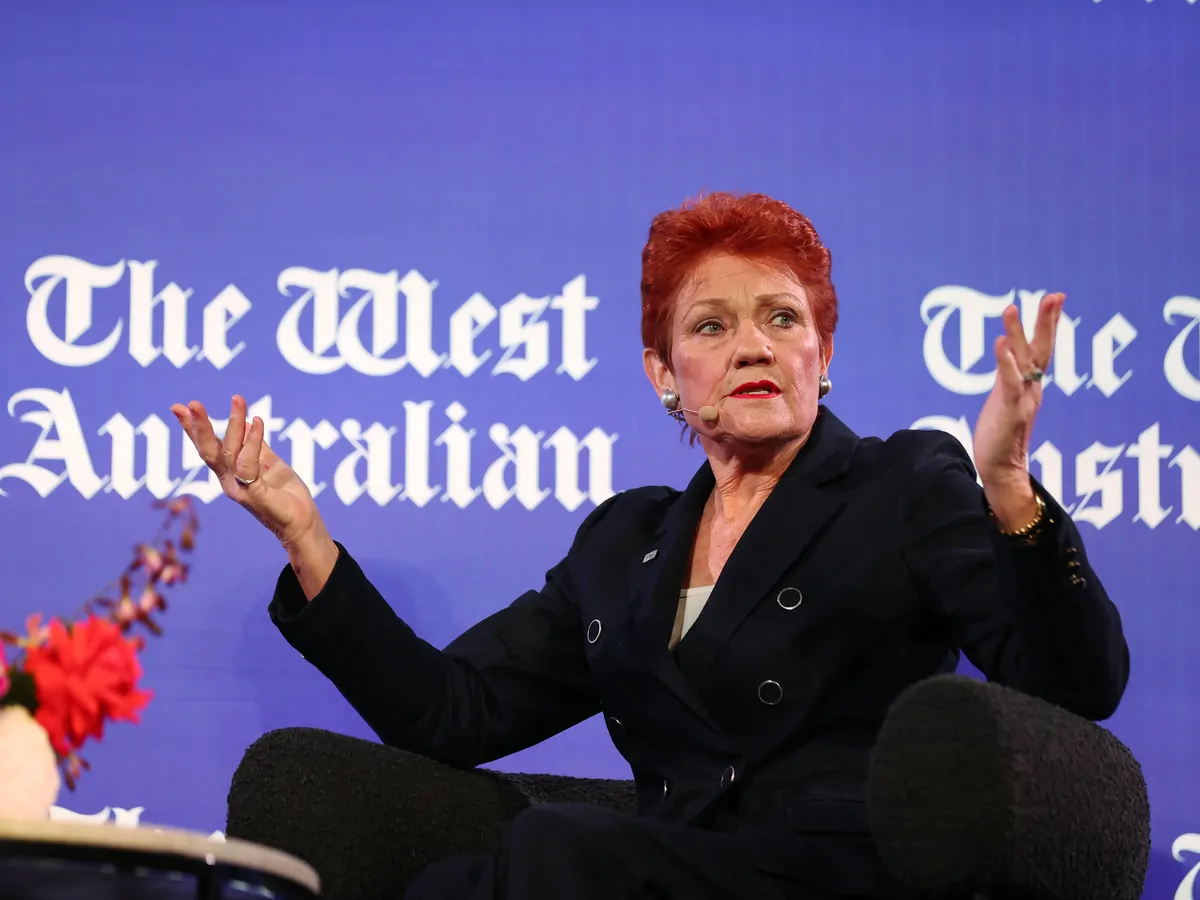
Pauline Hanson delivers a brutal Chris Bowen comeback over his $5.6m Fiji hotel bookings. u1

The Bill for Paradise: Behind the $5.6M Hotel Tab for Fiji’s Pre-COP Talks
The logistical machinery behind international climate diplomacy has once again collided head-on with domestic cost-of-living politics in Australia.
One Nation leader Pauline Hanson ignited a fresh wave of political scrutiny after publicising federal procurement records detailing more than $5.6 million in commercial hotel and resort contracts in Fiji. The bookings, made on behalf of the federal Department of Climate Change, Energy, the Environment and Water (DCCEEW), were secured to house international delegates, officials, and support staff attending the high-level Pre-COP negotiations scheduled for October 5 to 8.
The ministerial figure at the center of the political storm is Australia’s Minister for Climate Change and Energy, Chris Bowen. Following a complex multilateral compromise with Türkiye over the host rights for the main COP31 summit—which will formally take place in Antalya in November—Bowen assumed the official mantle of President of Negotiations. As part of Australia’s shared bid with Pacific island nations to keep Pacific climate vulnerabilities central to the global agenda, the Australian Government undertook the funding and operational co-hosting of the vital preparatory talks in Fiji.
According to procurement disclosures initially detailed by The Daily Telegraph, the federal department executed several multimillion-dollar contracts with prominent hospitality providers across Fiji’s primary resort corridors:
-
$2,113,467 contracted with Barton Pte Limited, operating the five-star Sheraton Fiji Golf and Beach Resort.
-
$2,083,706 contracted with Richmond Pte Limited, operator of the Sofitel Fiji Resort and Spa.
-
Approximately $1,000,000 allocated to the Crowne Plaza Fiji Nadi Bay Resort & Spa.
-
Additional smaller accommodation contracts across several other properties, including the Radisson Blu Resort Fiji, Wyndham Garden, Warwick Hotels & Resorts, Tanoa International Hotel, and Novotel Nadi.
Combined, the room commitments and conference hospitality agreements comfortably exceed $5.6 million.
Taking to social media, Senator Hanson attacked the expenditure as an indefensible deployment of taxpayer capital, framing it as public-subsidised luxury for global bureaucrats while Australian households face crippling energy bills and mortgage stress.
Departmental officials and government spokespeople have moved to contextualise the figures, noting that the contracts represent block-booked room allocations and meeting infrastructure necessary to convene hundreds of foreign dignitaries, technical negotiators, and security details across an island economy with finite conference capacity. Crucially, the Australian Government confirmed that cost-recovery mechanisms are built into the arrangements, with Canberra intending to invoice and recoup accommodation costs from visiting foreign delegations where customary under international diplomatic protocol.
The published contracts reflect direct department-level procurement rather than personal spending incurred by Bowen. Nonetheless, the disclosure has provided the Coalition and crossbench critics with potent political ammunition just weeks out from the Nadi summit.
2. Professional Analysis & Personal Perspective
My Professional Perspective
Covering three decades of international summits—from the tear-gas-choked avenues of WTO gatherings to the cavernous, fluorescent-lit halls of UN climate summits in Copenhagen, Paris, Glasgow, and Dubai—teaches an investigative journalist to look past the immediate outrage cycle.
When a story like this breaks, the public commentary splits into two predictable, theatrical trenches: conservative populists scream about “champagne climate junkets,” while government defenders dismiss the outrage as trivial bookkeeping noise.
Both reactions miss the real story. To understand what is actually happening in Fiji, you must follow the collision between global geopolitical posturing and the raw mechanics of an international logistics monopoly.
1. The Realities of Island Procurement: The Capacity Trap
The immediate civilian reaction to seeing a $2.1 million invoice for the Sheraton or a $2 million booking for the Sofitel is visceral: Why are taxpayers funding five-star beachside luxury?
The overlooked logistical reality of international diplomacy is that small-island developing states do not possess purpose-built mega-convention facilities like London’s ExCeL, the Jacob K. Javits Center in New York, or the Melbourne Convention and Exhibition Centre. When an international gathering of 50 to 80 ministerial delegations descends upon a nation like Fiji, there are only two or three integrated properties on the main island of Viti Levu capable of offering:
-
Contiguous, secure perimeters compliant with United Nations Department of Safety and Security (UNDSS) standards.
-
Redundant high-speed satellite telecommunications and secure digital routing for sensitive negotiations.
-
Sufficient plenary room capacity alongside private bilateral suites.
Those locations are, almost exclusively, multinational resort properties on Denarau Island.
Furthermore, international hotel conglomerates understand their leverage. When a G20 government issues a mandatory requirement to secure hundreds of rooms during peak tourist seasons under rigid diplomatic security stipulations, corporate yield-management systems kick into overdrive. Governments routinely pay standard rack rates, high non-refundable block deposits, and heavy facility buyout fees. What looks on the surface like administrative extravagance is often the consequence of a government trapped inside an aggressive, seller-dominated local hospitality market.
2. The Geopolitical Price Tag: Buying Pacific Influence
Why is Australia footing this bill in the first place? To view this strictly through the lens of domestic climate policy is a fundamental analytical error.
This is not merely climate diplomacy; it is frontline geostrategic statecraft.
For the past five years, Canberra’s foreign policy apparatus has operated in near-panic mode over Beijing’s expanding security, economic, and policing footprint in the South Pacific—from the Solomon Islands to Kiribati. Australia’s diplomatic counter-offensive has rested almost entirely on the mantra of the “Pacific Family First”. And in the Pacific, the single currency that buys genuine regional trust is climate action.
When Australia conceded the primary hosting rights for COP31 to Türkiye to avoid a damaging stalemate, it salvaged its regional credibility by guaranteeing Pacific island nations that they would co-anchor the preparatory summit on their home soil. Having promised Fiji the global stage, Canberra could not turn around and demand that Suva—already grappling with severe fiscal constraints and climate adaptation costs—underwrite the multi-million-dollar operational tab.
The Australian Treasury is effectively subsidising the summit as a down payment on Pacific geopolitical alignment. Every delegate bed booked in Nadi is an explicit investment in keeping Pacific leaders anchored to Canberra rather than looking toward alternative bilateral security patrons.
3. The Questions That Remain Unanswered
While the strategic rationale exists, serious accountability questions remain unanswered—questions the Australian public and parliament have every right to demand answers to:
-
What is the actual recovery rate? The government assures taxpayers it “expects to recover accommodation costs from participating delegations where appropriate.” In diplomatic practice, “where appropriate” is notorious bureaucratic code for discretionary waivers. Which nations are paying their own way? Are wealthy OECD delegations paying Australia back, or is Canberra quietly writing off the tabs of allied nations to grease the wheels of negotiation? The DCCEEW must publish an auditable, transparent post-summit ledger showing the net expenditure once all international reimbursements clear.
-
Why the fragmented sprawl across eight different hotel chains? Beyond the core hubs of the Sheraton and Sofitel, contracts are scattered across six other facilities. Does this reflect poor logistical foresight, last-minute room scrambles, or administrative inflation? In government contracting, fractured procurement across multiple distinct vendors almost invariably drives up management overheads and security-policing costs.
-
Could hybrid multilateralism have worked? Post-2020 international diplomacy pledged to rethink its sprawling carbon and financial footprint. If ministerial delegations are flying thousands of kilometers across the globe merely to finalize draft procedural text ahead of Antalya, could the Pre-COP have been conducted with leaner footprints, smaller entourages, and tighter delegation caps?
The $5.6 million hotel paper trail in Fiji captures the central paradox of contemporary Australian governance: the jarring divide between global strategic ambitions and domestic economic realities.

Pauline Hanson’s intervention has landed because it taps into a genuine domestic pressure cooker. When ordinary citizens are rationing winter heating, paying historic supermarket bills, and struggling with record rents, watching their government commit millions of dollars to luxury island resorts will always trigger acute political resentment. It is a textbook populist target, and dismissing it as mere political agitation ignores the legitimate civic frustration behind it.
Yet scrubbing the expenditure without examining the stakes is equally superficial. Australia made a sovereign, strategic pledge to stand shoulder-to-shoulder with its vulnerable Pacific neighbors on the climate frontline. In the hard-nosed arena of global diplomacy, leadership has an unavoidable financial cost.
As the motorcades prepare to roll into Denarau next month, the challenge facing the Albanese government is clear: it can no longer rely on vague assurances of diplomatic protocol. It must prove to Australians that this spending delivers measurable, binding diplomatic outcomes for the region—and that when the summit wraps, taxpayers are not left holding an unreimbursed receipt for an international gathering in paradise.
Can a nation maintain the domestic trust of its working citizens when the financial cost of projecting international influence looks increasingly indistinguishable from administrative excess?