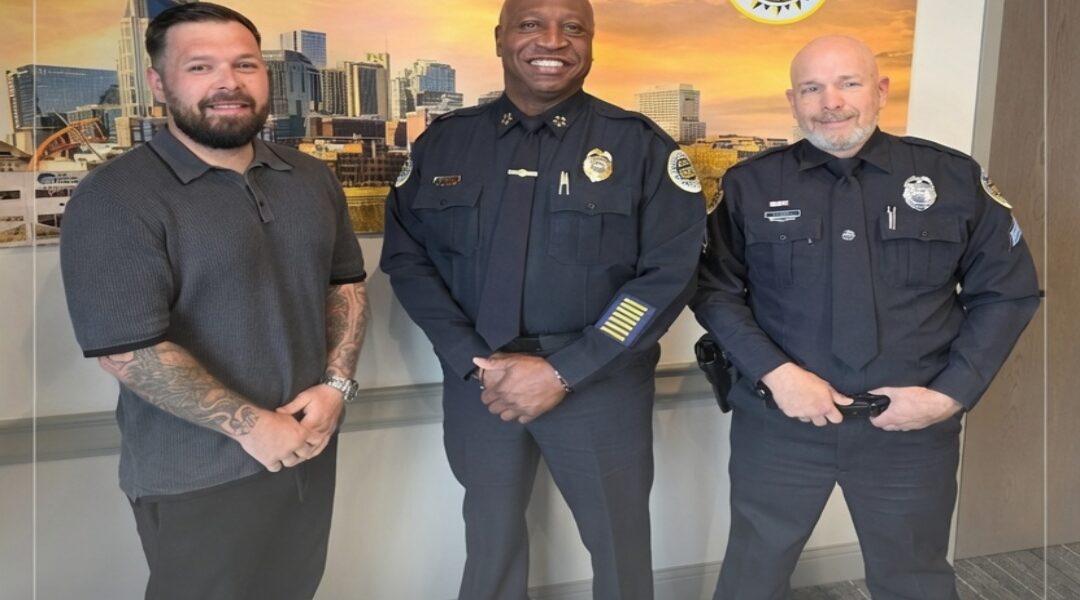
Just minutes after arriving in Nashville for a vacation, British police sergeant Taylor Johanson found himself in the middle of a life-or-death situation.

Taylor Johanson had been looking forward to this trip for months. After years of demanding shifts with the British police, he finally had a week off. Nashville was supposed to be simple — good music, good food, and a chance to switch off from the constant weight of duty. He landed at the airport just after noon, collected his rental car, and drove out into the Tennessee sunshine with the windows down and the radio playing softly. For the first time in a long while, he felt light.
That feeling lasted less than fifteen minutes.
As he merged onto the interstate exit ramp, something on the shoulder caught his eye. A police cruiser sat at an odd angle. A uniformed officer was on the ground, locked in a violent struggle with a much larger man. Even from a distance, Johanson could see the desperation in the fight. The suspect had pinned the officer down and was raining blows on him — punches, headbutts, and at one point, biting. The officer was fighting back with everything he had, but he was losing ground fast.

Johanson’s training took over before his mind could fully process what he was seeing. He pulled his rental car onto the shoulder, killed the engine, and ran toward the chaos without a second thought. As he got closer, he heard the scuffle clearly — grunts, heavy breathing, and the terrifying sound of fabric tearing. Then came a single, sharp crack.
The suspect had somehow managed to get his hand on the officer’s holstered weapon and fired a round.
Johanson didn’t hesitate. He threw himself into the struggle, grabbing the attacker from behind and using every ounce of strength to pull him off the downed officer. For what felt like an eternity but was only seconds, the three men rolled and fought on the gravel shoulder. Johanson’s years of police training kicked in — he used his body weight, controlled the suspect’s arms, and shouted commands in the same calm but firm tone he used back home in the UK. Slowly, with the Nashville officer’s help, they managed to pin the man down until backup arrived and the suspect was finally handcuffed and taken into custody.
The entire ordeal had lasted roughly six minutes, but to everyone involved it felt like a lifetime.
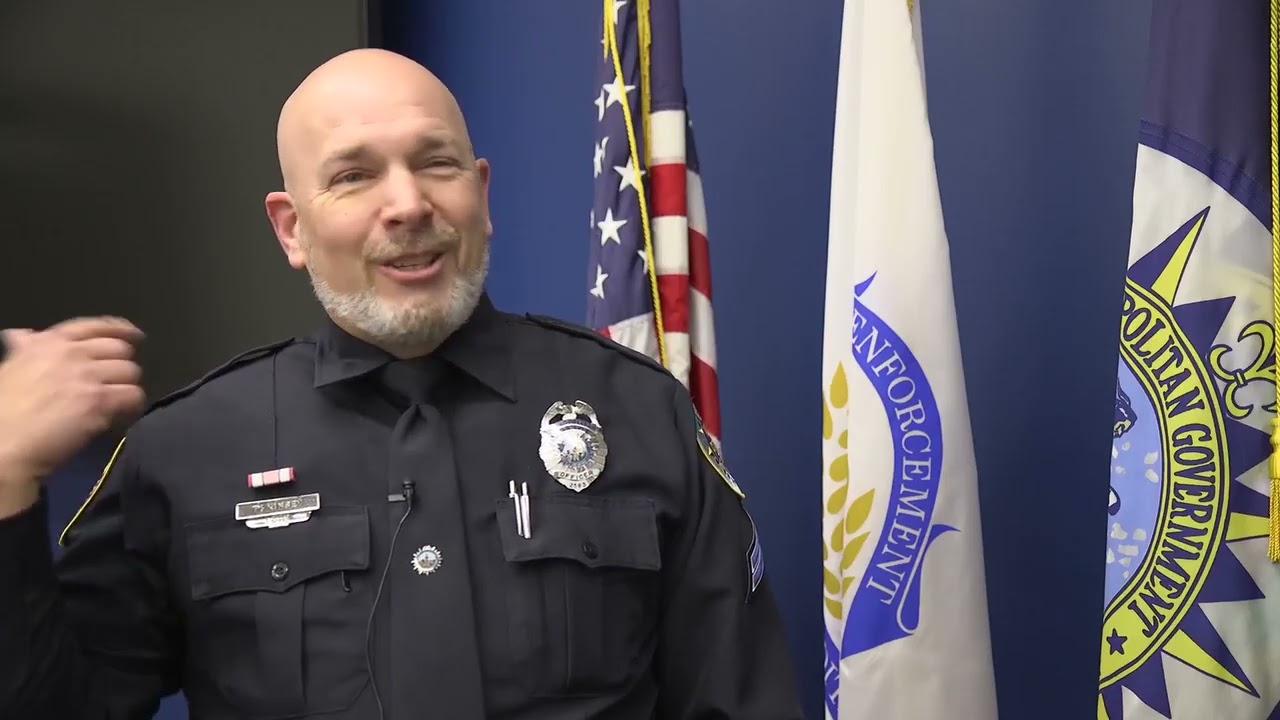
When the dust settled, Officer Peter Kinsey sat on the curb, breathing hard, blood on his face and uniform. He looked up at the stranger who had just risked everything for him and said the words that would stay with Johanson for the rest of his life:
“You saved me. I don’t know who you are, but you saved my life.”
Kinsey later told investigators and his own department that it was one of the closest brushes with death he had ever experienced in his career. The suspect had been relentless. Without Johanson’s intervention, the outcome could have been very different.
Nashville Police Chief John Drake was equally clear in his praise. In a statement released later that day, he said Johanson’s quick thinking and courage likely prevented a tragedy. The fact that an off-duty officer from another country had stepped in without hesitation spoke volumes about the kind of person he was.
What had started as the beginning of a relaxing vacation had turned into something far more profound.
In the days that followed, Johanson was embraced by the Nashville Police Department like one of their own. He was invited to the station, where officers shook his hand and thanked him personally. They presented him with commemorative gifts — a challenge coin, a department patch, and a framed photograph of the officers he had helped protect. What touched Johanson most, though, were not the gifts. It was the conversations. Late into the evening, he sat with Kinsey and other officers, sharing stories from their very different worlds. They laughed about the universal frustrations of police work and spoke quietly about the moments that remind them why they do the job.
A bond formed that neither man had expected. Kinsey introduced Johanson to his family. They shared meals. What began as a random act of courage on an exit ramp became the start of real friendships that crossed an ocean.
On the flight home, Johanson sat by the window and replayed the events in his mind. He hadn’t gone to Nashville looking for danger. He had gone looking for rest. Yet when he saw another officer in trouble, the choice to act had been instinctive. It wasn’t about being British or American. It was about something deeper — the unspoken understanding that exists between those who wear the badge. When one of them is down, others step up. No questions asked.
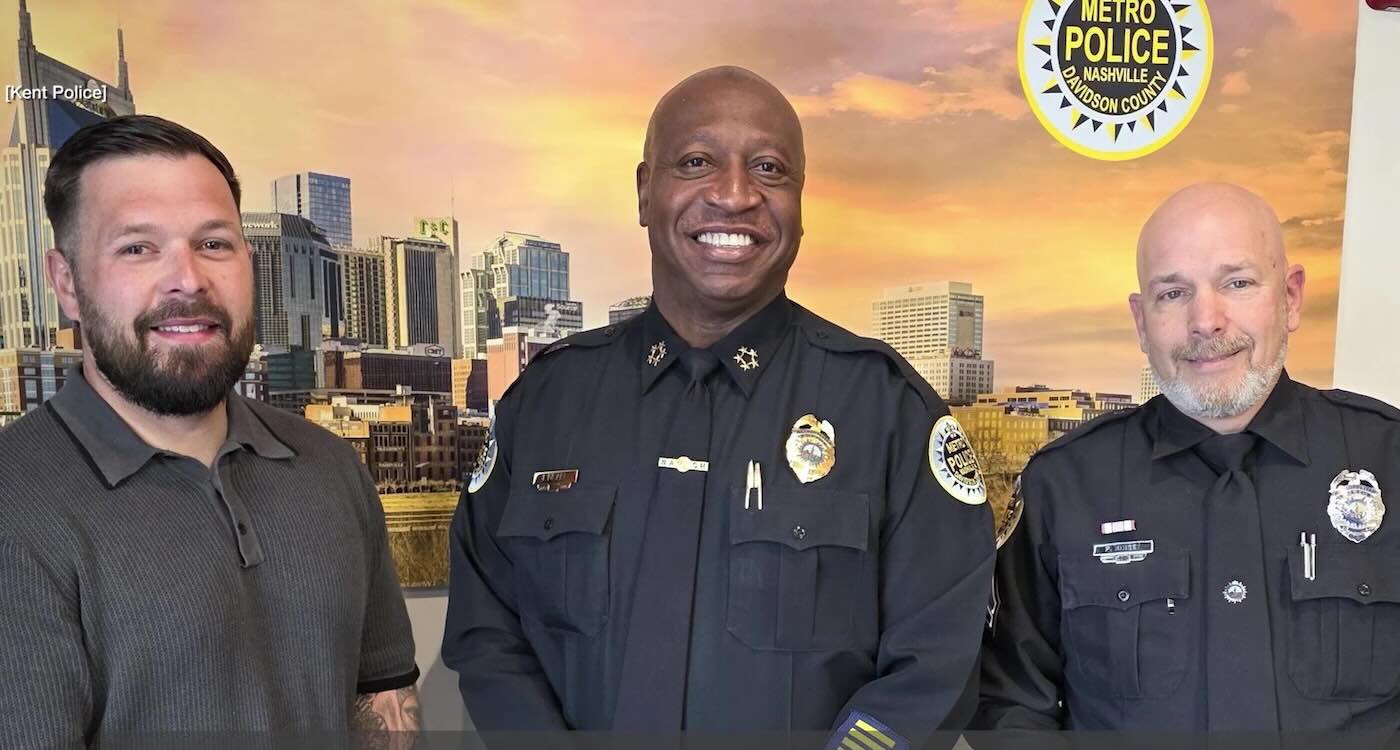
Back in the UK, Johanson returned to his normal shifts, but something had changed. He carried the memory of that day with him — the weight of the struggle, the sound of the gunshot, and the look of relief on Kinsey’s face when it was finally over. He also carried the quiet pride of knowing that, for a few terrifying minutes on a Tennessee roadside, he had made a difference.
What was supposed to be the start of a simple holiday became something much larger: a reminder that courage doesn’t take a vacation. It shows up when it’s needed, often in the most unexpected places. And sometimes, the people who end up saving lives are the ones who were simply trying to enjoy a week off.
Taylor Johanson never planned to become part of Nashville’s story. But in the space of a few minutes on an exit ramp, he became exactly what Officer Peter Kinsey needed — a fellow officer who refused to look the other way. And in doing so, he proved that the thin blue line stretches far beyond any border.