
The first call came as the sun was slipping toward the horizon.
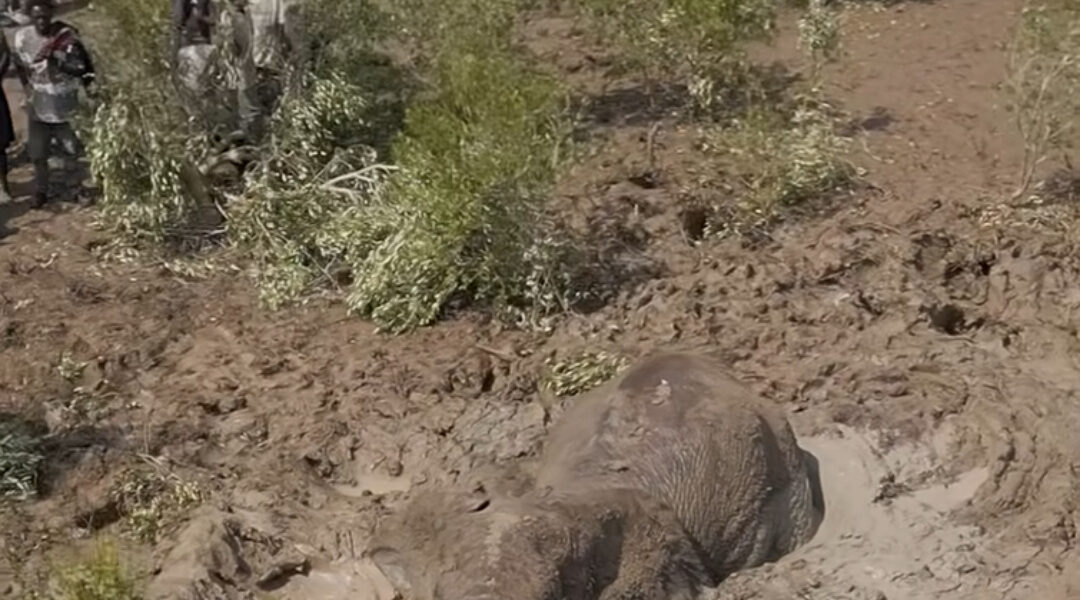
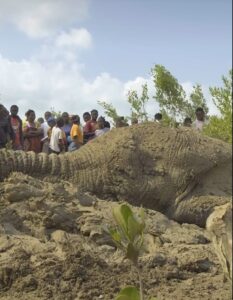
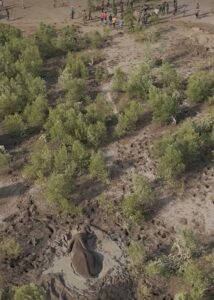
Two massive shapes were barely visible in the distance—dark silhouettes sunk deep into endless mudflats, hundreds of meters from solid ground. Two adult bull elephants. Trapped. Exhausted. Slowly losing the fight against a landscape that does not forgive mistakes.
By the time rescue teams arrived, daylight was already fading. The air was thick with humidity and urgency. Every step toward the bulls was heavy, each foot sinking into mud that pulled back like it had a will of its own. The elephants stood almost motionless, their legs locked in place, their weight pressing them deeper with every attempt to move.
Night was coming fast.
There would be no dramatic rescue that evening. No last-minute heroics. Only assessment, coordination, and a painful truth: they would have to survive the night on their own.
And no one could guarantee that they would.
Day One: Waiting in the Dark
Working alongside wildlife authorities, the team studied the terrain, the tides, the elephants’ positions. The mudflats were deceptive—solid-looking from a distance, deadly up close. Moving heavy equipment in darkness would risk human lives and likely worsen the elephants’ condition.
So the hardest decision was made.
They would wait until morning.
As darkness fell, the two bulls remained stranded, their deep rumbles carrying across the flats—low, vibrating calls of stress and confusion. The team left knowing that time was no longer on their side.
Every hour mattered now.
Day Two: Loss
At first light, the rescue began.
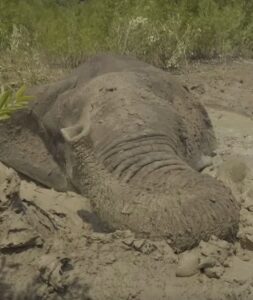
A bulldozer rumbled into position, its weight carefully guided across reinforced ground. Thick straps were prepared—strong enough, in theory, to move animals weighing several tons. Teams waded into the mud, digging around each elephant’s legs to relieve pressure and create space.
It was slow. Brutal. Exhausting.
The first bull was freed after hours of effort. For a brief moment, hope surged. But it faded almost instantly.
He was too weak.
Days of struggling in the mud had drained him beyond recovery. Even on solid ground, his body could not recover. He collapsed, his breathing shallow, his strength gone.
Shortly after, he died.
The silence that followed was heavy and absolute.
No one spoke. No one moved. This was the reality of rescue work that rarely makes headlines—the truth that not every effort ends in victory. That sometimes, despite everything, life slips away.
But there was no time to grieve.
The second bull was still trapped.
And he was deeper.
Day Three: Refusing to Leave
The straps snapped one by one under the immense strain of the second bull’s weight. The mud clung tighter. Every pull risked injury—to the elephant and to the people fighting for him.
Hours passed.
Then, finally, with stronger webbing straps and relentless coordination, the bulldozer pulled again.
This time, the earth released him.
The bull emerged coated in mud, his sides heaving, his eyes wide with fear and exhaustion. He was free—but he did not move.
Instead, he turned back.
Toward the place where his companion had fallen.
He refused to leave.
Elephants are known for their memory, their bonds, their grief. This bull stood rooted, despite exhaustion, despite freedom, as if abandoning his friend was something he simply could not do.
Rescuers gently guided him away, step by step, until he reached safer ground. Water was left for him. Space. Quiet. A chance to recover.
As night fell again, there was cautious relief.
Until the call came.
Late that night, word reached the team: the bull was trapped again.
Day Four: Racing the Tide
This time, the situation was worse.
The bull had wandered into a tidal creek and become stuck once more. The ground beneath him was unstable, and the tide was coming in.
If they failed now, he would drown.
There was no room for delay.
The team moved fast, administering IV fluids to strengthen him, stabilize his body, and buy precious minutes. The bulldozer returned. The straps were secured. Every calculation mattered.
They pulled.
And pulled.
One hundred meters.
One hundred fifty.
One hundred seventy.
Finally, the bull reached safety.
Barely thirty minutes later, the tide surged in, filling the creek completely. Water rushed over the mudflats, erasing all signs of the struggle that had taken place there.
Had the bull still been trapped, he would not have survived.
Freedom had come just in time.
But the mission wasn’t over yet.
Rescuers tracked him through the night, following his movement for 35 kilometers, ensuring he was far from danger, far from treacherous ground, far from the place that had nearly claimed his life—twice.
Only when he disappeared into safe territory did they stop.
Exhausted.
Mud-covered.
Emotionally spent.
But alive.
What Remains
Four days.
Four days of hope and heartbreak.
Of teamwork and loss.
Of a life saved—and one that could not be.
Rescue is not about guarantees. It is about showing up when the outcome is uncertain. It is about choosing to fight for life even when failure is possible.
One bull did not make it.
The other did.
And in that truth lies both sorrow and meaning.
Because sometimes, saving even one life is worth everything it takes.