For most of her life, Rhea knew the world as a place of chains, commands, and endless repetition.
Fifty-three years is a long time to wait for freedom. It is long enough for seasons to blur together, for pain to become routine, and for hope to learn how to survive quietly, without expectation. For Rhea, a former circus elephant, those years were spent under canvas roofs and harsh lights, moving when told, stopping when ordered, performing not because she wanted to—but because she had no choice.
She had once been young. Curious. Strong in the way only elephants are when their world is still wide and open. But that world narrowed quickly. The circus took her body, her labor, and most cruelly, her freedom. Day after day, she stood on hard ground, her feet aching, her spirit contained. Applause replaced birdsong. Chains replaced choice.
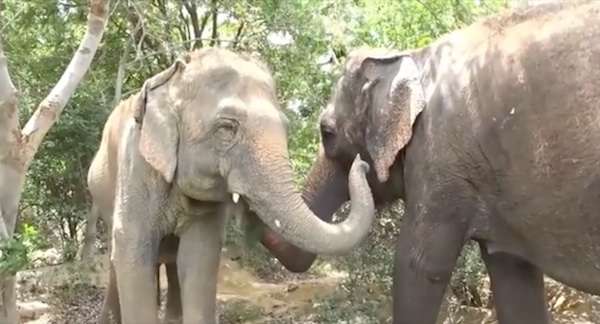
And yet, elephants remember.
They remember faces.
They remember voices.
They remember each other.
Rhea remembered her sisters.
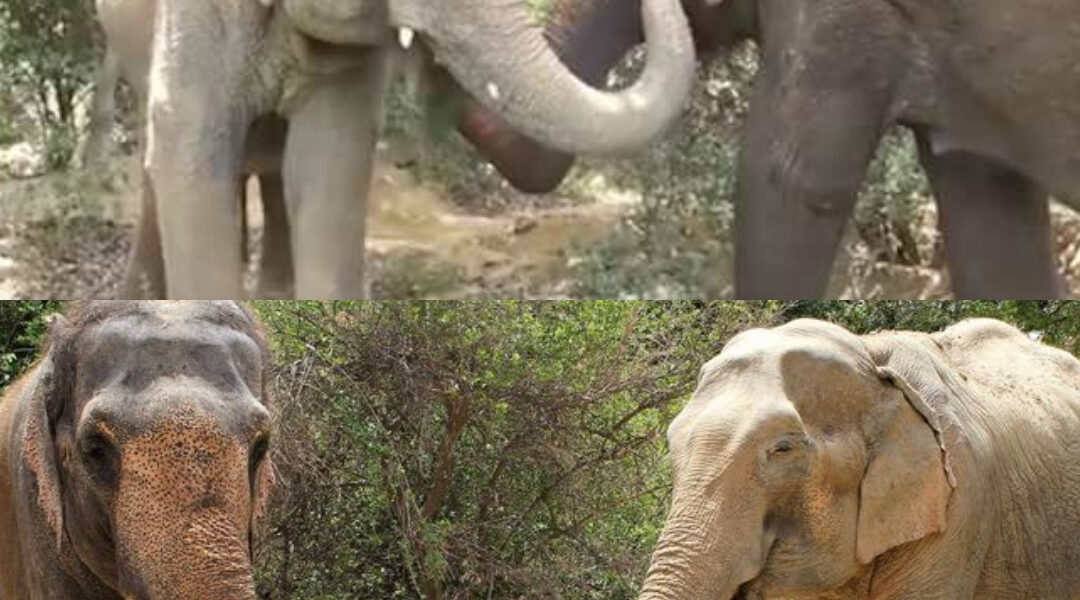
Years earlier, two elephants named Mia and Sita had been rescued from the same life. In November 2015, they were taken away to safety—saved, but separated. For Mia and Sita, freedom arrived sooner. For Rhea, it remained a distant promise.
The months after their separation were some of the hardest. Elephants form bonds that last a lifetime. They grieve deeply. They feel absence not as an idea, but as an ache. Rhea had lost not just companions, but family—beings who had shared her pain, her silence, her survival.
She could not know if she would ever see them again.
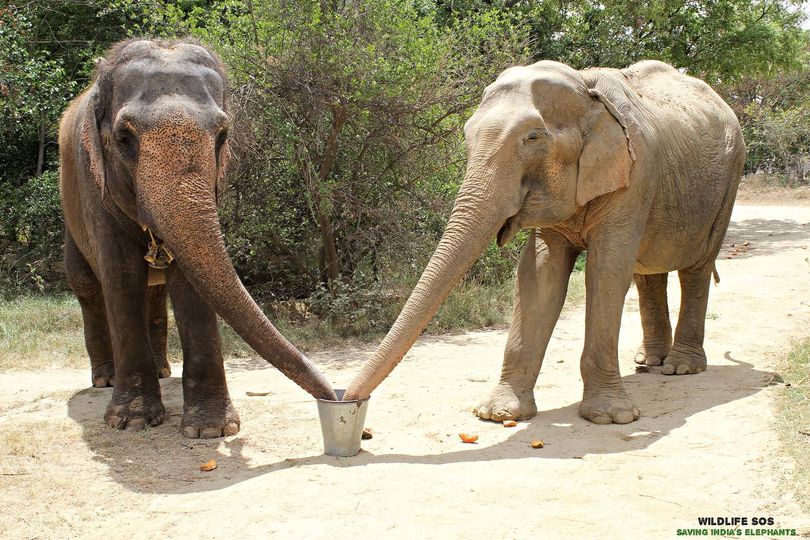
Then, one day, everything changed.
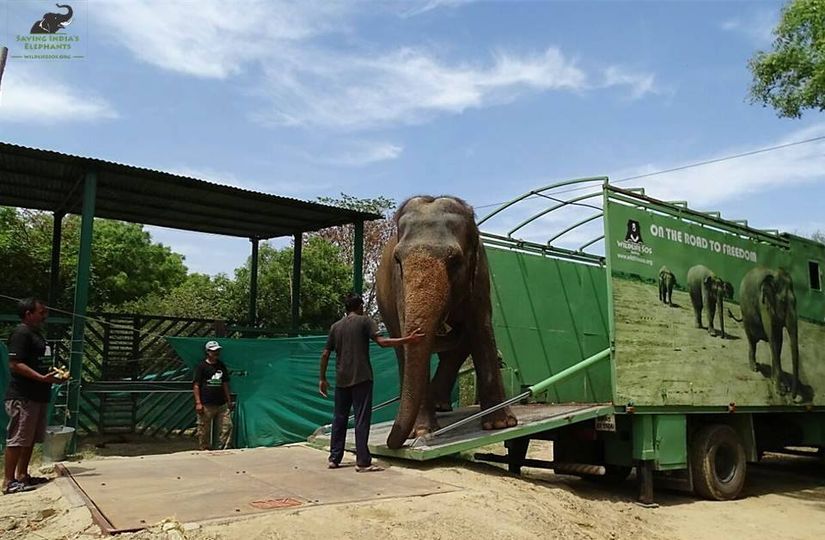
The rescue truck arrived quietly, but its presence carried the weight of a miracle. Wildlife S.O.S. had kept a promise—one made not just to Rhea, but to her sisters. After decades of advocacy, planning, and persistence, Rhea was finally free.
As the doors of the “elephant ambulance” opened, she stepped down slowly. Every movement was careful, uncertain, as if her body was still waiting for permission that would never come again. This short walk—from truck to sanctuary—was something she had been denied her entire life.
Choice.
No chains pulled at her legs.
No hooks guided her steps.
No crowd demanded anything from her.
For the first time in more than half a century, Rhea walked because she wanted to.
The rescue center felt different immediately. The ground was soft. The air was calm. There was space—real space—to move, to pause, to breathe. Caregivers spoke gently. Hands offered reassurance instead of control.
But the greatest moment was still waiting.
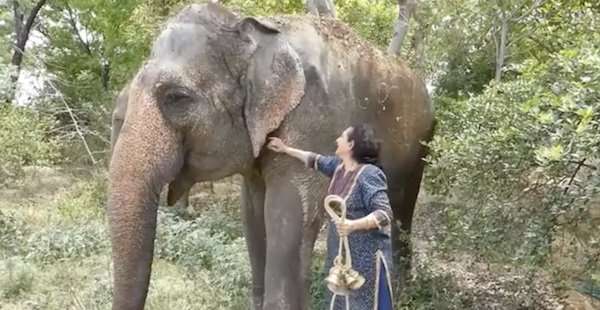
Mia and Sita were already there.
When the elephants caught sight of one another, time seemed to fold in on itself. Decades of separation collapsed into a single instant. Rhea stopped. Her ears lifted. Her body stilled in a way that only elephants recognize—a moment of recognition deeper than sight.
Then came the sound.
A low rumble, vibrating through the ground. A greeting meant only for family.
Mia answered.
Then Sita.
They moved toward each other slowly, deliberately, as if afraid the moment might break if rushed. Trunks reached out, touching faces, tracing familiar contours that memory had never forgotten. They leaned into one another, pressing foreheads together, breathing in the scent of home.
It was as if no time had passed at all.
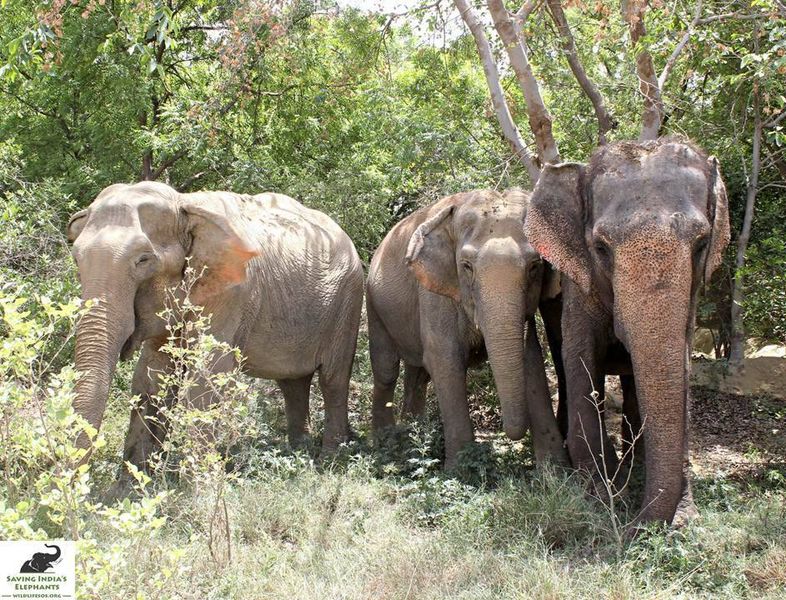
For those watching, it was impossible not to feel the weight of what was happening. This was not just a reunion. It was a restoration. A reclaiming of something that should never have been taken.
Elephants do not forget their bonds.
They do not replace family.
They wait.
And Rhea had waited a lifetime.
Now, at last, she was where she belonged.
Her future looks nothing like her past. No more performances. No more confinement. No more commands. Instead, there are open spaces, long walks, mud baths, and afternoons spent doing nothing at all—a luxury denied to her for over fifty years.
She will eat bananas without hurry.
She will rest when she chooses.
She will communicate in rumbles and touches, surrounded by sisters who understand her without words.
Most importantly, she will not be alone.
For elephants, togetherness is everything. They grieve together. Heal together. Remember together. The trauma of captivity does not vanish overnight, but healing is possible when safety replaces fear—and when family is near.
The caregivers at Wildlife S.O.S. understand this. They did not just rescue Rhea’s body; they reunited her heart. They knew that freedom without companionship would never be complete.
Now, Rhea, Mia, and Sita will remain together for the rest of their lives.
There is something profoundly humbling about watching an animal step into freedom after so much suffering. It forces us to confront uncomfortable truths about how easily cruelty becomes normalized—and how long it can take to undo its damage.
Rhea’s story is not just about rescue.
It is about accountability.
It is about patience.
It is about the responsibility humans carry when they interfere with lives that are not theirs to own.
Fifty-three years were taken from her.
But not her spirit.
Not her memory.
Not her capacity to love.
As she settles into sanctuary life, Rhea is no longer a performer, a possession, or a spectacle. She is simply an elephant—free, safe, and surrounded by those who know her best.
Finally, she is home.
And in that quiet truth lies a promise: that even after a lifetime of suffering, healing is possible—and love, once reunited, is stronger than the years that tried to erase it.