

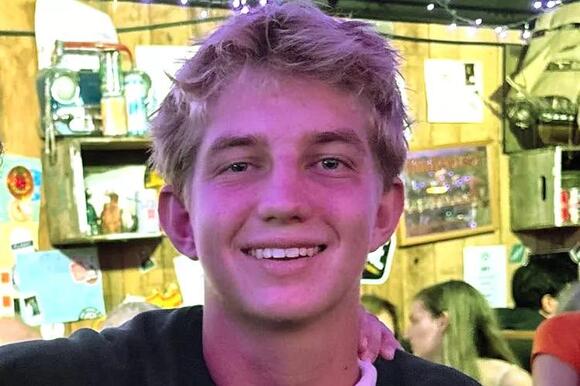
Braun Levi was eighteen years old, standing at the edge of everything.
Graduation was only weeks away. College acceptance letters had already opened doors to a future he had worked tirelessly for. His tennis racket, worn smooth from years of practice, rested beside dreams that felt solid and close enough to touch. Life was moving forward, exactly as it should have.
And then, in the quiet hours before dawn, it all stopped.
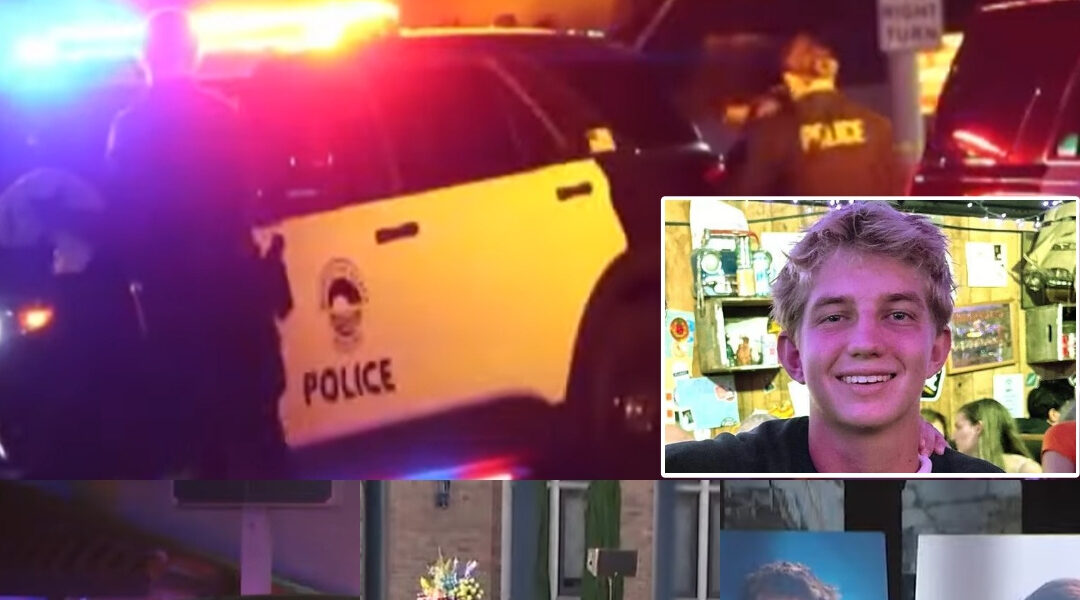
Braun was walking with a friend, doing nothing extraordinary, nothing reckless—just moving through an ordinary moment that should have passed unnoticed. Instead, a car came out of the darkness. Police later said the driver was suspected of being intoxicated. The impact was sudden, violent, irreversible.
By the time officers arrived, Braun was gone.
Eighteen years of life—ended in seconds.
For those who loved him, the shock was paralyzing. There was no warning, no chance to say goodbye, no moment to prepare for the impossible. One phone call shattered a family, a school, a community that had wrapped itself around a young man who made people feel better simply by being near him.
Braun Levi was more than a headline.
He was a son who had already endured loss. Just months before his death, his family had watched their home burn in the wildfires that ravaged the Pacific Palisades. While others saw devastation, Braun showed resilience. Friends say he never complained, never asked for pity. He kept showing up. Kept smiling. Kept moving forward.
Tennis was his passion, but not his identity.
At Loyola High School, Braun played for the varsity tennis team and had just secured his fourth league championship. Yet when teammates speak about him now, trophies barely come up. What they remember most is his presence. The way he encouraged younger players. The way he led without ego. The way he made victories feel shared and losses easier to carry.
“He was a true leader,” his coaches said. Not because he was loud or commanding—but because people trusted him. Because he cared.
Braun had that rare ability to make others feel seen.

Friends describe his smile as infectious, his laughter effortless. He never met a stranger. Whether it was a teammate, a classmate, or someone he had just encountered for the first time, Braun treated everyone like they mattered. He had a gift for connection—one that can’t be taught or trained.
He was preparing to attend the University of Virginia in the fall. He talked about independence, about new challenges, about the excitement of starting over somewhere new. Like most eighteen-year-olds, he believed time was endless.
No one should have to learn otherwise so soon.

As news spread, grief rippled outward. At Loyola, classrooms fell quiet. Students hugged longer. Teachers struggled to find words that didn’t feel hollow. Coaches stood in empty courts, staring at lines Braun once paced with focus and determination.
Vigils formed almost immediately.
Candles flickered in the dark. Flowers piled up. Photos of Braun—laughing, competing, dressed in bright suits at horse races, standing beside alpine lakes, running marathons with friends—told the story of a young man who lived fully, even in a life cut painfully short.
One friend wrote, “You left an impact on everyone you met. I’m going to live and love as big as you every day.”
That promise echoed through the crowd.

Teachers remembered Braun not just as an athlete, but as a student who brought joy into the room. His economics teacher described him as “unique and special,” someone who lifted the energy of everyone around him without trying.
Another friend said simply, “He was the heart and soul.”
That phrase stayed with people.
Heart and soul.
Because that’s what was missing now.
The driver accused in the crash was arrested and held without bail. The legal process will unfold in courtrooms, through paperwork and hearings and consequences. But for Braun’s family and friends, justice is a word that feels painfully incomplete.
No verdict brings back a son.
No sentence restores a future.
No explanation makes sense of an empty chair at the dinner table.
Grief, instead, arrives in waves.

It comes when the sun rises and the world continues as if nothing happened. It comes during celebrations that feel wrong without him. It comes when someone reaches for their phone to send a message they suddenly remember will never be answered.
Braun’s death also joins a growing list of young lives lost to drunk driving—stories that feel hauntingly similar and yet unbearably personal to those left behind. Each one a reminder that a single choice can destroy countless futures in an instant.
In the months and years ahead, Braun’s name will be spoken less often outside his circle. Headlines will fade. News cycles will move on.
But inside the people who loved him, he will remain.
In the way they cheer louder for each other.
In the way they pause before getting behind the wheel.
In the way they choose kindness, remembering how effortlessly Braun gave it.
He was only eighteen.
He should have been worrying about dorm rooms and textbooks, not memorials and vigils. He should have been stepping into adulthood, not becoming a memory others must carry forward.
And yet, even in loss, Braun Levi leaves something behind.
He leaves an example of leadership rooted in compassion.
He leaves proof that joy can be quiet and powerful.
He leaves a reminder that the measure of a life is not its length, but its impact.
Braun lived eighteen years—but he filled them with meaning.
And those who knew him will spend a lifetime honoring that light, refusing to let it disappear.
Because some people leave too soon—but never without leaving something that lasts forever.