
Some tragedies arrive without warning. One moment a city breathes in quiet routine, and the next — everything changes. On the night of November 26, Hong Kong learned how quickly an ordinary evening can turn into a nightmare.
It began with smoke.
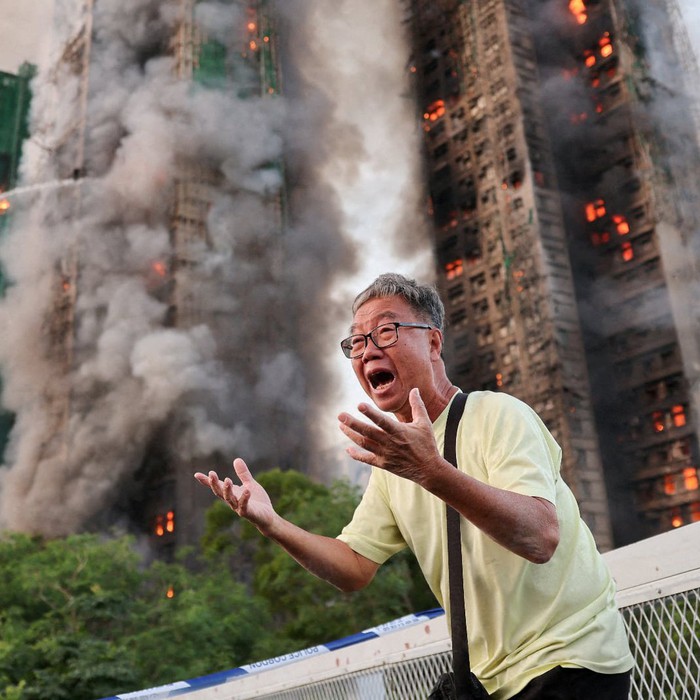
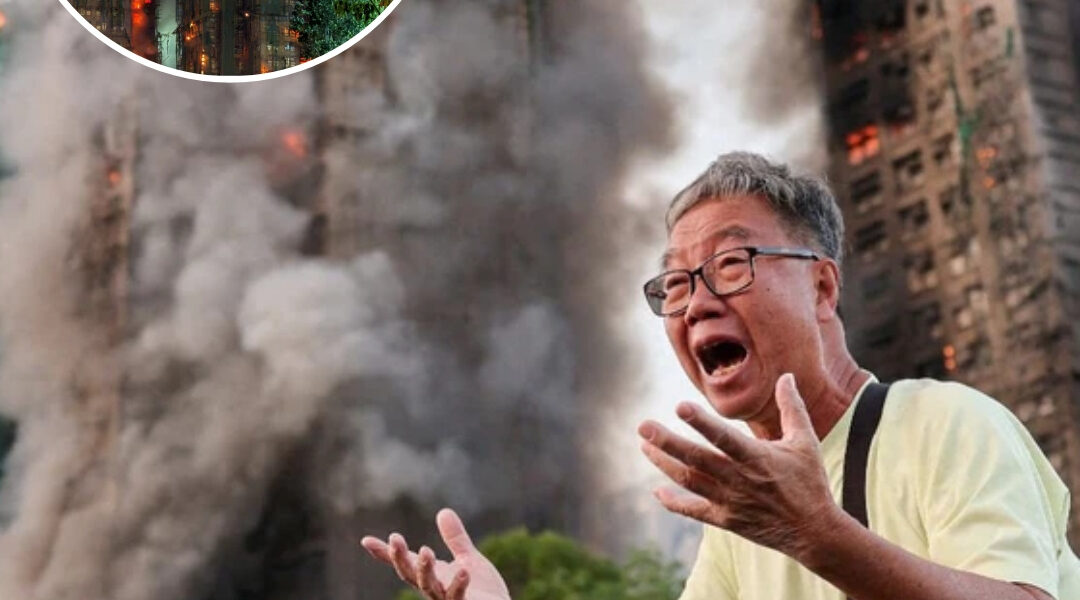
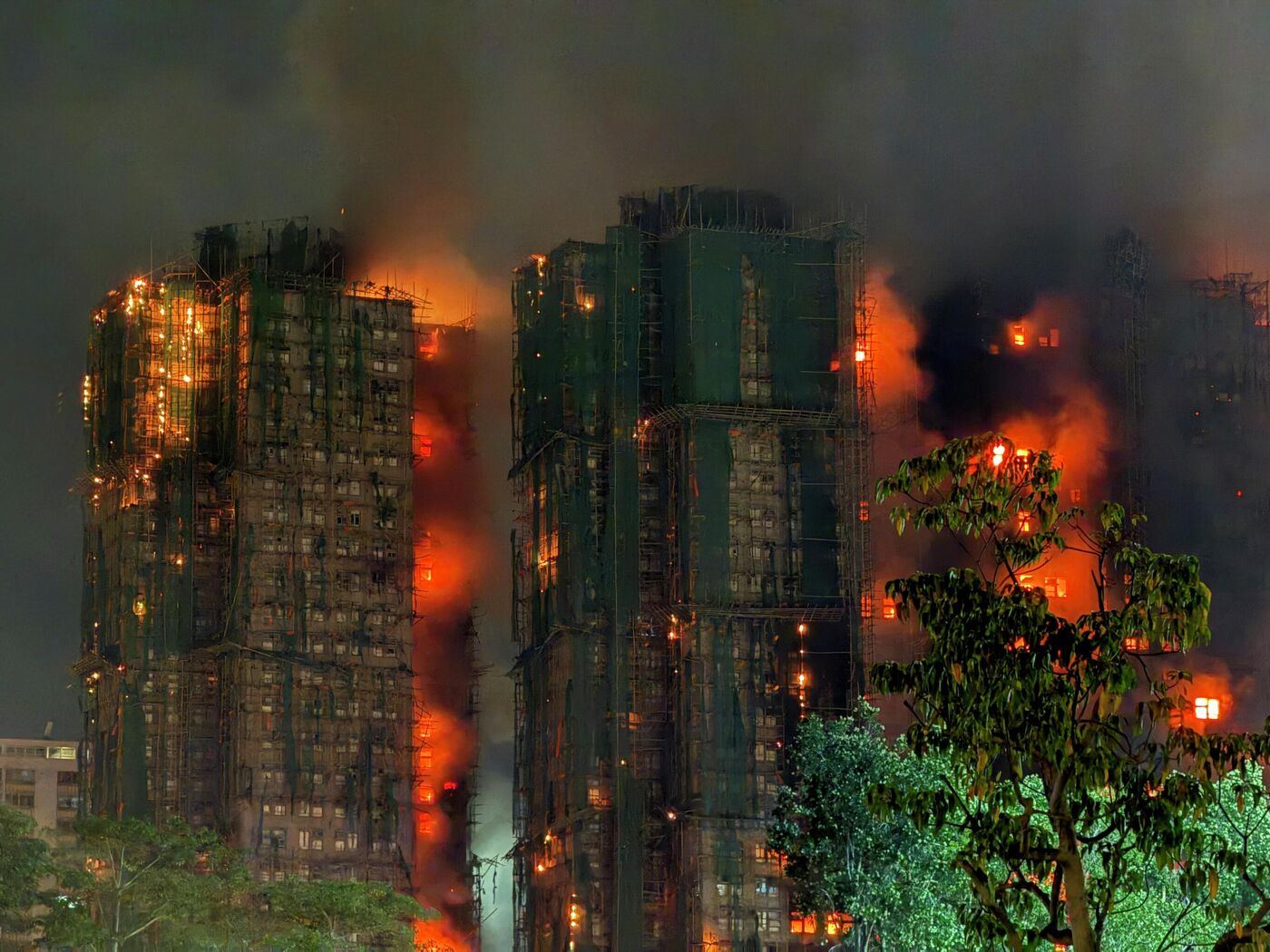
Not much at first — just a faint blur drifting above the rooftops of Tai Po. But within minutes, smoke turned into fire, fire turned into fury, and fury climbed skyward along the bamboo scaffolding wrapped around several high-rise buildings. By the time the first alarms were raised, flames were already racing up the sides of three residential towers, swallowing window after window like a living beast.
People looked up from the streets and gasped.
Those inside never saw it coming.
The Fire That Should Never Have Happened
Residents at Wang Fuk Court had lived through typhoons, black rainstorms, and long power outages. But no one was prepared for a fire fueled by bamboo scaffolding — those familiar lattices of pale sticks that line Hong Kong’s construction sites like skeletons.
But that night, the bamboo became a wick.
A spark — no one knows from where — slid under the planks, caught the dried bamboo, and erupted. In seconds, flames shot upward like vertical lightning. Glass cracked. Air conditioners melted. The heat was so intense it radiated through walls.
Firefighters initially classified it as a Level 1 fire.
Fifteen minutes later, as the flames exploded upward, they raised it to Level 4.
At 6:22 PM, the highest alert was issued:
Level 5 — maximum emergency.
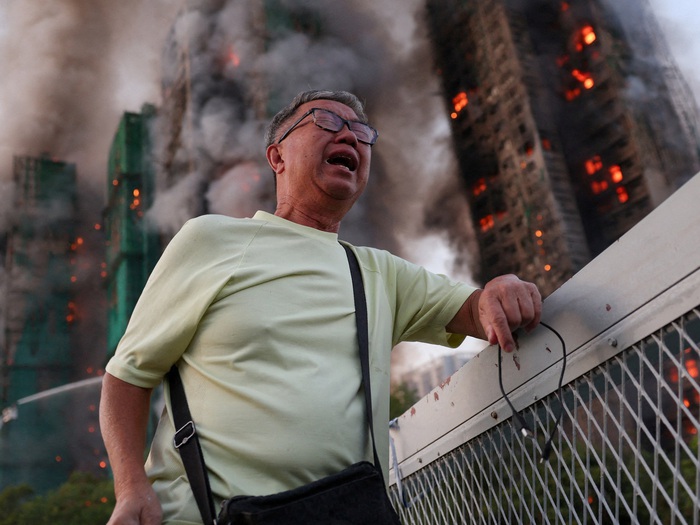
The kind of alarm that makes a city hold its breath.
Inside the Burning Buildings
People inside the towers had no time to think.
A grandmother preparing dinner smelled something burning — but when she opened her door, a wave of choking smoke poured into her home. A young couple on the 11th floor tried to escape, only to find the staircase too dark and too hot. A father held his two children close in their windowless bathroom and prayed the smoke wouldn’t find them.
One resident later said:
“The fire didn’t sound like fire. It sounded like the building was screaming.”
Across the hallways, sprinklers hissed uselessly against the rising heat. Some residents pressed towels to the gap under their doors. Others called emergency hotlines, describing the smoke filling their rooms. Many didn’t know whether help could reach them in time.
The Heroes Who Walked Into the Inferno
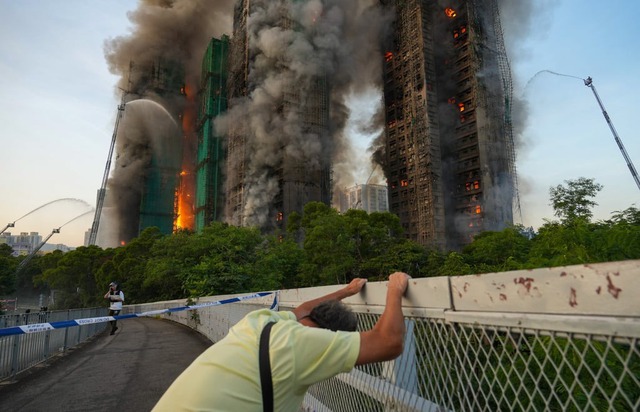
The first firefighters arrived within minutes — but even they were stunned by what they saw. Walls of flame poured down the facade. Scaffolding collapsed in burning sheets. The air shimmered with debris so hot it glowed.
Still, they pressed forward.
Among them was a 36-year-old firefighter — a man who had run into dozens of dangerous situations in his career, but none like this. He climbed the scaffolding to reach residents trapped behind caged balconies, hacking at metal bars while flames whipped around him.
He found two unconscious victims. He dragged them down rung by rung as the bamboo groaned above him.
He went back up a third time.
He never came down.
He was one of the first four confirmed fatalities that night.
A City Watching With Trembling Hands
By dusk, police had blocked off several highways to make space for fire trucks, water tankers, and emergency crews. People from nearby districts gathered on the streets, watching helplessly as firefighters tried to contain the blaze.
No one spoke.
Some prayed.
Some cried quietly.
Parents pulled their children closer. A man handed out face masks to strangers. A woman stood shaking as she whispered into her phone, begging her elderly father to stay near the window where rescuers might see him.
Over and over, rescue teams shouted into megaphones:
“Stay inside! Seal your doors! Help is coming!”
But the smoke kept rising.
Lives Taken, Futures Shattered
By 5 PM, officials confirmed four dead.
But the number kept climbing.
By nightfall, fourteen lives had been lost — including the firefighter who died trying to save others. Dozens were injured, some badly burned, others unconscious from smoke inhalation. Several individuals arrived at the hospital in cardiac arrest.
A tragedy counted in numbers on paper —
but in reality, those numbers were people:
A mother who never made it downstairs.
A young man trapped in the stairwell.
An elderly neighbor who couldn’t outrun the smoke.
A rescuer who gave everything he had.
And Yet — The City Did Not Break
While flames still licked the buildings, people on the ground acted with fierce compassion.
Someone brought crates of water for firefighters.
Someone else held a stranger’s shaking hands.
Volunteers translated instructions for residents who didn’t understand Cantonese.
Neighbors took in families who fled their homes with nothing but their clothes.
No one waited to be asked.
Hong Kong simply rose to help.
Because in moments like these, tragedy becomes a mirror — reflecting not devastation, but humanity.
A Mother’s Whisper, A City’s Grief
One rescue worker later described carrying a child out of the building — her face smeared with soot, her tiny arms trembling.
“She was whispering, ‘Is Mommy coming?’” he said.
“I told her yes… even though I didn’t know.”
Fire doesn’t just take lives.
It steals comfort.
It steals certainty.
It steals the small, fragile things that make us feel safe.
But it cannot steal kindness.
Morning After the Ashes
By sunrise, the fire was finally under control. The buildings stood blackened and broken — windows shattered, balconies twisted, bamboo reduced to charred bones. The air smelled of smoke long after the flames died.
But the people of Hong Kong did what they always do:
They gathered.
They helped.
They mourned.
Donations poured in for the victims.
Volunteers prepared meals.
Counselors offered free support.
Residents opened their homes to neighbors who had lost everything.
Because behind the headlines — “14 Dead in Tai Po Blaze” — there were real lives, real names, real stories.
And the city refused to let those stories fade.
In the End
The fire of November 26 will be remembered not only for the devastation it caused — but for the courage it revealed.
A firefighter who climbed into flames three times.
Families who protected each other through choking darkness.
Strangers who stood together in fear and compassion.
A city that acted as one heart.
Tragedy struck Hong Kong that night.
But what remained was not just loss.
What remained — was humanity.