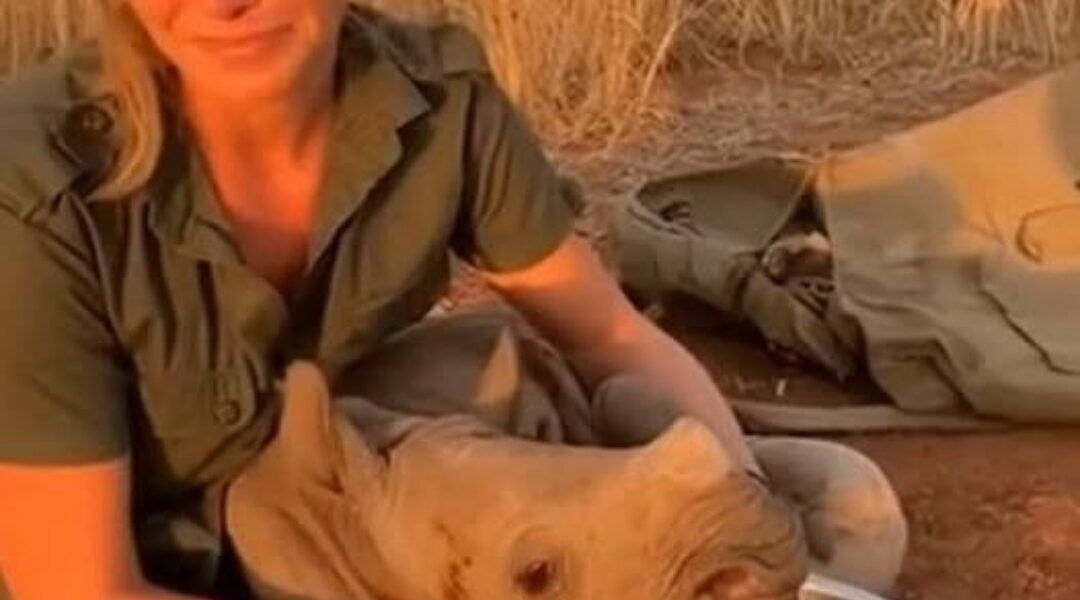


The radio crackled just after sunrise — a sound Kate had learned to fear. In the sanctuary, mornings were supposed to be calm: nurses mixing milk formula, keepers preparing feed buckets, young animals stretching awake under the pale African light. But when the emergency channel came alive, every heartbeat on the grounds seemed to stop.
“Mortality alert. Female rhino. Last ping—north ridge.”
Those words meant one thing: death.
Kate froze, her hands still wrapped around a bottle she had been preparing for an orphaned zebra. She’d only been at the sanctuary for two years, but she knew what a “mortality” signal meant. A rhino’s tracking collar sent it when the animal stopped moving — when its heart stopped.
Poachers.
Hunger.
Dehydration.
Injury.
Always something too brutal, too fast, too preventable.
The senior ranger grabbed his rifle and shouted toward the trucks. Kate didn’t think — she just ran.
They drove fast across the dry plains, tires bumping over red earth, dust rising behind them like smoke. Kate gripped the metal rail on the truck bed, her heart pounding with a mix of dread and helpless rage. Every rhino death carved a wound into the land… and into the people who tried every day to protect them.
When they reached the ridge, no one spoke.
The mother rhino lay in the grass, her massive body still warm, her horn hacked away with cruel precision. A giant brought down by greed. The kind of scene Kate had trained herself not to cry at — but time never made it easier.
The ranger cursed under his breath. “Another one gone.”
The team moved quietly, respectfully. Pictures, measurements, evidence. The terrible routine of saving a species that the world seemed determined to erase.
They were moments away from calling it in when something cut through the heavy silence.
A small, thin cry.
Kate turned sharply. “Did you hear that?”
The others stopped. Listened.
There — again. Weak. High-pitched. Desperate.
Kate didn’t wait for permission. She sprinted toward the tall grass, her boots crunching through the dry stalks. Her breath hitched as the sound grew louder, more frantic, more fragile.
And then she saw him.
A rhino calf — no more than a few days old — wedged in the brush, trembling violently. His skin was painfully dry, his tiny legs tucked under him as if he were trying to disappear.
“Sweetheart…” Kate whispered, sinking to her knees.
He blinked at her — the look of an animal who had cried until he had no sound left. His mother had fallen hours ago. He had stayed close, waiting for her to get up.
She never did.
Kate’s throat tightened until she could barely breathe. She called out to the others — “We’ve got a calf! Alive!” — and lifted the exhausted baby into her lap. He felt too light, too warm, too still.
Dehydration.
Shock.
Grief.
A fatal mix for a newborn.
“Get me water!” she yelled, though her voice cracked halfway. A ranger ran to the truck and returned with a metal bowl. Kate held it to the calf’s lips.
Nothing.
“Come on, baby,” she whispered. “Please.”
She guided her hand under his jaw, lifting his head. His eyes fluttered. His tongue moved. A slow, shaky sip.
Kate let out a sound that was half-sob, half-prayer.
“That’s it… that’s it, sweetheart. Drink a little more.”
She stroked his tiny face with her thumb, tears slipping down her cheeks as she steadied the bowl. The calf’s ears twitched each time she spoke — the only sign he still had fight left.
Behind her, the rangers stood quietly. The same men who faced poachers and death with stone faces looked away now, wiping their eyes.
Because this wasn’t just a rescue.
This was a baby learning, in the span of one brutal morning, what loss meant.
And what hope felt like.
As the sun dipped low, the team wrapped the calf in canvas blankets and carried him carefully to the truck. Kate climbed in with him, never letting his head leave her lap. Every bump in the road made him flinch. Every shadow made him press closer into her.
“You’re okay,” she whispered. “I’ve got you. You’re safe now.”
She repeated it again and again until the calf’s trembling softened, until his breathing settled into something steady and rhythmic. She didn’t know whether she was comforting him… or herself.
Back at the sanctuary, the staff sprang into action. Warm fluids. Milk formula. Monitoring for infection. But Kate refused to leave.
She sat beside him through the night, her back aching, her shirt still stained with dust and tears, her hand resting gently on his tiny flank. Every so often, she whispered:
“I’m here.”
He slept in fits, crying once or twice — the soft, broken cries of a heart too young to understand why its whole world had disappeared.
The team named him Brave before sunrise.
Because surviving what he survived was nothing short of a miracle.
Over the next days, Brave learned to drink from a bottle, his mouth wrapping around the rubber nipple with determination that made Kate laugh through her tears. He followed her like she was the only familiar thing left in the world — a tiny rhino calf trailing behind a woman who had never expected to become a mother to one.
Kate stayed longer shifts.
Sometimes overnight.
Sometimes past exhaustion.
Not because she was required to.
But because she knew what it meant to lose everything…
And then find one person who refused to walk away.
Weeks passed, and Brave grew stronger. His cries turned into playful grunts. His steps wobbled less. His eyes brightened. But every time Kate knelt beside him, he still pressed his head into her chest the same way he had that first evening in the grass.
As if she were his anchor.
His comfort.
His second chance at life.
Kate often thought about the moment they found him — the dry grass, the dying light, the sound of her own heartbeat pounding as she lifted his head to drink.
One cruel act had taken his mother.
But one tiny, fragile moment had saved him.
And now, a baby rhino who should have died on the plains because of human cruelty…
…would live because of human love.
**Brave isn’t just his name.
It’s the story he’ll carry for the rest of his life.**